
Dubai apartment view premium: how much a sea view actually adds to price
Market commentary puts the premium for a direct sea or marina view at roughly 15–60% over an equivalent unit without one, depending on the building and floor. When that premium pays off in yield, when it only pays off on resale, and how to judge a view from a floor plan before the tower exists.
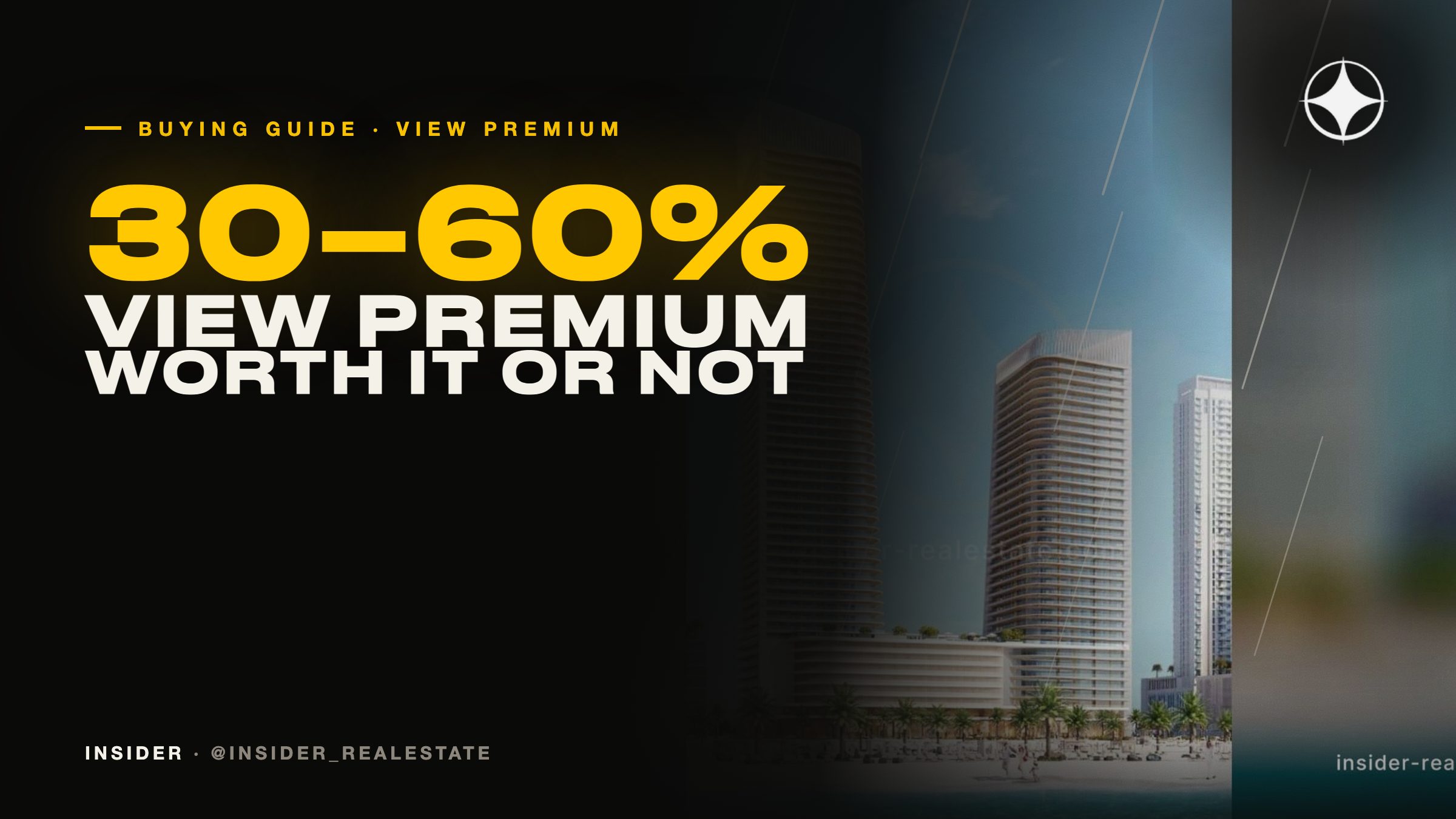
"Take the one with the view, it resells easier" is close to standard advice from agents showing units in Dubai. It holds up: two otherwise identical apartments in the same building, differing only by what is outside the window, routinely trade tens of percent apart. The real question for an investor is not whether the premium exists, but where the line sits between a premium that is worth paying and one that will not come back through rent or resale. Comparing such units only works on a like-for-like basis — see price per square foot against price per apartment for how area differences distort the comparison before a view is even factored in.
According to Khaleej Times reporting on the city's waterfront market, and consistent with broader agency commentary, a direct sea, marina or Palm view within the same building typically adds somewhere between 15–25% for a partial view and 30–60% for a full, unobstructed frontal view. The range is wide by design — it depends heavily on the specific building, floor and how much of the sightline is already blocked by neighbouring towers. Treat the top of that range as a ceiling for rare units, not as a number to plan a purchase around.
Where the view premium works against yield
This is the trap for an investor modelling percentage return rather than just price. A view unit costs meaningfully more than an equivalent non-view unit in the same tower, but achievable rent does not scale up at the same rate — tenant demand responds to a view less sharply than buyer demand does. The result is that a full sea-view unit can post a lower rental yield than a side- or partial-view unit in the identical building: rent is close, entry price is not.
Talk to a licensed broker: 📲 +971 50 120 32 64 on WhatsApp, @dubai_oleg on Telegram
The practical rule follows from that: if the goal is rental income and a percentage return, buy the minimum view that keeps the unit competitive to rent — not the frontal, fully premium sightline. If the goal is capital appreciation over a medium-to-long hold, or the flat is for personal use, a strong view is usually worth the premium: it depreciates more slowly in a soft market and finds a buyer faster on resale, simply because fewer comparable units exist.
One building, two very different views: Grand Bleu Tower
A useful illustration of how much view varies within a single building is Grand Bleu Tower, on the peninsula that forms Emaar Beachfront between Dubai Marina and Palm Jumeirah. The project offers two-bedroom layouts with a direct frontal view of Palm Jumeirah and the open sea alongside two-bedroom layouts of comparable size facing the development's internal courtyard or neighbouring towers within the same project. The gap in view quality between otherwise similar layouts is one of the more visible examples of this effect on the market.
We are deliberately not quoting specific resale transaction prices here: individual unit resales are private, one-off deals rather than exchange-quoted prices, and repeating a secondhand figure without a DLD-registered source risks being wrong by a wide margin in either direction. For evaluating the building and its unit mix, the project's own public profile is a steadier reference point than any single reported sale — see the Grand Bleu Tower project page, developed by Emaar.
Judging a view from a floor plan, before the tower exists
Off-plan buyers cannot stand at the window, so three checks substitute for it:
- What sits on the sightline today, and what is zoned to be built there. An open view over an empty plot is a view "for now" if that plot is zoned for a tall building. The masterplan and the permitted height of neighbouring parcels matter more than the current photo.
- The developer's own next phase. In large masterplans, a view is often blocked not by a competing developer but by the same developer's following launch phase — worth confirming directly rather than trusting a brochure render.
- Floor and angle, not just the words "sea view" in the listing. That phrase says nothing about the width of the sightline, which can be a narrow gap between two towers or a full frontal sweep. On lower floors, a nominally correct "sea view" listing is frequently blocked by the building's own podium.
The one rule that runs opposite for park views
For sea views, higher floors generally command a higher premium than lower ones. Park-facing units often work the other way: a low floor with the sense of sitting "in the park" tends to rent and resell better than a high floor looking down on the tree canopy. This is a consistent observation across park-fronting developments, though the exact percentage uplift is building-specific and should not be generalised from any single project to the market as a whole.
When the premium does not pay off
- A hold under 2–3 years aimed at a quick flip: the market already prices a rare view into the entry cost, leaving little room to extract extra value on a short timeline.
- A view that is not permanent — an empty plot with no confirmed zoning, or a temporary construction yard that could become a tower.
- A purchase modelled purely on percentage rental yield rather than capital growth — a side or partial view with a more reasonable entry price usually wins on that metric.
Conversely, the premium tends to be worth paying when the view is genuinely unobstructable — open water, a protected park, sea with no facing development — and the hold is five years or longer: over that horizon, the liquidity gap between a view and a non-view unit typically covers the difference in entry price.
For an example of how sea-view and courtyard-facing layouts sit side by side within one project, see the unit mix at Grand Bleu Tower on Emaar Beachfront.
Video on this topic
The same subject on the English channel — each clip has a written version of its own.
 11:44Dubai Hills ready apartments: the park, the schools and a 6–7% long-let yield23 September 2023
 5:41Vida Residence Downtown: ready apartments beside the Burj14 June 2024
 10:13Waterfront property in Dubai: Mina Rashid — Clearpoint, Sunridge, Seascape21 September 2023
 13:04Seven Palm on Palm Jumeirah: an infinity pool, a rooftop bar and a hotel underneath8 May 2024
 8:01Island Park at Dubai Creek Harbour: an Emaar tower that is almost finished9 August 2024
 8:54Address Sky View: the twin towers with the bridge, reviewed properly31 May 2024
In the news
Other write-ups on the site about the same thing.
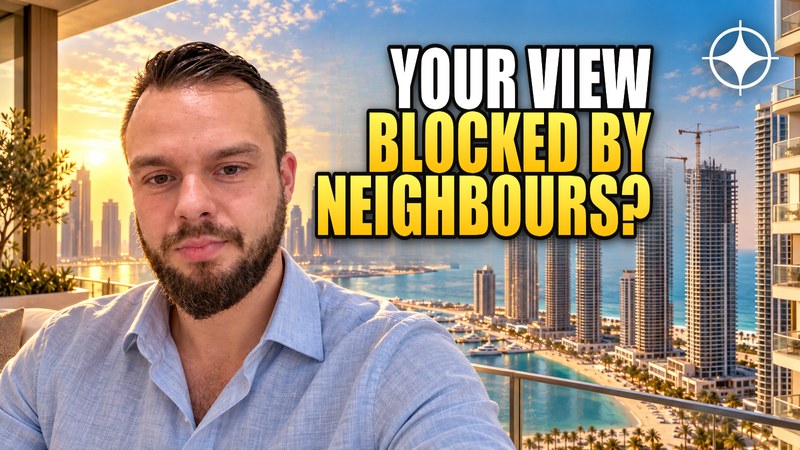
Emaar Beachfront: the sea view your own neighbours will block
A dense cluster of towers on reclaimed land between the Marina and the sea. The main risk to the view is not someone else’s plot but the next phase of the same project.

Renovating an apartment in Dubai: the permits and the realistic timeline
Converting a maid's room into an office, or moving a wall, needs sign-off from both the developer or owners' association and Dubai Municipality (or Trakhees) — plus a licensed contractor. Budget weeks for a simple change, and a few months if the project gets sent back for revisions.

Dubai apartment layouts: what studio, 1BR and 2BR+maid actually mean for a buyer
A Dubai "1BR" is a living room plus a separate bedroom — closer to a European two-room flat than a one-room unit. Formats, typical sizes in sqft, and how the choice between studio, 1BR and 2BR+maid affects rental yield and resale liquidity.

Emaar Beachfront and Dubai Harbour: 27 towers and 1.5 km of private beach
A man-made peninsula between Palm Jumeirah and Dubai Marina, and the distinction almost everyone misses: Emaar builds the head of it, other developers build the stem. What to check before buying a sea view here.

City Walk apartments: Thyme at Central Park by Meraas, from a 2023 ballot to a finished building
Thyme is a low-rise Meraas building in Central Park at City Walk with one- to four-bedroom homes, sold by ballot in May 2023 from about AED 2.1–2.3m for a one-bedroom. Handover was set for Q3 2026; portals now list it as ready and sold out, like Celadon, Viridian, Erin and Castleton.
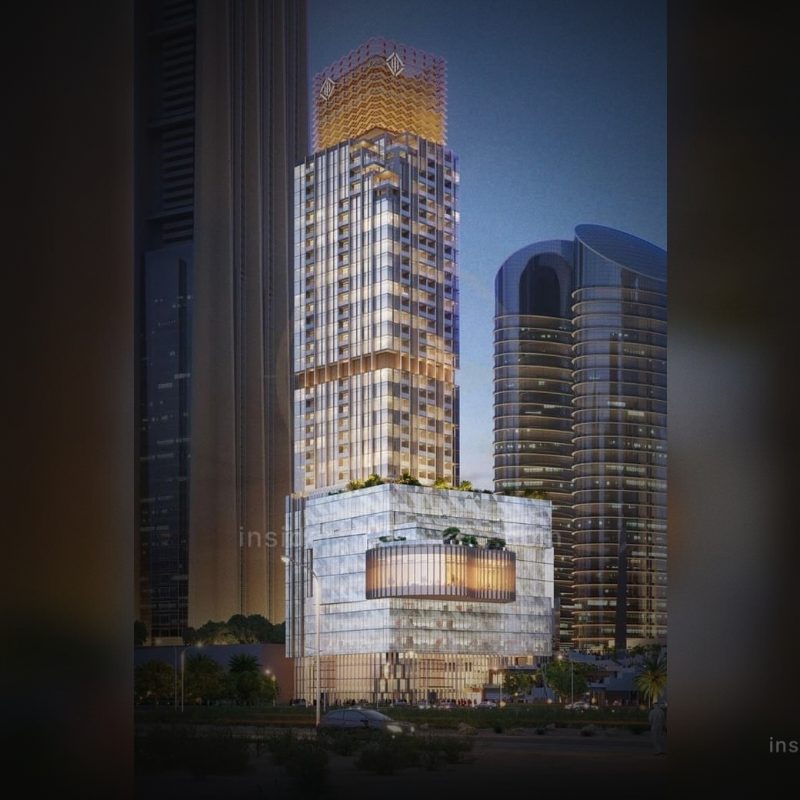
DIFC apartments: DIFC Living, the Waldorf Astoria residences and what is being built next
DIFC Living — 41 floors and 170 homes sold by the DIFC Authority itself — launched in September 2023 with handover scheduled for Q3 2026; our stock shows units at AED 3.85–5.4m. Next up: Four Seasons (Q1 2027), DIFC Heights (2029) and The Residences DIFC (Q4 2029).