
 −16%
−16% The Springs
Dubai's first mass-market townhouse community, now past its twentieth year: grown trees, settled neighbours and rental demand that does not follow fashion.
26 units in stock. 26 with a confirmed status: 26 ready, 0 under construction. 39th most expensive of 91 districts by median price.
- families with school-age children
- minimal tenant turnover
- a house near the working half of the city
Median price $1.51M AED 5,550,000
Entry price $857K AED 3,149,000 — cheapest unit
Per square foot $655 AED 2,406 / sq ft, median
Ready stock 100% 26 units discounted, up to −16%
What this area is actually like
What the community is
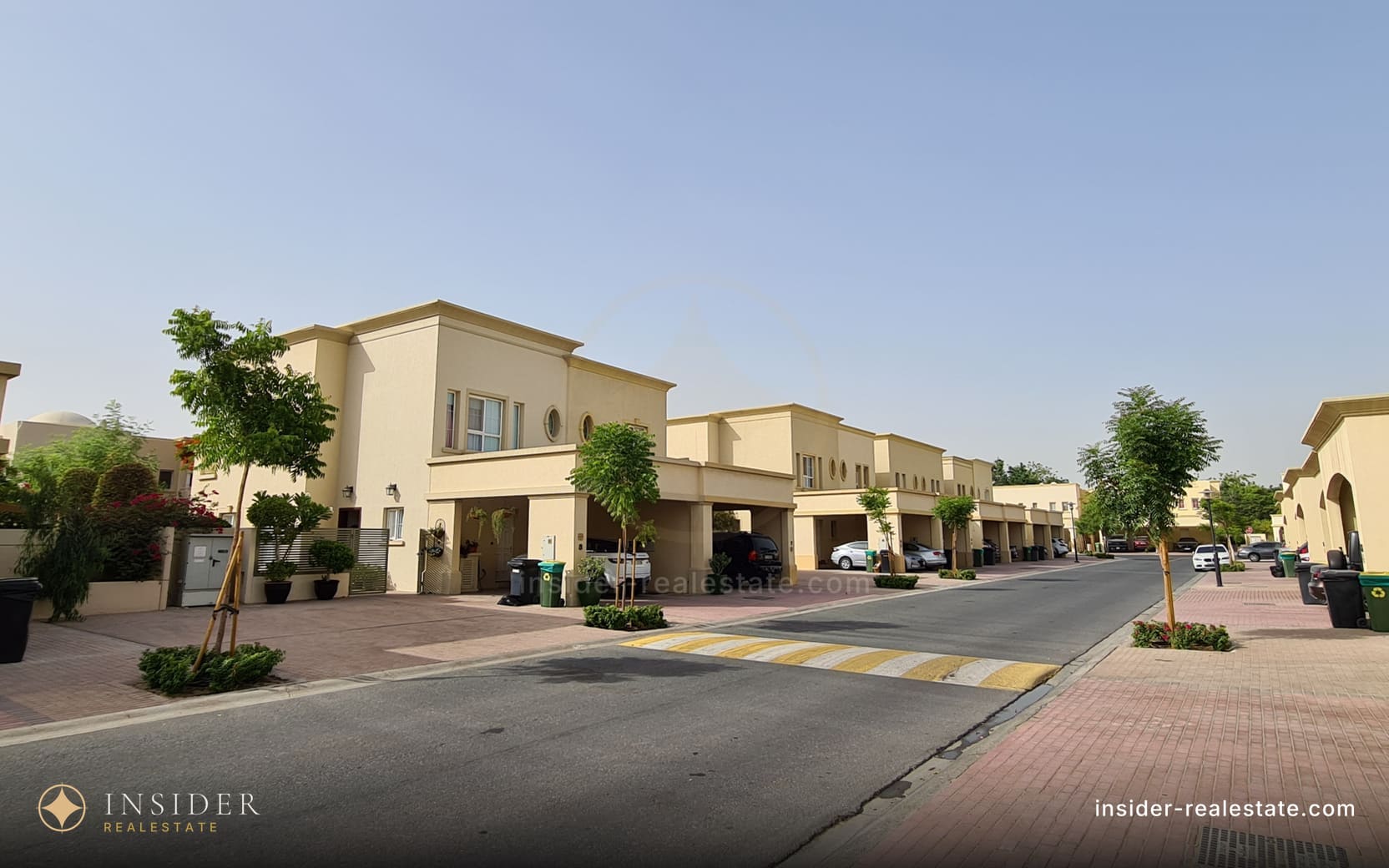
The Springs is part of Emirates Living, Emaar's first big freehold development, laid out in the early 2000s around a chain of artificial lakes. It is numbered rather than named — Springs 1 through 15 — and each cluster repeats the same handful of layouts.
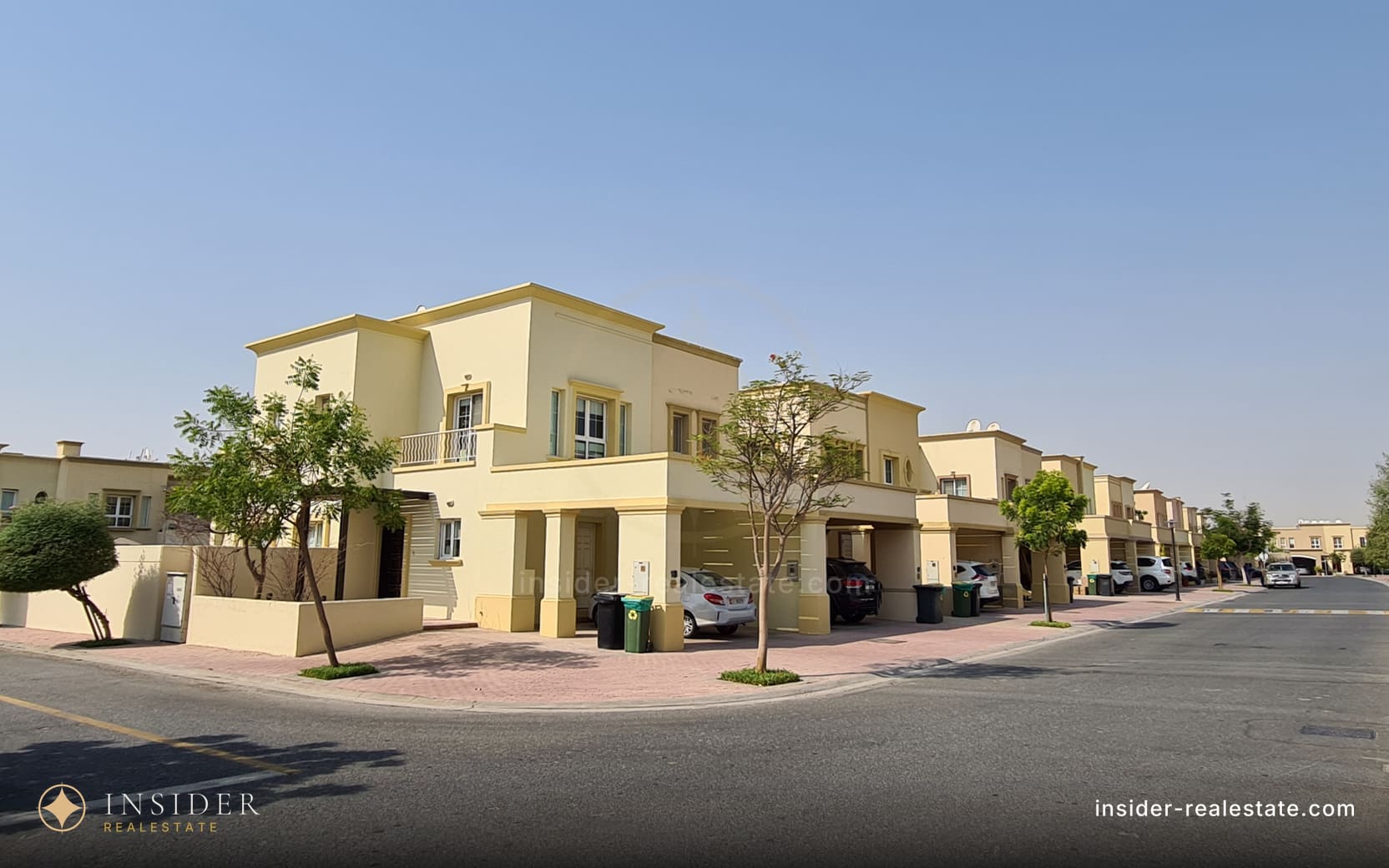
The product is two- and three-bedroom townhouses: modest by the standards of what Dubai builds now, with small private gardens and shared pools in each cluster.
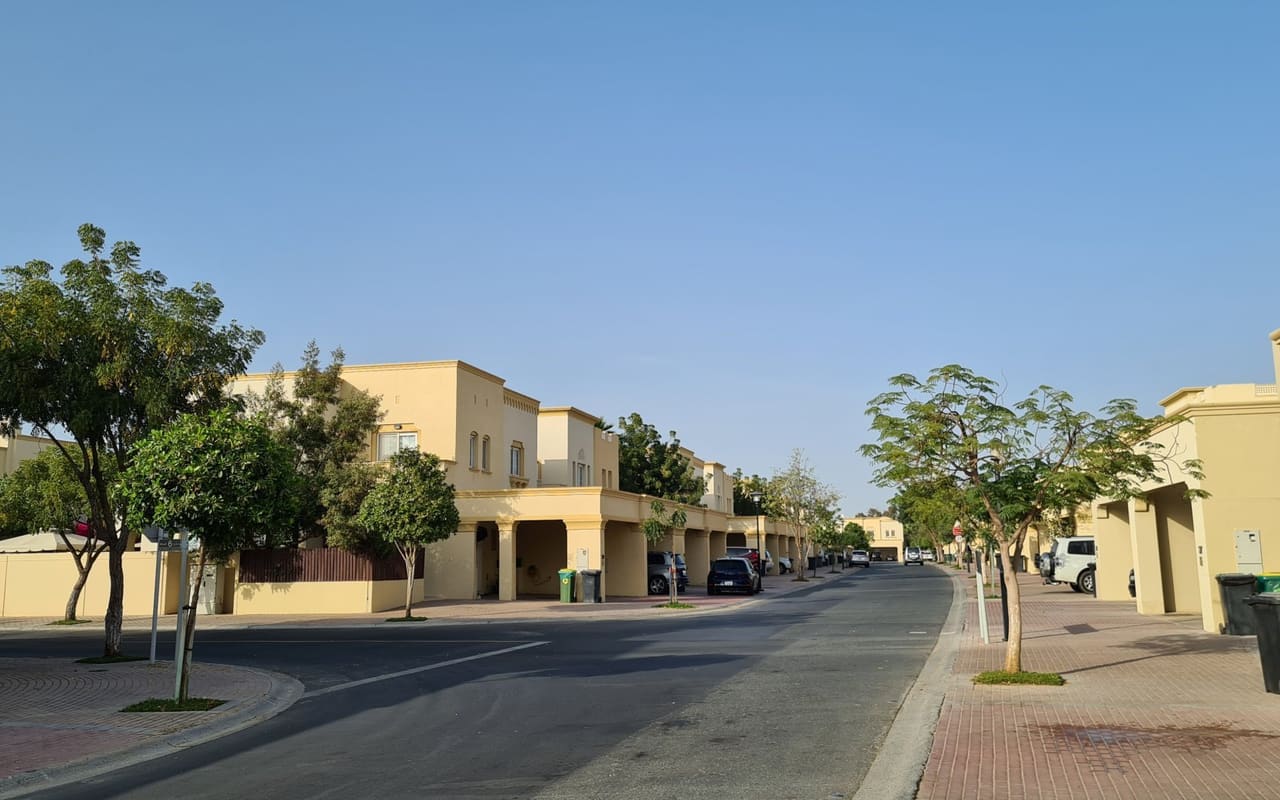
Twenty years of growth is the thing photographs do not convey. The trees are tall, the hedges are thick, and the streets have shade — which in this climate is not a decorative detail but the difference between a walkable street and an uninhabitable one.
The Springs Souk sits at the centre with a supermarket, clinics and cafés. Schools, the golf club and the Meadows and Lakes villages are immediately around it.
Why it still lets so easily
Because it solves an unglamorous problem well: a family wants a house, a garden, a school run under fifteen minutes and a commute to Media City or Marina that does not consume the evening. The Springs does all four.
Supply is fixed. Nothing new is being built here and nothing can be — the land is used. Every competing product is further out, which is a structural advantage that does not decay.
Tenants stay. Families who move in for the schools tend to renew for years, and low turnover matters more to a landlord's actual return than the headline rent does.
The result is a market that barely notices the cycles that swing the newer districts. It does not spike, and it does not empty.
What you are actually buying
A twenty-year-old house. That is not a criticism, it is the specification: original kitchens, original bathrooms and original air conditioning unless a previous owner replaced them.
The spread between a renovated unit and an untouched one is the widest variable in this community, and it is wider than the spread between clusters. Two identical layouts on the same street can be entirely different purchases.
Plot sizes are small and the layouts are dated by current standards — narrow kitchens, modest bedrooms. Buyers coming from newer townhouse communities notice immediately.
What you get in exchange is location and maturity, neither of which can be built.
The economics
This is an income asset rather than a growth bet. The upside case is steady occupancy over a long hold, not a re-rating.
Renovation is the main lever available to an owner. Bringing an original unit up to current standards moves both the achievable rent and the buyer pool at resale, and the work is well understood because hundreds of owners have done it.
Service charges are moderate compared with newer villa communities, because the shared amenity is modest: pools, landscaping, security. No marina, no golf course inside the gates.
Liquidity is reasonable by villa standards. The buyer pool is large — families and long-hold investors both want in — though a villa always takes longer to sell than a flat.
What to check before buying
Whether the house has been renovated and, if so, by whom. Air conditioning, plumbing and the roof are the expensive items, and at this age they are due.
The cluster and the position within it: backing onto a lake, a park or another row of houses are three different products at three different rents.
Three years of service-charge history, and whether the seller has arrears — they travel with the property.
And the school run. The community's tenant base is families, so the practical value of a given house is partly a function of which schools are reachable from it in the morning.
The drawbacks worth knowing
The layouts are small and dated, and no renovation changes the footprint. A family that needs genuine space will outgrow a Springs townhouse.
Twenty-year-old infrastructure means occasional community-wide works — pipes, roads, landscaping — and the associated disruption.
There is no metro and there will not be one. Every household here runs at least one car.
And the price reflects all of the above being widely known. This is an efficiently priced market with few bargains in it.
What to compare it against
The Meadows next door — larger, detached, bigger plots, materially more expensive.
The Lakes — the same era, quieter, and with a higher share of houses that have been fully rebuilt.
Town Square and Mudon — newer townhouses with modern layouts, further out and without the mature landscaping.
And a point about horizon: the Springs is not a two-year asset. Its strength is predictability, and predictability only shows up over distance. Owners who have held here since the mid-2000s have been through two full market cycles and let the house throughout both.
More on The Springs
Written breakdowns of subjects the English channel has not filmed.
- The Springs: a twenty-year-old townhouse that never stops letting
Dubai's first mass-market townhouse community, laid out in the early 2000s around a chain of lakes. Fixed supply, grown trees and a tenant base that renews — and the one variable wider than the difference between clusters.
The market, per the Land Department
Residential price index 167.33 Q4 2025
Quarter on quarter +3.32% QoQ
Year on year +8.9% YoY
Full year 2025 +9.81% index 162.51
These are official DLD readings for the entire emirate; a district split, The Springs included, is not made public. Use them as context for the prices on this page — registered sales for the building you pick I pull on request. Source: Dubai Land Department, read 15/08/2026.
The latest read: July 2026
The Land Department index above is quarterly and emirate-wide. The monthly price index splits villas from apartments — and in 2026 that matters: a single blended figure hides the fact that the two markets have pulled apart.
Villas and townhouses 292.5 flat YoY
Apartments 168.7 −4.2% YoY
All residential 219.2 −0.3% MoM
Price per sqft 2,039 villas · apartments 1,397 AED
Off-plan took 72.8% of the month's deals and ready homes 27.2%. Ready volume was up 11.4% on the month, and off-plan alone fell both month on month and year on year (−45.3%). So negotiation is realistic on apartments and off-plan, much less so on completed villas in established communities. Index base is January 2021 = 100 — a villa reading of 292.5 means growth of 192.5% from that mark, not a premium over a 2021 peak. Monthly ValuStrat market review for July 2026, checked 24/08/2026.
Other districts
All districts →The Springs in the news

The Springs: what comes due in a villa community at twenty years
One of Dubai’s first villa communities, traded entirely second-hand. The list of works is predictable — and no service charge is saving up for it.

The Springs lakes and canals: who maintains the water in a Dubai villa community, and who pays
Houses on the water sell for more, and the water needs constant care. Who is responsible for it and what it costs is a question for the community charge.

The Meadows: how it differs from The Springs next door
Two villa communities of the same generation across the road from each other. The price gap is persistent, and it is a gap for concrete reasons.
Looking at The Springs specifically?
Send me the building or the unit and I will pull the registered transaction history, the current service charge and what comparable units actually let for — before you make an offer, not after.
Ask on WhatsAppAsk a question
Telegram is the fastest way — I answer personally.
Message on Telegram