Emaar Beachfront and Dubai Harbour: 27 towers and 1.5 km of private beach
A man-made peninsula between Palm Jumeirah and Dubai Marina, and the distinction almost everyone misses: Emaar builds the head of it, other developers build the stem. What to check before buying a sea view here.
Dubai Harbour is a man-made peninsula pushed into the sea between Palm Jumeirah and Dubai Marina. Its shape is roughly a letter T: a broad head facing the Palm, a narrow stem connecting it to the mainland. Emaar develops the head, and that part is called Emaar Beachfront. The stem is shared among other developers. These are two different stories that get collapsed into one word — "Harbour" — in conversation and in listings.
Emaar Beachfront by the master plan
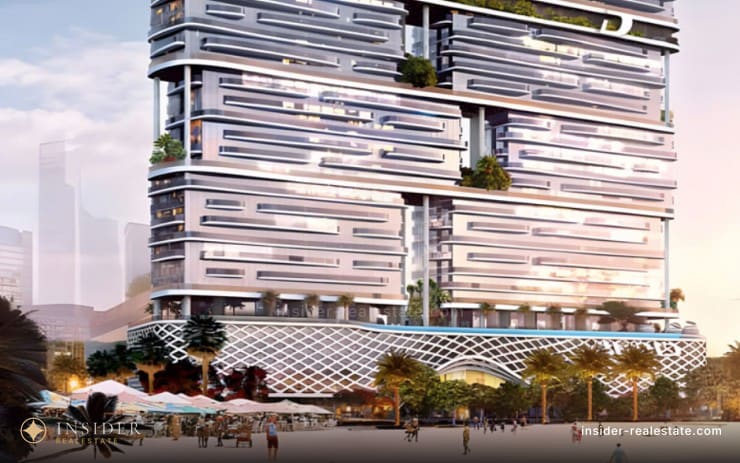
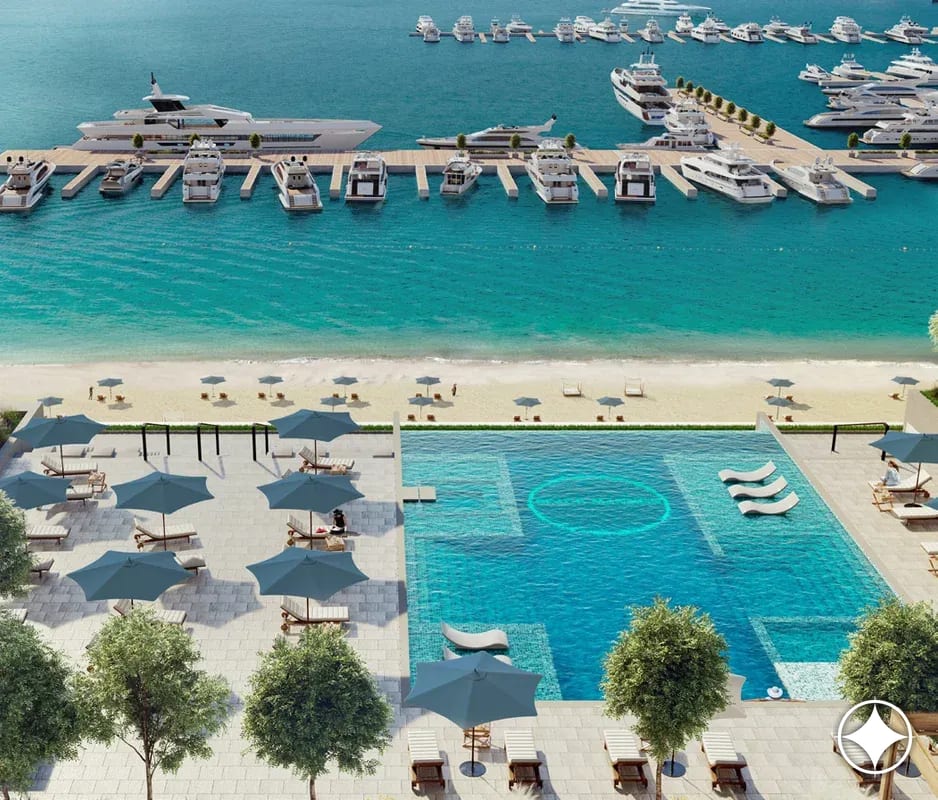
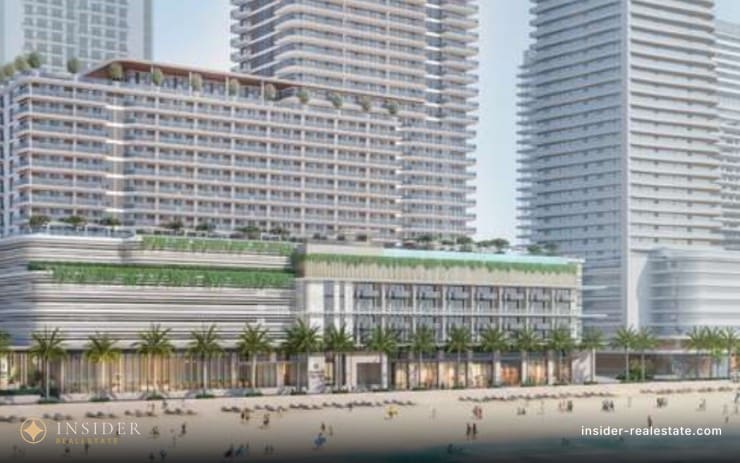
A gated community on its own peninsula inside Dubai Harbour: 27 residential towers, more than 10 000 apartments, penthouses and waterfront homes, 1.5 km of private shoreline and a retail gallery of roughly 13 000 square metres. Each tower has its own allocated stretch of beach — a planning fact rather than a marketing line, because beach access is tied to a specific building.
- 27 towers in the master plan, including a hotel.
- 10 000+ homes at completion.
- 1.5 km of private shoreline.
- ~13 000 m² of retail inside the community.
What surrounds it
Dubai Harbour is not only housing. The peninsula carries a large yacht marina including mega-yacht berthing, a cruise terminal and a promenade. On one side sits Palm Jumeirah, on the other Dubai Marina and JBR. Most apartments look at the Palm, at the Marina skyline, or straight out to sea past the observation wheel on neighbouring Bluewaters.
Talk to a licensed broker: 📲 +971 50 120 32 64 on WhatsApp, @dubai_oleg on Telegram
The stem: other developers
Emaar does not build the narrow part of the peninsula. There you find three Sobha Seahaven towers, Damac Bay by Cavalli, W Residences by Arada and the low-rise Dubai Harbour Residences by Shamal Holding. Same postal address, entirely different products in terms of management, service and price per foot.
The practical point is blunt: "an apartment in Dubai Harbour" without naming the project tells you nothing. Commissions, layouts, handover dates, beach access and service standards differ across these schemes.
What to check before buying
- The sight line. The peninsula is being built densely and not simultaneously. A view shown from a floor today can be blocked by a neighbouring tower in two years. Read the master plan for the plots between your building and the water, not the construction site as it stands.
- Which beach is yours. Each tower has its own stretch. Establish which one belongs to your building and how residents reach it.
- Service charge. Higher on the waterfront than inland: maintaining a beach, pools and plant next to salt water costs more. It is a permanent cost and is budgeted before handover, not after.
- Aspect and floor. In a tower on a narrow peninsula, the difference between west and east is the difference between sunset over water and a neighbouring facade. It is always in the price per foot.
How the district reads in market terms
Emaar Beachfront sits among Dubai's most expensive addresses by price per square foot, in the same band as Palm Jumeirah and Bluewaters. The reason is not architecture but scarcity: the city has a finite coastline and the front-row plots are nearly gone. That is why waterfront schemes behave differently from the mass market in a cooling phase — they lose liquidity, meaning fewer transactions, rather than price per foot.
Video on this topic
The same subject on the English channel — each clip has a written version of its own.
 17:09Bluewaters Island: ready apartments where wealthy expats actually live27 September 2023
 11:36Ready apartments in Dubai Creek Harbour: Creek Horizon, Harbour Views, The Cove24 September 2023
 6:43Retail in Maritime City: Danube Oceanz compared with Nautica by Select Group25 September 2023
 10:13Waterfront property in Dubai: Mina Rashid — Clearpoint, Sunridge, Seascape21 September 2023
 12:00XXII Carat on Palm Jumeirah: 22 Mediterranean villas compared with Raffles and Zabeel Saray20 September 2023

In the news
Other write-ups on the site about the same thing.
Dubai Marina: five of the ten tallest residential buildings in the world
A district designed from nothing on a Vancouver waterfront model, built between 2003 and 2008. The numbers behind it, and what a fully man-made location tells you about how value is created in Dubai.

Bluewaters Island: 750 homes, an observation wheel, and 33 months without it
A Meraas island opposite JBR that spent almost three years with its anchor attraction switched off. What that did to retail, to housing and to short lets — a rare clean experiment in what an anchor is actually worth.
Water or a metro station: the two kinds of Dubai district, and what each one lets to
Most Dubai districts sell one of two things to a tenant — a view of water or a way to get to work without a car. They attract different people, carry different running costs, and fail in different ways. Which one you are buying is worth deciding before the viewing.
Palm Jebel Ali: 5 200 hectares and 90 kilometres of coastline
Dubai’s second palm archipelago, restarted after a long pause. Its dimensions are worth stating in full, because they are what explains its effect on the market — including on the mainland behind it.
Dubai Islands: the last waterfront land, from about $5 200 a square metre
A chain of reclaimed islands under a single government master plan. Almost no coastal land with direct beach access is left inside the emirate — and one or two new projects launch here every month. The opportunity and the risk are the same fact.
Dubai apartment view premium: how much a sea view actually adds to price
Market commentary puts the premium for a direct sea or marina view at roughly 15–60% over an equivalent unit without one, depending on the building and floor. When that premium pays off in yield, when it only pays off on resale, and how to judge a view from a floor plan before the tower exists.
Related services
Below market in Emaar Beachfront right now
From the daily off-market feed. Availability and price are confirmed on request.
All below-market listings →