
Dubai’s digital twin: 195 000 buildings in a working 3D model of the city
Sheikh Hamdan has unveiled the Digital Twin Platform — a 3D model of Dubai holding 195 000 buildings and 330 000 infrastructure assets, built for urban planning, asset management and emergency simulation. Why planning quality is part of the price per square foot.
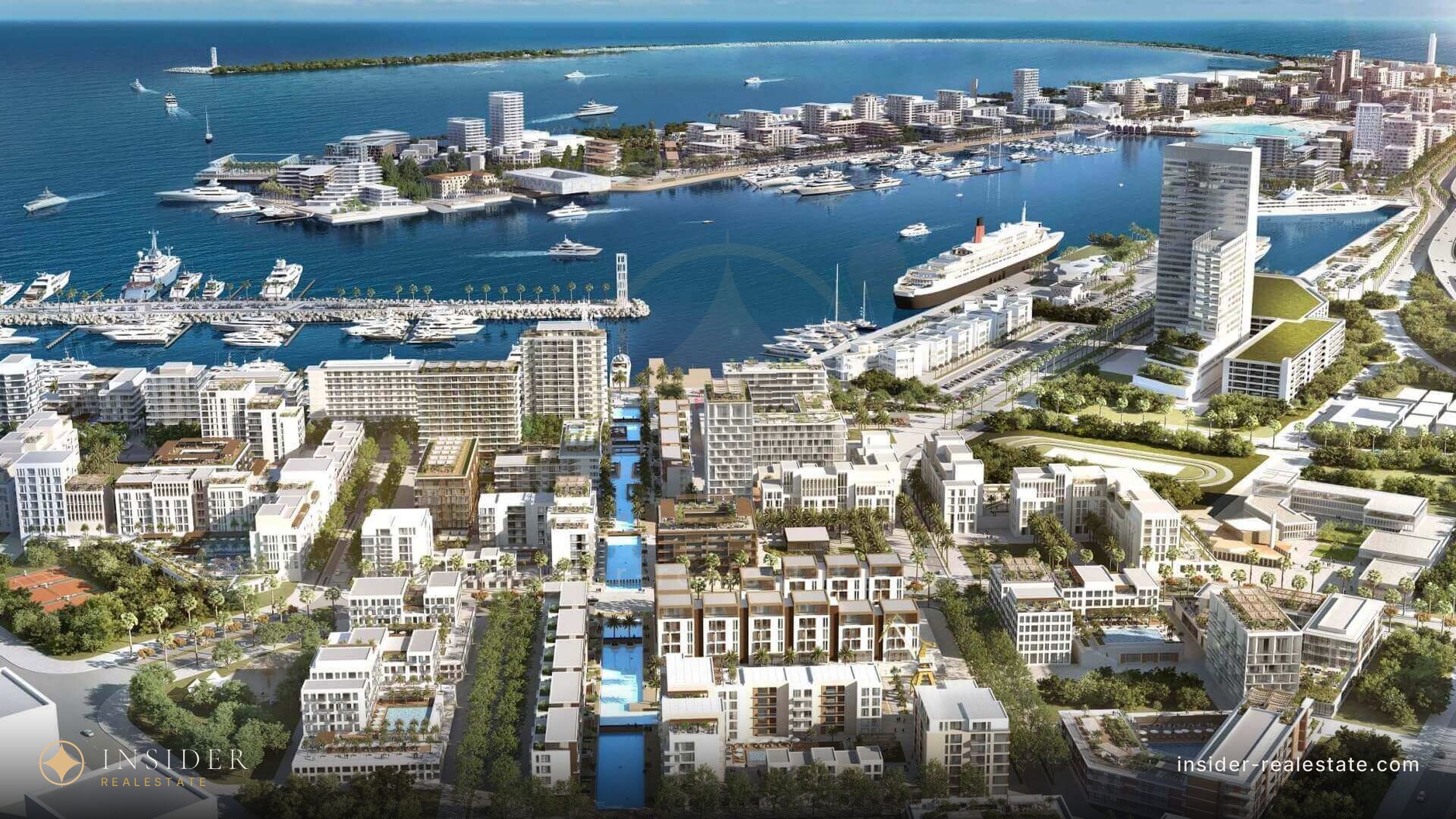
Dubai's Crown Prince Sheikh Hamdan has unveiled the Digital Twin Platform — a three-dimensional digital model of the entire city. Inside: 195 000 buildings and 330 000 infrastructure assets — roads, networks, engineering structures. The declared applications: urban planning, city asset management, emergency forecasting and evacuation modelling. The project sits inside the D33 economic agenda, in its data-economy and AI chapter.
What a city digital twin is
Not a map and not a 3D visualisation, but a working model: every building and infrastructure asset has a digital copy with its real characteristics. On such a model you can play out scenarios before spending money in the physical world: how a new tower loads a district's roads and utilities, where water goes in a storm beyond the design case, how traffic behaves when an artery closes.
- 195 000 buildings — effectively all of built Dubai.
- 330 000 infrastructure assets — the level of detail at which modelling becomes an engineering tool rather than a presentation.
- Part of D33 — the same agenda under which Dubai targets a top-4 spot among global financial centres by 2033.
Why the property market should care
The buyer's main risk in a fast-growing city is infrastructure lag: a district where housing outran the roads, schools and utilities lives in congestion for years, and that sits squarely in the price. A digital twin is the tool that lets the city see such overload on the model before permits are issued, not after residents move in.
Talk to a licensed broker: 📲 +971 50 120 32 64 on WhatsApp, @dubai_oleg on Telegram
Dubai already plans more centrally than most megacities — the 2040 master plan sets the frame for the decade. The twin adds real-time feedback to that frame. For an investor it means the gradual narrowing of the nastiest risk class: "bought into a district the city couldn't carry".
Practical takeaways
- Planning quality is part of the price per square foot. Cities that plan on models produce problem districts less often; that is an argument for the jurisdiction as a whole.
- Emergency modelling is also insurance. The more precisely a city models risk, the more accurate insurance tariffs and building requirements — an owner pays for real risk, not for uncertainty.
- Watch for public-facing products. Parts of such platforms tend to open to the market over time — and then a private buyer, too, will be able to check a district's load before purchasing.
Based on Dubai government announcements on the Digital Twin Platform.
Video on this topic
The same subject on the English channel — each clip has a written version of its own.


In the news
Other write-ups on the site about the same thing.
Dubai's Blue Line Metro: 14 Stations From the Airport to Academic City
Dubai's third metro line will link the international airport, Al Jaddaf and Academic City, with a bridge over the creek connecting Dubai Creek Harbour to the network. A new station typically shows up in nearby property prices.
Dubai Auto Market: DP World's 22-million-sq-ft car trading hub, and what it means for warehouses and housing
DP World was mandated in 2024 to expand Dubai's car market eightfold; in November 2025 the project was unveiled at 22 million sq ft — 1 500 showrooms, capacity for 800 000 vehicles a year, an auction house and a hotel. Current turnover of AED 6.8bn is expected to double.
Air taxi in Dubai: airport — Downtown — Marina — Palm
Four passengers and a pilot, electric, between the four locations with the heaviest ground traffic and the most expensive property. What it does to prices, and what to treat with caution.

The Dubai 2040 plan is being revised: housing may replace DXB airport
The master plan is a living document. One revision concerns the fate of the existing international airport — and the districts under its flight paths.
Dubai Creek Tower has been redesigned: what it means for Creek Harbour
The tower the whole master plan was built around went through a design competition and a new concept. Why a landmark matters to a district’s prices, and at what point in construction the market starts pricing it in.
Expo City Dubai: what happened to the world exposition site
Exposition sites usually decay after closing — it is nearly a rule. Dubai converted its into a permanent district, and the reason it is growing is the opposite of the usual Dubai story: the infrastructure came first.