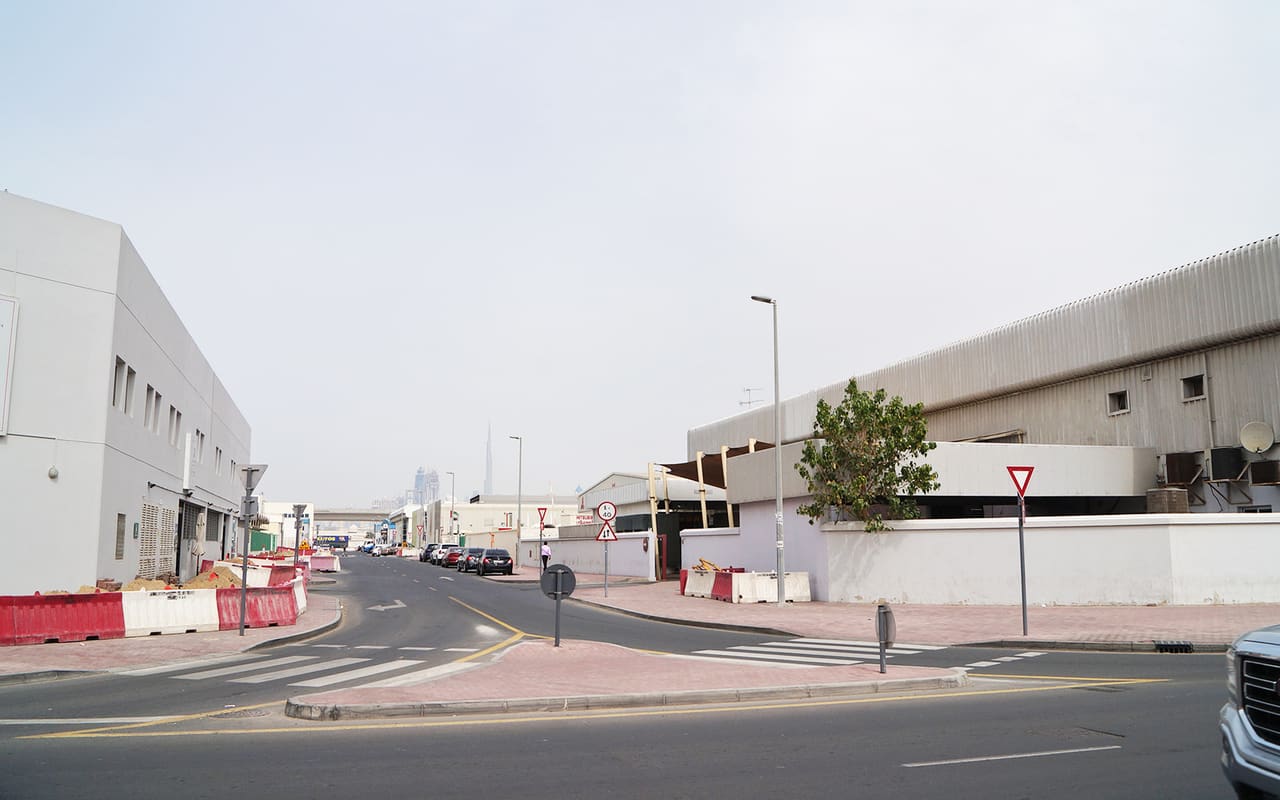
Dubai’s car-free Superblock plan: Al Karama, Al Fahidi, Abu Hail and Al Quoz
In February 2025 Dubai announced Superblock: car-free neighbourhoods with pedestrian streets and more greenery. The first areas are Al Karama, Al Fahidi, Abu Hail and Al Quoz Creative Zone. There is still no public timetable. What it means for rental housing in old Dubai.
Dubai was built around the car: wide highways, a car park under every building, and summer heat in which nobody walks. The Superblock initiative is an attempt to reverse that in a few neighbourhoods. Crown Prince Sheikh Hamdan announced it at an Executive Council meeting in early February 2025, saying the aim was to create car-free, pedestrian-friendly neighbourhoods. Eighteen months later, here is what is known and what to expect.
What a superblock is
The idea comes from Barcelona. Several blocks are grouped into one “superblock”, through traffic is pushed to the perimeter, and the inner streets are handed to pedestrians, cyclists, trees and shared public space. Residents keep their cars but park them outside. Descriptions of the Dubai project mention park-and-ride sites, off-site parking and a network of electric shuttles.
The first four areas are:
Talk to a licensed broker: 📲 +971 50 120 32 64 on WhatsApp, @dubai_oleg on Telegram
- Al Karama, a dense residential and shopping district known for cheap restaurants and markets;
- Al Fahidi, the historic quarter of Bur Dubai with its museums and galleries;
- Abu Hail, an older residential area of Deira;
- Al Quoz Creative Zone, the galleries and workshops of Al Quoz.
The project is tied to the Dubai 2040 Urban Master Plan and the D33 social agenda. As of September 2026 there is no public timetable, budget or street-level design. It is a framework decision, not a construction programme.
How it fits other programmes
Superblock is part of a broader push towards a walkable Dubai. The RTA’s soft-mobility programme has already added cycle lanes, crossings and shade in Al Karama, Al Mankhool, Al Barsha and other older districts, and the Dubai Walk strategy promises thousands of kilometres of pedestrian routes by 2040, which we cover in Dubai Walk: 6,000 km of routes and 110 bridges. The 20-minute-city concept, with daily needs within 20 minutes on foot or by bike, is being piloted in Al Barsha 2.
What it means for property
All four areas are old Dubai, with very little new-build stock for foreign buyers and little freehold. There is not much to buy “for the Superblock”. The effect will be indirect:
- Rentals in the old city. Al Karama and Bur Dubai are the mass rental market we describe in our Deira and Bur Dubai profile. Greener, quieter streets could lift demand, but parking by the door will become more expensive or further away.
- Demand for walkable places. If the pilots succeed, the principle will move into new masterplans. Developers already sell “car-free” podiums and courtyards; check what sits behind the brochure wording.
- Al Quoz. The only one of the four where land use is visibly changing, as we describe in our Al Quoz profile.
In practical terms: until street plans are approved, do not pay extra for a “future pedestrian quarter”, and do not worry that the road outside will close tomorrow. Schemes like this are phased in, with consultation.
If you are interested in the fastest-changing district on this list, start with our Al Quoz guide: what is being built, what foreign buyers can own and how Superblock could shape it.
Video on this topic
The same subject on the English channel — each clip has a written version of its own.
 ShortDubai 2040: the masterplan that tells you where demand goes next28 August 2025
 ShortFour cities, four bets on the future: Dubai, New York, London, Tokyo4 September 2025
 ShortThe New Silk Road: what a trade corridor does to the cities on it3 September 2025
 ShortThe Jebel Ali coast: Dubai's last big stretch of undeveloped shoreline2 September 2025
 ShortAir taxis in Dubai: what eVTOL would change, and what it would not1 September 2025
 ShortDubai is learning to walk: the 20-minute city and what it does to rent27 August 2025
In the news
Other write-ups on the site about the same thing.
Dubai Healthcare City breaks ground on an AED 1.3bn phase one expansion
Dubai Healthcare City has started an AED 1.3bn ($354m) phase one expansion: the 13,000 m² PIXEL office building and the 5,800 m² IBN SINA+ medical complex. Ground was broken on 29 April 2026, with completion planned for 2027. What it means for homes in Al Jaddaf and Healthcare City Phase 2.
Therme Dubai in Zabeel Park: a 100-metre, AED 2bn wellness resort due in 2028
Therme Dubai, a 100 m tall wellness resort of about 500,000 sq ft, is planned for Zabeel Park at a cost of AED 2bn (about $545m). It expects 1.7 million visitors a year and is due to open in 2028. What it means for Zabeel, Downtown and the neighbouring districts.
Dubai Islands to Bur Dubai bridge: 1.4 km, eight lanes and a late-2026 opening
A 1,425 m bridge across Dubai Creek will link Dubai Islands directly to Bur Dubai: four lanes each way, 16,000 vehicles an hour, 18.5 m above the water. The AED 786m contract targets completion by the end of 2026. What the bridge changes for the islands and the old city.
Dubai’s beaches to grow fivefold: from 21 to 105 kilometres by 2040
One of the most-quoted lines in the 2040 master plan. Where the extra 84 kilometres come from — and why more coastline is not unambiguously good news for a waterfront owner.

The Dubai 2040 plan is being revised: housing may replace DXB airport
The master plan is a living document. One revision concerns the fate of the existing international airport — and the districts under its flight paths.

Deira / Bur Dubai: the oldest rental market in the city
The historic centre on both sides of the creek, where a very large share of Dubai actually lives. What a foreign buyer can own here, and who rents.
Below market in Al Quoz right now
From the daily off-market feed. Availability and price are confirmed on request.
All below-market listings →