
Dubai Walk: 6 000 km of pedestrian routes and 110 bridges by 2040
RTA has begun phase one of Dubai Walk: 12 km of routes, 5 km of cycle lanes and 11 transport interchange points. By 2040 — 6 000 km of pedestrian infrastructure across 160 districts and 110 bridges, lifting walking’s share of trips from 16% to 25%.
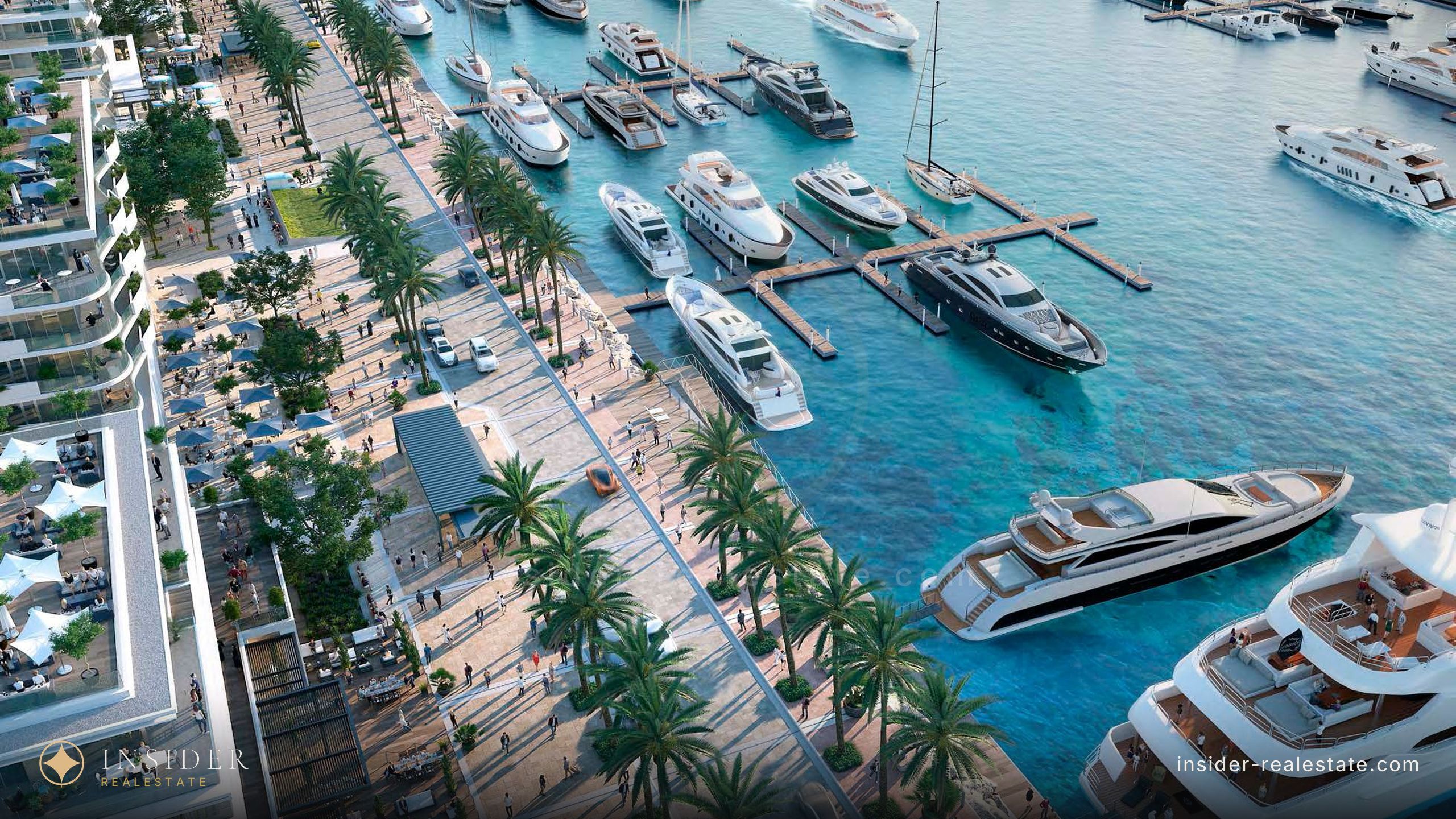
Dubai's Roads and Transport Authority (RTA) has launched phase one of Dubai Walk — a systematic rebuild of the city around the pedestrian. The first tranche is modest in numbers, but the programme as a whole reframes the task: a city designed around the car is turning towards the person on foot.
Phase one
- 12 km of pedestrian routes and 5 km of cycle lanes.
- 10 sites to be rebuilt as public spaces.
- 11 locations connected to transport — metro, buses and marine routes.
Where it leads by 2040
- 6 000 km of pedestrian infrastructure across 160 districts.
- 110 pedestrian bridges and crossings.
- Walking and personal-mobility trips from 16% in 2025 to 25% by 2040.
Why walkability is a money question
In cities where pedestrian infrastructure arrived after the buildings, the effect has been measured repeatedly: housing within walking distance of a connected pedestrian network prices above comparable housing without it. The reason is not romance but arithmetic — walkability adds to an apartment everything you can reach on foot: a café, a school, a metro station, a promenade.
For Dubai this matters more than most, because walkability has historically been the weak point. Distances, eight-lane arterials and eight months of heat made a car mandatory. Every bridge and every shaded route chips away at that — moving a district from "you need a car" towards "you can manage without one".
Talk to a licensed broker: 📲 +971 50 120 32 64 on WhatsApp, @dubai_oleg on Telegram
What a buyer should watch
- Transport interchange beats route length. Eleven connection points to metro and buses in phase one is about whether you can walk to a station, not about where it is pleasant to stroll.
- The 160 districts benefit unevenly. The biggest gains go to places where today you can walk nowhere — that is where new connectivity is worth most.
- It is a long project with staged reporting. Like the mangrove programme, Dubai Walk publishes milestones — check the promises against those.
Based on data from Dubai's Roads and Transport Authority (RTA).
Video on this topic
The same subject on the English channel — each clip has a written version of its own.
 0:59
0:59 Dubai's Quality of Life Strategy 2033: The Walkable Districts
Two kilometres of air-conditioned, glazed elevated walkways around Emirates Towers, plus a new waterfront district in Deira — this is what Dubai's Quality of Life Strategy 2033 is actually building.
WatchIn the news
Other write-ups on the site about the same thing.
Air taxi in Dubai: airport — Downtown — Marina — Palm
Four passengers and a pilot, electric, between the four locations with the heaviest ground traffic and the most expensive property. What it does to prices, and what to treat with caution.
Dubai builds the VDX vertiport next to DXB as air taxis approach commercial launch
A four-level vertiport for electric air taxis is rising next to Dubai International Airport, with capacity for up to 170 000 passengers a year — billed as the first facility of its class in the world. What air taxis mean for the geography of property prices.
Dubai will close DXB by 2035 and move all traffic to Al Maktoum
DXB — the world’s busiest international airport with 95.2m passengers in 2025 — is to close by 2035. Al Maktoum, a $35bn project designed for 260m passengers, replaces it. The vacated land will be folded into the city.
Dubai Airport Express Line via JVC and the Abu Dhabi high-speed train: what changes for property
The RTA is planning a 55 km, five-station Airport Express Line from DXB via Al Jaddaf and Al Khail Road to JVC and Al Maktoum, with flight check-in at the stations. Etihad Rail is separately building a 350 km/h Abu Dhabi–Dubai line with a 30-minute journey. What it means for JVC and Al Jaddaf.
Flying taxis hit UAE skies in 2026: DXB to the Palm in 12 minutes, Abu Dhabi to Dubai in under half an hour
Dubai and Abu Dhabi air taxis start commercial flights in 2026: the first vertiport at DXB is finished and the capital has priced its routes. Where the vertiports are, flight times, what an Abu Dhabi to Dubai air taxi will cost and what it means for property.
Dubai Loop: Elon Musk’s tunnel between DIFC and Dubai Mall — what is really being built
The Boring Company’s Dubai Loop: a 6.4 km pilot with 4 stations between DIFC and Dubai Mall for about $154m, a full 22.5 km, 19-station network for about $545m. The RTA contract was signed in February 2026 and tunnelling is due in the second half of the year. What it means for buyers downtown.