
Dubai’s beaches to grow fivefold: from 21 to 105 kilometres by 2040
One of the most-quoted lines in the 2040 master plan. Where the extra 84 kilometres come from — and why more coastline is not unambiguously good news for a waterfront owner.
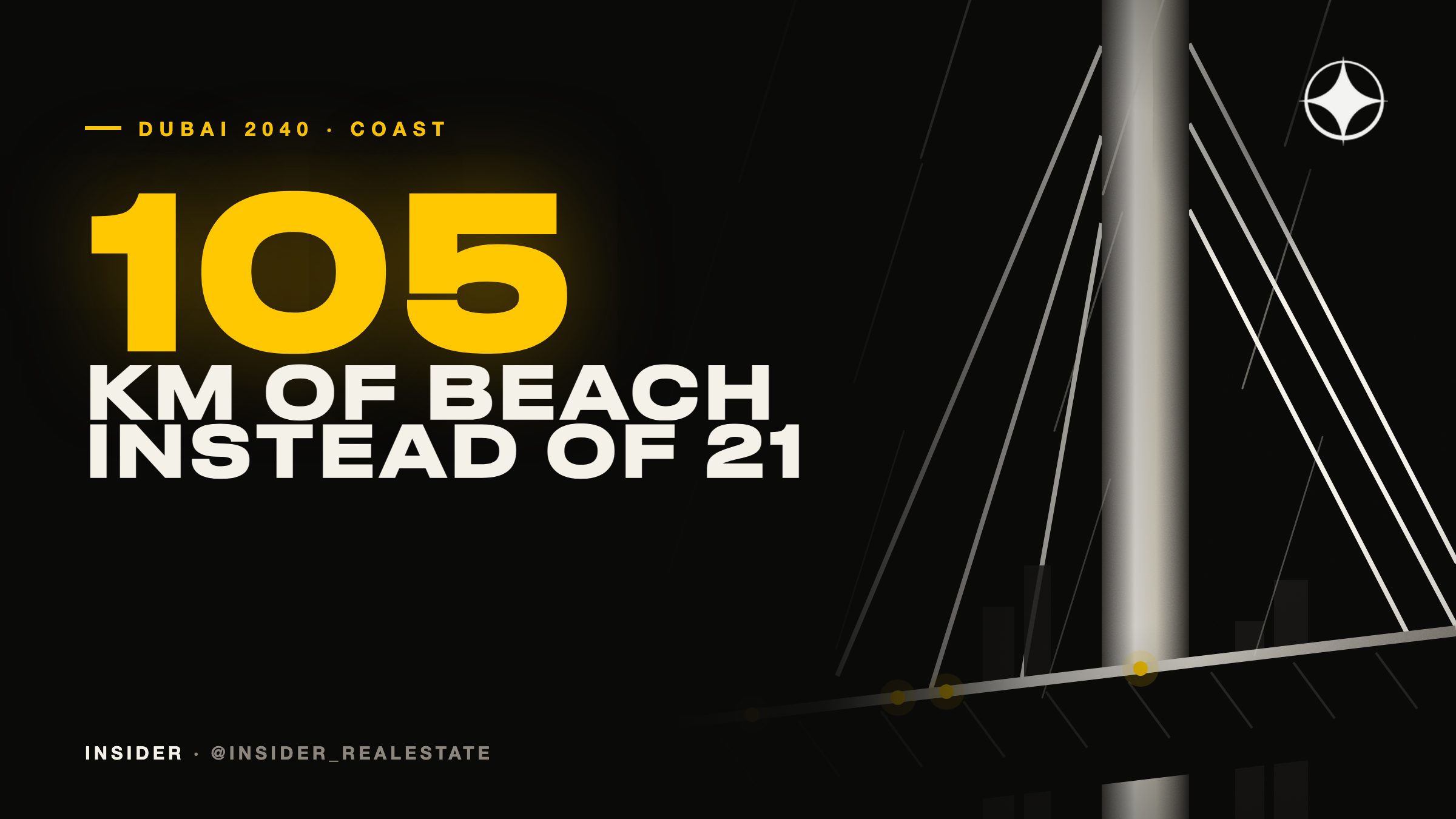
One of the most-quoted items in Dubai's 2040 master plan is a fivefold increase in the length of public beaches. Here is what the figure is made of.
The arithmetic
- Today: about 21 km of coastline with public beaches, concentrated mainly on Jumeirah.
- By 2040: 105 km — an increase of 84 kilometres.
Where the length comes from
Palm Jebel Ali supplies more than half of the increase, on the order of 54 kilometres. Dubai's second palm has been officially restarted and is being built out in phases. The concept here is stated as different from Palm Jumeirah's: mangroves are planted along part of the shoreline for erosion protection and marine habitat, with cycle and pedestrian paths, water-sports facilities and recreation zones. An ecological approach rather than a purely resort one.
Al Mamzar is the programme's second large territory, where construction and residential sales are already under way.
Talk to a licensed broker: 📲 +971 50 120 32 64 on WhatsApp, @dubai_oleg on Telegram
What it means for the market
- Coastal housing becomes less scarce. The premium for proximity to water in Dubai is high precisely because there is little coast. An eighty-kilometre increase gradually erodes that logic — not cancelling it, but taking the edge off.
- A public beach nearby is a plus and a minus at once. It raises a district's appeal to live in and simultaneously brings traffic, parking pressure and noise. For a quiet villa that is not always an improvement.
- The horizon is 2040. Years separate a line in a plan from a built beach. Buying for a future shoreline is only sensible where the date is confirmed by contract.
Video on this topic
The same subject on the English channel — each clip has a written version of its own.
 Short0:59Dubai's Quality of Life Strategy 2033: The Walkable Districts14 October 2026
 Short0:59Hatta: Dubai's $1.8 Billion Bet on Mountain Tourism21 October 2026
 Short0:58Dubai Air Taxis: Joby, Archer and the Four Planned Vertiports18 October 2026
 Short1:01Etihad Rail and Dubai 2040: Building an Alternative to the Red Sea Route18 October 2026
 Short0:40Therme Dubai: Inside the $545M Wellness Resort Next to Zabeel Park17 October 2026
 Short0:47Dubai Solar Park: The $13.7 Billion Plan Behind 5,000 Megawatts16 October 2026
In the news
Other write-ups on the site about the same thing.
Dubai’s car-free Superblock plan: Al Karama, Al Fahidi, Abu Hail and Al Quoz
In February 2025 Dubai announced Superblock: car-free neighbourhoods with pedestrian streets and more greenery. The first areas are Al Karama, Al Fahidi, Abu Hail and Al Quoz Creative Zone. There is still no public timetable. What it means for rental housing in old Dubai.
Therme Dubai in Zabeel Park: a 100-metre, AED 2bn wellness resort due in 2028
Therme Dubai, a 100 m tall wellness resort of about 500 000 sq ft, is planned for Zabeel Park at a cost of AED 2bn (about $545m). It expects 1.7 million visitors a year and is due to open in 2028. What it means for Zabeel, Downtown and the neighbouring districts.

The Dubai 2040 plan is being revised: housing may replace DXB airport
The master plan is a living document. One revision concerns the fate of the existing international airport — and the districts under its flight paths.
Al Mamzar floating bridge and Jebel Ali Beach: what Dubai has actually built on its coastline by 2026
Khor Al Mamzar Beach reopened in May 2026 after a AED 500m upgrade: the region's first floating pedestrian bridge, a 3.6km swimming line, a 300-metre night beach and 5.5km of trails. The Al Mamzar corniche is still finishing, while the 6.6km Jebel Ali Beach is being delivered in phases.
Megaprojects reshaping Dubai and the UAE: Al Maktoum airport, Etihad Rail, Palm Jebel Ali and five more
Eight UAE megaprojects and what each means for property: Al Maktoum airport at 260m passengers, the 900 km Etihad Rail, Palm Jebel Ali with 90 km of coast, the Metro Blue Line, Dubai Islands, the $5.7bn Wynn resort, Saadiyat’s museums and Yas Island.
UAE Mangroves: Halfway to 100 Million Trees
The UAE has planted 51% of its target 100 million mangrove trees by 2030. The program protects the coastline from erosion — and it's the one environmental initiative that directly affects owners of waterfront property.