
 −32%
−32% Dubailand
Not one district but a vast planned region covering much of inland Dubai — a name that means very little without a sub-community attached.
113 units in stock. 98 with a confirmed status: 30 ready, 68 under construction. 53rd most expensive of 91 districts by median price.
- yield over prestige
- affordable family space
- a wide choice of communities
Median price $1.23M AED 4,500,000
Entry price $136K AED 500,000 — cheapest unit
Per square foot $400 AED 1,469 / sq ft, median
Ready stock 31% 79 units discounted, up to −32%
What this area is actually like
What Dubailand actually is
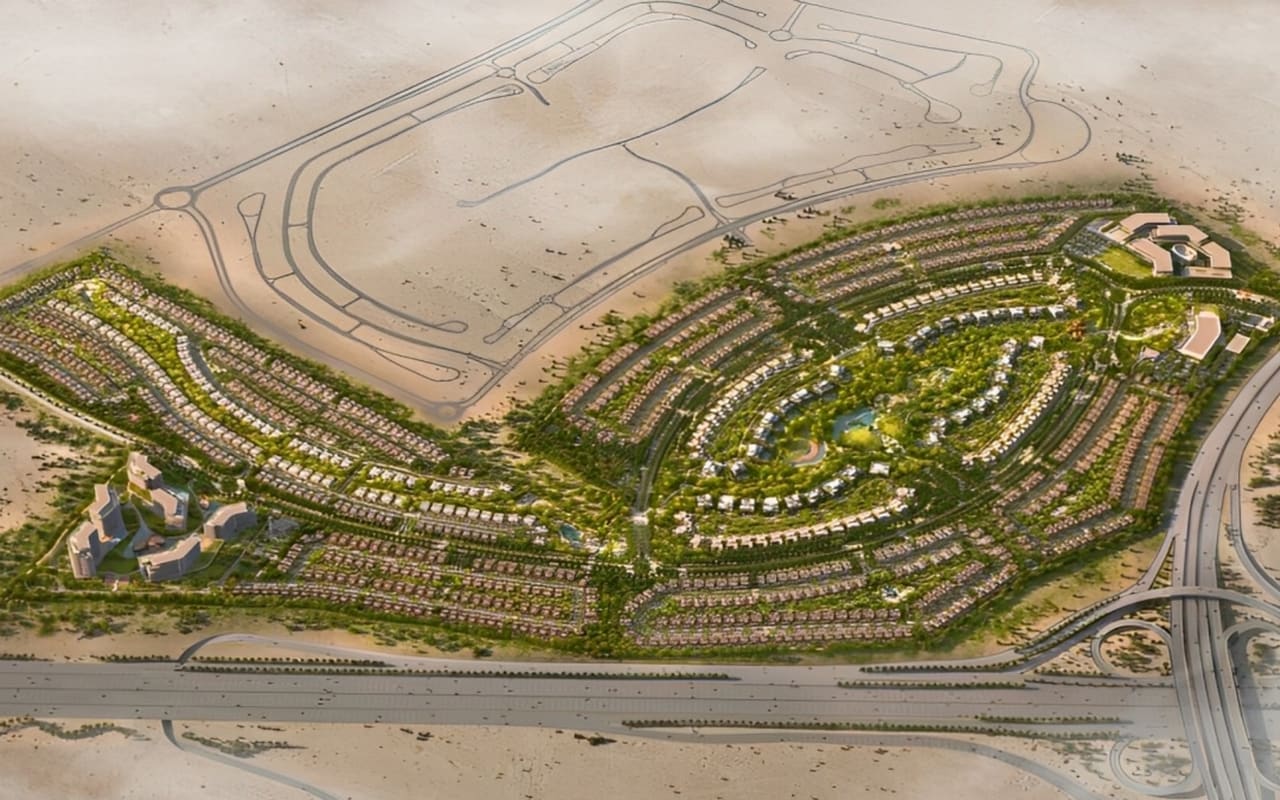
Dubailand is an enormous designated development region covering a large part of inland Dubai, originally announced as a leisure and entertainment megaproject and subsequently developed piecemeal as residential communities.
It contains dozens of separate communities — Villanova, Mudon, Arjan, Majan, Liwan, Living Legends, The Acres, Remraam, Wadi Al Safa and many more — each with different developers, different products and different price points.
A listing that says "Dubailand" and nothing more is telling you almost nothing. The first question is always which sub-community.
The original plan and what happened
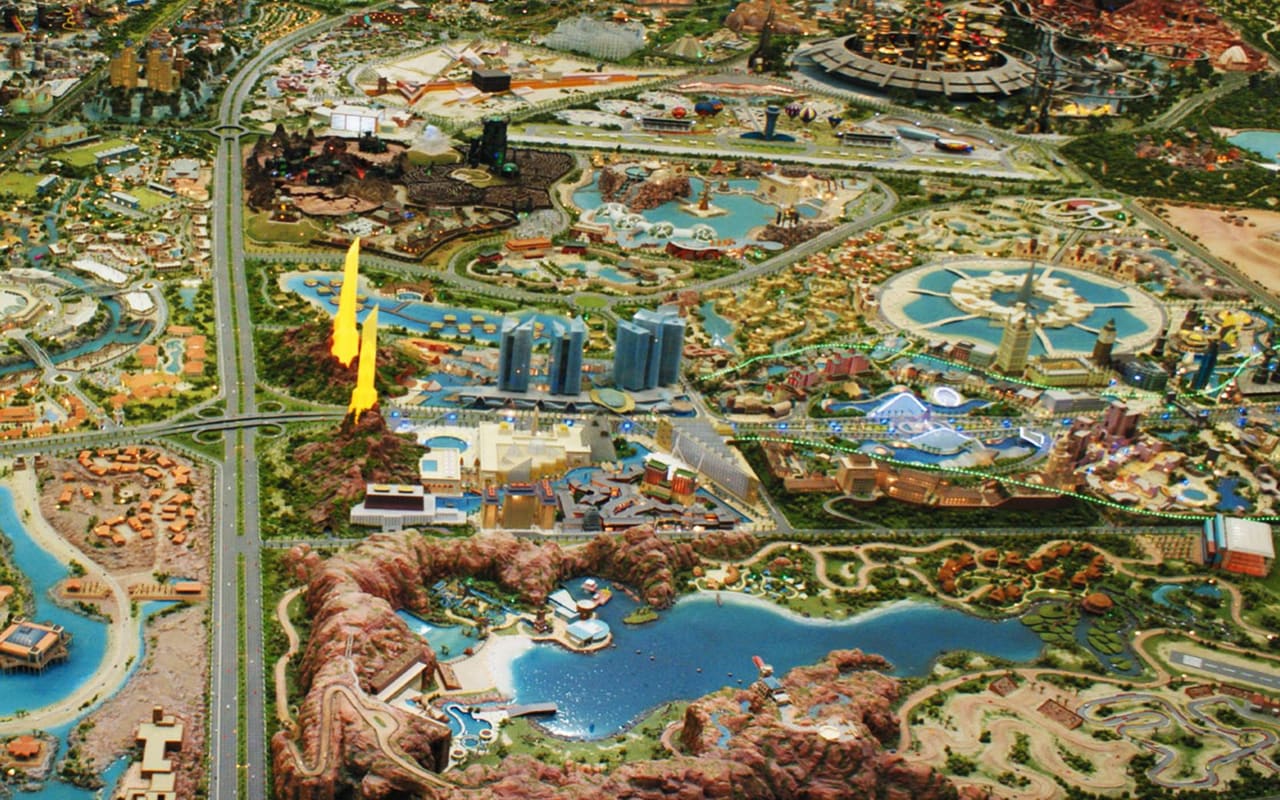
Dubailand was launched in the mid-2000s as a leisure destination on a scale intended to rival Orlando — theme parks, sports venues, resorts and attractions across a huge site.
The financial crisis intervened. Much of the entertainment programme was cancelled or indefinitely postponed, and the land was progressively released for residential development instead.
Some of the original vision survives — Global Village, Dubai Miracle Garden, IMG Worlds, the Cityland retail cluster — but the region today is overwhelmingly housing.
The common characteristics
Whatever the sub-community, Dubailand shares certain things. It is inland, it is car-dependent with no metro, it is roughly thirty to forty-five minutes from Downtown depending on where exactly, and it is where affordable family housing in Dubai is built.
Land is abundant. That is the single most important economic fact about the region: supply responds to demand quickly, which keeps prices anchored and caps capital appreciation.
Yields are correspondingly good. The rent-to-price ratio across Dubailand is generally better than in the coastal and central districts.
How to navigate it
Ignore the Dubailand label and evaluate the specific community: who developed it, when it was delivered, what condition it is in, what the service charge history looks like, and what amenity actually exists.
Check the drive time from that specific point, because the region is large and the difference between its inner and outer edges is fifteen minutes or more.
Check what is planned on the adjacent land, because in a region with this much undeveloped plot, your outlook and your competition can both change.
The investment view
Dubailand is where you buy yield and space rather than location and appreciation. That is a legitimate strategy and it suits a large number of investors.
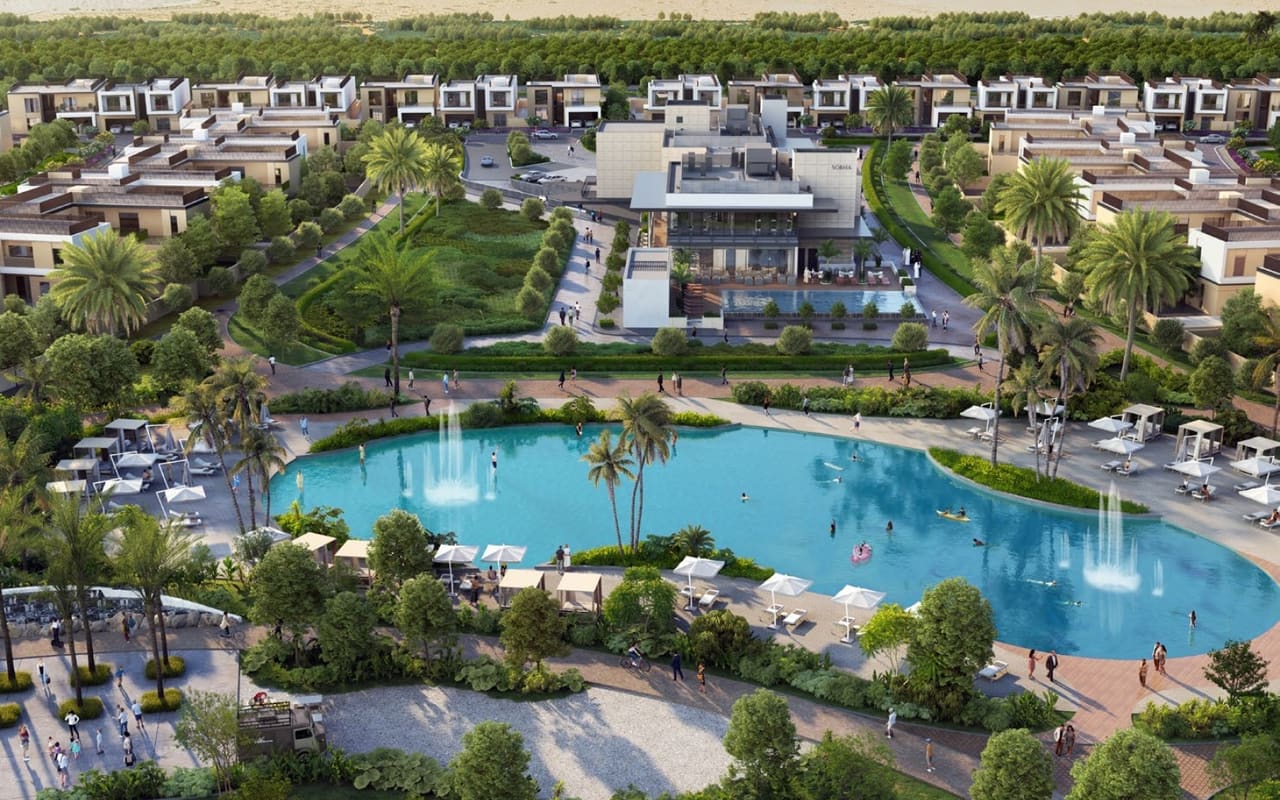
The best-performing sub-communities have been those with genuine differentiation — a real park, a lagoon, good management — because in a region of abundant supply, the generic product competes only on price.
The worst outcomes have been in communities with weak management and deferred maintenance, where the discount at purchase was consumed by the cost of the building over time.
Who it suits
Yield investors who want the best rent-to-price ratio available in Dubai and are indifferent to prestige.
Families who need space at a price the central districts cannot offer and either work nearby or remotely.
It suits poorly anyone commuting daily to the coast, anyone expecting appreciation driven by scarcity, and anyone who treats "Dubailand" as a single market.
The attractions that did get built
Not all of the original leisure programme disappeared. Global Village operates every winter and draws millions of visitors. Dubai Miracle Garden and the Butterfly Garden run seasonally. IMG Worlds of Adventure is one of the largest indoor theme parks anywhere. Cityland Mall sits at the centre of the region as a retail anchor.
For residents these are a mixed blessing. They bring restaurants, retail and a reason for infrastructure investment. They also bring seasonal traffic on roads that residents use daily, concentrated on the routes serving Global Village and Miracle Garden.
Whether that matters depends entirely on which part of Dubailand you are in. Communities near the attraction corridors feel it every winter; communities a few kilometres away do not.
It is worth checking on a viewing during the season rather than in August, when the roads are empty and the picture is misleading.
The infrastructure question
Dubailand’s road network was laid out for a masterplan that was never completed, and the result is uneven. Some communities have direct access to Sheikh Mohammed Bin Zayed Road or Al Qudra Road; others reach them through a single congested feeder.
Utilities follow the same pattern. Communities developed early were connected as part of a coordinated plan; later infill developments sometimes rely on connections that arrived afterwards.
Drainage is the recurring issue, and exceptional rainfall in recent years exposed it in parts of the region. Ask specifically about the drainage design for the community and whether it has flooded.
None of this is visible from a listing, and all of it is answerable by driving there and asking residents.
How to choose within the region
Ignore the Dubailand label entirely and rank communities on four things: who built them, whether the amenity is delivered and maintained, what the service charge history looks like, and the actual drive time from that specific point.
The communities that have performed best — Mudon, Town Square, Villanova — share the same profile: a single competent developer, a genuine central amenity, and management that funds maintenance.
The ones that have performed worst are generic townhouse clusters with no differentiation, built by developers with thin records, in positions with no access advantage.
The label tells you the price band. Everything that determines your return is one level down, and it takes a site visit to see.
More on Dubailand
Written breakdowns of subjects the English channel has not filmed.
- Dubailand is not a district: how to read the label on the listing
Dozens of separate communities under one name, with different developers, products and management quality. Why a per-square-foot figure for "Dubailand" describes nothing, and the four things that actually decide the return.
The market, per the Land Department
Residential price index 167.33 Q4 2025
Quarter on quarter +3.32% QoQ
Year on year +8.9% YoY
Full year 2025 +9.81% index 162.51
This is the official index for the whole emirate, not for Dubailand: the Dubai Land Department does not publish a district breakdown publicly. Treat it as background — it tells you whether the market is rising or flat while you read the prices above. Transaction data for a specific building I pull separately, on request. Source: Dubai Land Department, read 15/08/2026.
The latest read: July 2026
The Land Department index above is quarterly and emirate-wide. The monthly price index splits villas from apartments — and in 2026 that matters: a single blended figure hides the fact that the two markets have pulled apart.
Villas and townhouses 292.5 flat YoY
Apartments 168.7 −4.2% YoY
All residential 219.2 −0.3% MoM
Price per sqft 2,039 villas · apartments 1,397 AED
What this means for Dubailand
- 7.6% of off-plan deals landed in this district — out of 9,475 registrations for the month. Nearly all of it came from a single cluster — City of Arabia. Off-plan district share is usually one large project rather than the whole area.
The month split by completion status: 72.8% of deals were off-plan, 27.2% ready homes. Ready-home volume rose 11.4% on the month, while off-plan was the only segment down both on the month and on the year (−45.3%). The practical read: there is room to negotiate on apartments and on off-plan, far less on finished villas in established communities. Index base is January 2021 = 100 — a villa reading of 292.5 means growth of 192.5% from that mark, not a premium over a 2021 peak. Monthly ValuStrat market review for July 2026, checked 24/08/2026.
Questions about Dubailand
Is Dubailand a single community?
No. It is a very large designated development region containing dozens of separate communities — Villanova, Mudon, Arjan, Majan, Liwan, The Acres and many others — each with different developers, products and price points.
Why are yields higher in Dubailand?
Because purchase prices are low relative to rents, which reflects the abundance of land. Supply responds quickly to any price rise, which keeps values anchored and caps capital appreciation — high yield is the compensation.
Other districts
All districts →Projects in Dubailand
All projects in Dubailand →
Dubailand in the news
LEOS Developments in Dubai: a UK developer moves its HQ, a $7bn fund and LEOS Royal with Dubai Holding
In October 2024 UK-founded LEOS moved its global headquarters to Dubai and announced a $7bn fund for 10+ UAE projects. A year later it launched LEOS Royal with Dubai Holding: about 800 villas and townhouses in Wadi Al Safa 5, valued at AED 5bn+. How to read a developer like this.

The Blue Line and Dubailand: how a periphery becomes a district in demand
Dubai Land Residence Complex spent years being what agents delicately call “out of town”. The pattern that repeated twice before says what a station does next.

Mudon: in an outer family community the commute is the investment case
A family community deep in Dubailand. The drive is not a comfort detail here — it is the single variable that decides both letting and resale.

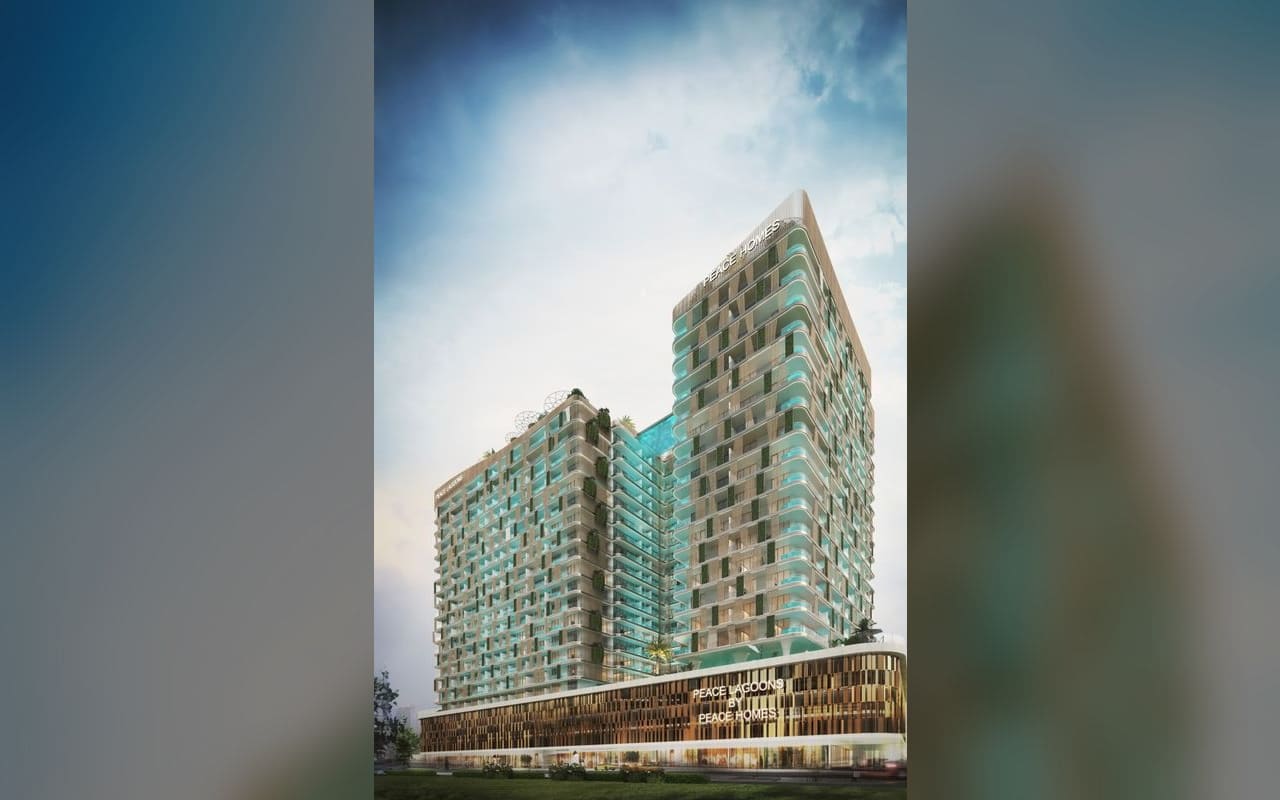
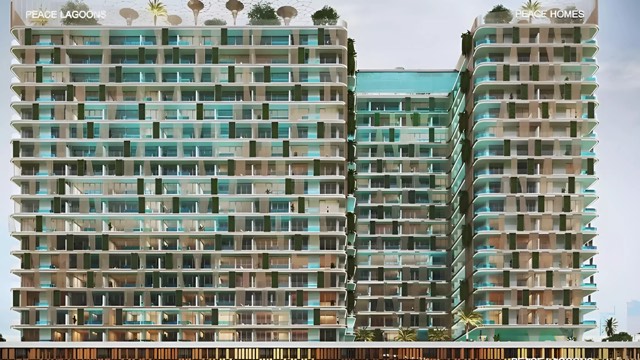
Peace Homes Development: what a lagoon costs to keep
A mid-market developer building a lagoon-themed project in Dubailand. Water features are the current standard amenity — here is what they actually add and what they take every year.

Falconcity of Wonders: a themed master plan built over a very long time
A development shaped like a falcon, with quarters themed on world landmarks. Long-running master plans have a particular risk profile, and it is not the one buyers usually expect.

Gulf Land Property Developers: what you are paying for in a villa, land or building
A developer building a villa community in Dubailand. Villa pricing splits into plot and structure, and the two behave completely differently over time.
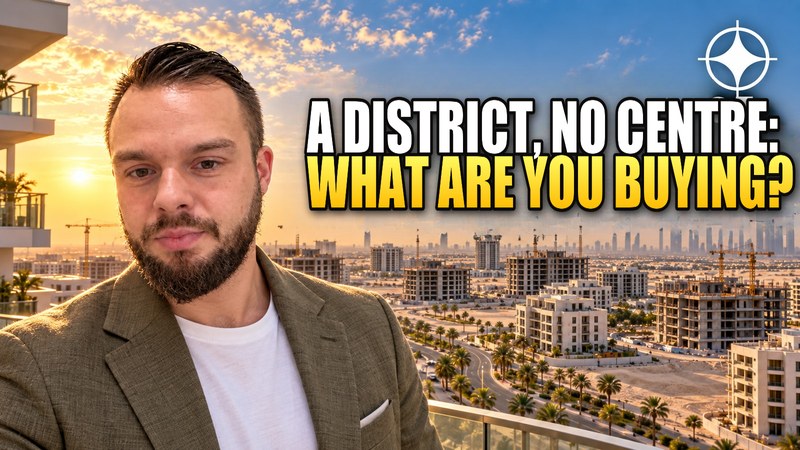
Majan area profile: buying in a Dubailand cluster with no centre of its own
Dense building-by-building development with no shared master plan and no amenities of its own. A cluster like this is assessed not as a district but as a set of individual addresses.
Looking at Dubailand specifically?
Send me the building or the unit and I will pull the registered transaction history, the current service charge and what comparable units actually let for — before you make an offer, not after.
Ask on WhatsAppAsk a question
Telegram is the fastest way — I answer personally.
Message on Telegram