
The UAE left OPEC and OPEC+ on 1 May 2026
After nearly 60 years of membership, the UAE announced its exit from OPEC and OPEC+ and a shift to an independent energy policy. The country gains freedom over production and exports. What it says about the economic model — and why it matters for property.
The UAE announced its exit from OPEC and OPEC+ effective 1 May 2026. The country had been part of the cartel for almost 60 years and is now moving to an independent strategy: setting its own production pace, investment and export policy without regard to shared quotas. The statement stressed that the decision was taken at an appropriate moment and should not shock the market.
What it means for the oil market
The departure of a large producer weakens discipline inside the alliance and makes the balance between price and volume less predictable. In the short term that is a volatility factor. The practical effect is visible in production figures: in June 2026 the UAE reached 3.8–3.9 million barrels per day — a nine-year high.
What it says about the economy
A paradox worth stating plainly: leaving an oil cartel is really news about the non-oil economy. A country whose budget depends critically on oil revenue values the quota mechanism, because it supports the price. A country where oil has become one source among several can afford freedom on volumes.
Talk to a licensed broker: 📲 +971 50 120 32 64 on WhatsApp, @dubai_oleg on Telegram
The figures bear this out. UAE non-oil foreign trade in the first half of 2026 reached AED 1.937 trillion, up 13.1%; non-oil exports hit a record AED 452.8 billion. Finance, logistics, property, tourism and international trade have long carried the main load.
Why a property owner should care
The chief long-term risk for a homeowner in the Gulf has always been framed the same way: what happens to prices when the oil runs out or its price collapses. Economic diversification is the only substantive answer, and its degree is measured by decisions like this rather than by statements.
- Weaker linkage to the commodity cycle means a smaller swing in housing demand when oil falls.
- Freedom on production means budget revenue — and the budget, as the 2026–2028 cycle showed, sends 48% into infrastructure, which feeds directly into district values.
- Oil volatility remains a factor — simply no longer the decisive one. The Central Bank's 2027 forecast of 9.8% growth rests precisely on an oil recovery alongside a strong non-oil economy.
Based on official UAE statements on leaving OPEC and OPEC+.
In the news
Other write-ups on the site about the same thing.
Non-Oil Sector Now 74.6% of UAE GDP; Dubai Draws $14bn in Foreign Investment
The UAE’s non-oil economy has grown to 74.6% of GDP, up 4.5%. Dubai alone attracted $14bn in foreign direct investment — up 33% year on year — and a record 1 117 new greenfield projects.
UAE economy in 2026: PMI at 55.3 in August, GDP up 3% and Dubai private schools in the PISA global top ten
The UAE non-oil PMI rose to 55.3 in August 2026, its highest since December 2024. Real GDP grew 3% in Q1, with the non-oil share at 79.4%. Dubai private schools ranked 6th in the world for reading and 8th for maths in PISA 2025. Why the economy looks stronger than the housing mood.
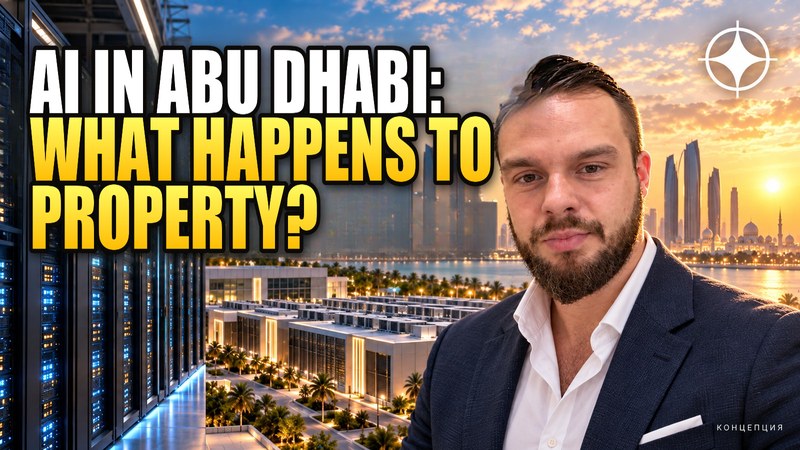
Stargate UAE: a 1 GW AI cluster in Abu Dhabi, and what it actually means for property
The first 200 MW goes live in 2026 and the wider campus is planned at 5 gigawatts across ten square miles. Where the effect on housing and offices is real, and where it is being overstated.
UAE Central Bank: growth slows to 1.7% in 2026 — then accelerates to 9.8% in 2027
The UAE Central Bank cut its 2026 growth forecast to 1.7%, after 6.2% a year earlier — geopolitics and logistics took their toll. For 2027 it projects 9.8% growth. How to read the swing, and what it means for timing a property purchase.
UAE ranks 5th in IMD World Competitiveness 2026 — and 1st for economic performance
The UAE placed 5th in the IMD World Competitiveness Yearbook 2026 and 1st globally for economic performance, leading its region for the tenth straight year — plus 9th in the CGGI good-government index. Why competitiveness rankings are about the durability of your asset.

UAE extends small business corporate tax relief to the end of 2029
Companies with annual revenue up to AED 3 million keep their corporate tax exemption until 31 December 2029. SMEs are roughly 94% of all UAE companies and over 60% of non-oil GDP. What the extension means for entrepreneurs — and for the office market.