
Crystals in interior design: how a Dubai designer maps a space with stones and paintings
Natalie, an interior designer and artist working in Dubai, treats crystals and paintings as anchors for a mood rather than as decoration. Her method, which she calls the mapping of inner spaces, gives each object an intention such as focus or calm and adds three practical rules: declutter, protect the bedroom, and understand yourself.
What is the mapping of inner spaces?
It is Natalie's name for designing a room around the state a person should feel in it. A client arrives with a request, such as more calm, more harmony at home or better finances, and she builds the space and its paintings around that request.
She traces the idea to her studies at an academy of arts, where she researched how space, colour and light influence human psychology. The paintings she makes today grew out of that work.
In her description a painting is an anchor. The person sees it every day, and she believes it works on a subconscious level to make them more effective or more relaxed. She also says each painting carries its own energetic charge.
Talk to a licensed broker: WhatsApp +971 50 120 32 64 · Telegram
The method has only two tools, paintings and crystals. Asked whether she uses anything else in this practice, she answers that she uses practically nothing more.
Which crystals does she use, and what does she associate with them?
Natalie links each stone to a purpose: agate slices to concentration, rose quartz to love, femininity and harmony, rock crystal to clarity, and labradorite to creativity. These are her associations, and she says any object can be given a task.
She brought a table of examples to the studio. Agate bookends are, in her view, suitable for a masculine or a feminine interior alike. A blue lace agate stand is pure decor for clients who do not want raw crystals on show.
Other pieces are functional. A polished agate slice from her collection for women serves as a tray for creams and skincare. She also showed selenite and a stone she assigns to wisdom and concentration.
The labradorite came from Ukraine to order, and she uses it mostly in teaching. Her range splits into raw crystals kept in their natural form and a line of finished interior objects. She also makes jewellery.
Her explanation for all this is that crystals formed over many thousands of years and, as she puts it, carry an information field and their own energy waves. That is her belief, not an established scientific finding.
How did Natalie come to work with minerals?
She was six when her father gave her a small box of 18 different minerals and crystals. Reading about them and sorting them became her favourite game, and nobody else was allowed to touch the collection.
Later she studied the subject in more depth and spoke to specialists. A stay in Bali, she says, deepened her knowledge and her feeling for the stones.
From there came three lines of work: placing crystals in interiors, making jewellery and painting. An earlier series of her paintings contained crystal dust. She describes herself as an artist and sculptor by training, and also as an interior designer.
How are crystals used in Dubai buildings and restaurants?
The best-known case discussed is AVA, a Dubai development where crystals are placed in the foundation and inside the building. Oleg, who covered it in an earlier episode, puts the number at about 10,000 crystals. Natalie attended the launch of the second AVA project.
She calls it one of the best projects she has seen, though she sees no real difference between the first and second buildings in how stones are used. Her reasoning is that any crystal can be given a task.
Oleg recalls a large black tourmaline on a stand in an office in Dubai Marina and what he read about it cleaning the air. The notes to the video are more cautious: tourmaline is piezoelectric, but an effect on ozone outside dedicated generators is not scientifically confirmed.
Natalie adds a restaurant on the Palm's West Beach whose whole concept rests on stone: a large raw crystal at the entrance, a table cut from a slab, and crystal rests for the cutlery.
What the examples show is a market fact rather than a physical one. Some owners of very large companies are seriously interested in minerals, and that taste now reaches the buildings they commission.
How do her paintings work in a room?
Each painting is made for a state and a place: one for the study, one for calm in the bedroom, one for energy near the front door. Clients can buy a single work or commission one after she visits the space.
Her 2026 series consists of nine paintings and a tenth, main one. Two are already in a private collection, and the series is due to go to an exhibition.
In the studio Oleg described what he saw in one canvas: a butterfly, two snakes, a wolf's muzzle, a girl in a white dress, fire at the edges and stability in the centre. Natalie said the work was made for balance, structure against chaos.
The link with Rorschach inkblots is deliberate. The left and right halves look alike and are never identical, which she reads as a statement that nothing, and nobody, can be copied exactly.
A recent commission was for the office of a new company in Dubai, with paintings intended, in her words, to keep the flow of money running. No results were offered, and none should be assumed.
Why do expensive homes have such high ceilings?
Natalie connects very large rooms with focus and control. Oleg notes that penthouses often have double or triple height ceilings and studies the size of a hangar. In her reading the owner wants distance and wants to see everything.
She separates control from power. Control means knowing what is happening around you: who went where, who called whom, where the cameras stand.
She also sees a cost. Managing a large volume of information is hard, she says, and such a person lives with a conflict between calming down and keeping control.
Do concrete, glass and bright colours affect how a home feels?
In Natalie's view the material matters less than how it is used. She calls a standard concrete and glass building depressing, then explains that the causes are ceiling height, the kind of light and the colour range, not the concrete itself.
Direct light, she says, is perceived by the nervous system as an aggressor. Bright lime green, orange or pink have the same effect, and she has often seen clients combine everything at once and then feel uncomfortable at home.
Her argument comes from nature. Garish colours are rare in a forest and usually belong to poisonous creatures as a warning, so she treats them as an irritant indoors.
A cosy apartment, by her definition, is one where each zone has a clear purpose and the nervous system can rest in silence, warmth and calm. This matches what Dubai buyers increasingly ask for: luxury that is also restful.
What is ThetaHealing, and how does she use it?
ThetaHealing is a private American method that Natalie studies and teaches. She describes it as work with the conscious and subconscious mind: finding inner beliefs that hold a person back and replacing them with ones that serve them.
She is in her sixth year of study and holds 18 certifications. Five more, she says, would bring a master's level. Oleg clarifies on camera that this is not a state qualification, and she confirms it is entirely private.
She presents it as the source of her approach to space and links mood directly to money: how you feel affects how you think and what decisions you make. She teaches the method to groups online and in person.
Three tips for a calmer home
Her first rule is air. The more objects a room holds, the more energy it takes from you, she says, so declutter: throw things out or give them away. She calls this the foundation of being able to relax.
The second is the bedroom. She advises against a television there, because the thoughts you fall asleep with tend to be the ones you wake up with. Keep a separate zone for screens.
The third is to work on understanding yourself, with a coach or a psychologist of your choice. In her method the interior follows the person, not the other way round.
Frequently asked
What stones did Natalie show in the interview?
Agate slices and bookends, rose quartz, rock crystal, selenite, labradorite and blue lace agate, each of which she associates with a purpose such as concentration, harmony, clarity or creativity.
Is there scientific proof that crystals change a room?
The interview offers none. Natalie presents her own beliefs and practice, and the video's notes say that tourmaline's effect on ozone outside dedicated generators has not been scientifically confirmed.
Where should a painting hang according to her method?
It depends on the purpose: she suggests one work for the study, a calming one for the bedroom and a more active one near the exit from the apartment.
Why does she advise against a television in the bedroom?
Because, in her view, you wake up with the same thoughts you fell asleep with, so the bedroom should be kept free of screens and information.
How many paintings are in her 2026 series?
Nine paintings plus a tenth, main one. Two of them are already in a private collection.
✍️ Message me on WhatsApp for a free consultation — off-market stock, payment plans and honest numbers on any of the projects covered here.
✅ Subscribe on YouTube — investment, property, business and relocation in the UAE and beyond.


In the news
The same subject in writing — analysis and news related to this video.
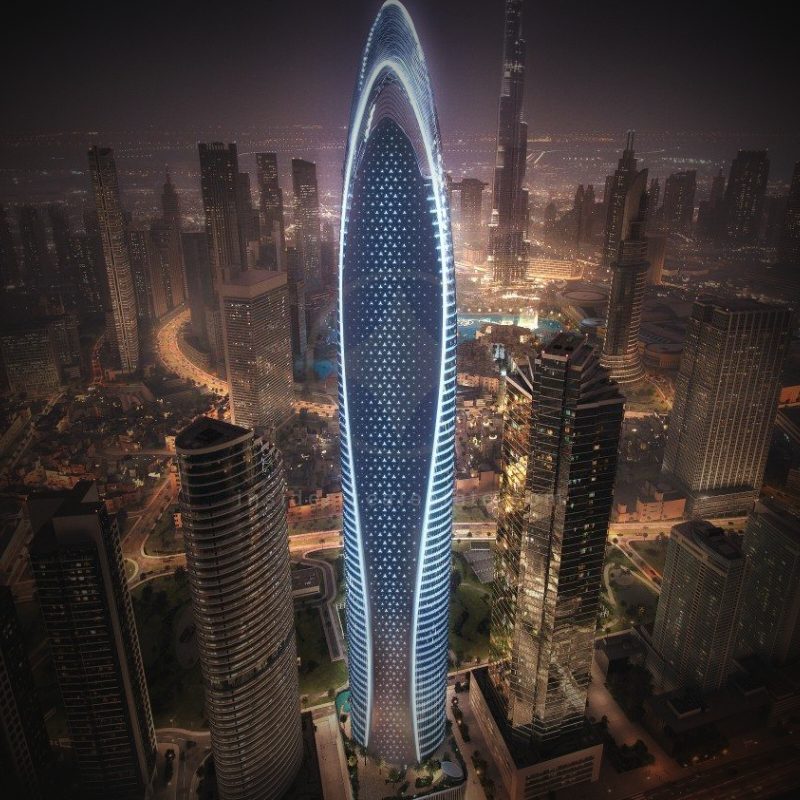
Car-brand residences in Dubai: Bugatti, Mercedes-Benz, Aston Martin, Pagani and Bentley compared
Five car makers now put their names on Dubai homes: 182 Bugatti Residences in Business Bay, the 341-metre Mercedes-Benz Places, Aston Martin interiors at Viewz, a 19-storey Pagani tower on the canal and Bentley Home villas from AED 20m. What the badge actually buys.

Dubai Design District: a district built for one profession
A quarter for design, fashion and creative business, with housing among it. Demand here is occupational and narrow — which is both its strength and its single point of failure.

Ellington Properties: what a boutique developer trades away
A company that builds few buildings and competes on architecture and floor plans. What the boutique format gives on quality and costs on liquidity, and what needs checking with a smaller developer.
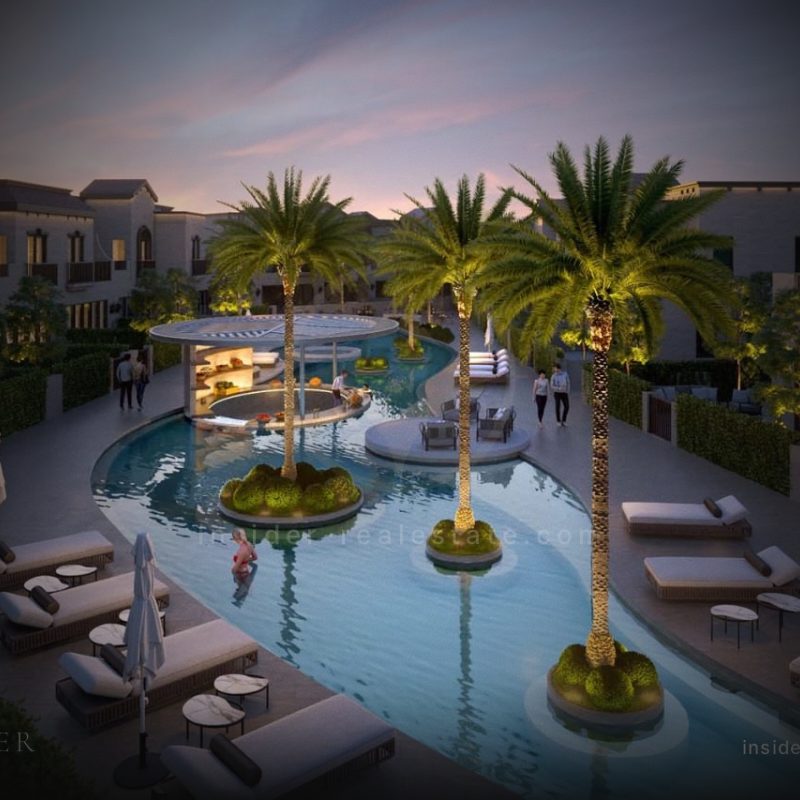
Jumeirah Golf Estates townhouses: Jasmine Lane by Durar with Elie Saab interiors, two years after handover
Jasmine Lane is 138 three-bedroom townhouses in Jumeirah Golf Estates, Elie Saab’s first project in the community. It launched from AED 3.68m and was handed over in summer 2024; resale asking prices now start at AED 5.95m. Who Durar is, and what the project shows about branded low-rise homes.
Jumeirah property: H&H’s Peninsula Dubai — Rosewood Residences and RSHP-designed homes around a new marina
In Jumeirah 2, H&H is building Peninsula Dubai: a waterfront district with a marina, a 195-key Rosewood hotel, 63 Rosewood residences and five villas by Hopkins Architects, and residential buildings by RSHP. Rosewood opens in 2029; the RSHP residences target early 2029.

City Walk area profile: a Dubai neighbourhood designed as a street, and what walkability costs
A pedestrian quarter in the centre, with shops at street level and homes above. Walkability is rare in Dubai — and it comes with a price tag worth understanding.