
Why Dubai 2040 Reads Like a Global City Plan, Not a National One
Saskia Sassen's book The Global City studies New York, London and Tokyo and identifies between 100 and 200 cities where economic life will concentrate. Dubai takes a significant place in that picture as a transit hub — which is why its city plan carries the weight a national plan usually would.
What book is this framing from?
Saskia Sassen's The Global City examines New York, London and Tokyo specifically, using them as case studies for a broader argument about how the world economy is organising itself going forward.
Rather than treating national economies as the primary unit of analysis, she looks at a smaller set of specific cities and argues that global economic life is progressively concentrating into a defined group of them — somewhere between 100 and 200 worldwide, by her estimate.
That's a genuinely different lens from the way most economic and investment analysis is framed, which still defaults to comparing countries against each other. Sassen's argument is that the more relevant comparison, going forward, is increasingly between specific cities, not the nations that contain them.
Talk to a licensed broker: WhatsApp +971 50 120 32 64 · Telegram
Sassen's book is not a fringe theory, either.
First published in the early 1990s, The Global City has become one of the standard references in urban studies and economic geography.
The term 'global city' itself, largely popularised through her work, is now routinely used by planners, economists and investors to describe exactly this small set of cities that punch far above their national weight in finance, trade and talent.
Dubai's own well-established role as a logistics and aviation crossroads between Europe, Asia and Africa, built up over decades through its airport, ports and free zones, is precisely the kind of transit-hub function Sassen's framework describes, which is part of why the comparison tends to hold up under scrutiny rather than reading as marketing language borrowed for a masterplan.
Are cities replacing states?
The central thesis running through Sassen's work is a gradual shift away from the state's role in organising economic activity, with cities and corporations taking on a growing share of that function instead.
In this framing, a city isn't simply a subdivision of a national economy — it becomes an economic actor in its own right, competing and cooperating directly with other cities around the world, sometimes more directly than with other regions of its own country.
Dubai fits into this picture in a specific role: as a transit hub, positioned geographically and logistically to connect flows of capital, trade and people between other major global cities, rather than functioning as a purely domestic economic centre serving the UAE alone.
Why can a city plan outweigh a national one?
This is the actual preface to why the Dubai 2040 plan is worth taking seriously as an investment signal.
Dubai is a city, not a country, and yet, following Sassen's argument, modern economic research increasingly suggests the whole economy is organising itself around cities like it rather than around nation-states.
If that thesis holds, a city's own development plan can end up mattering more for an investor's decision-making than the broader development plan of the country that city sits within.
That reframing is genuinely useful for anyone evaluating Dubai 2040 specifically.
Rather than reading it as one city's local infrastructure roadmap, it's worth reading it as the strategic plan of an actor competing directly with New York, London, Singapore and Tokyo for a share of exactly the kind of global economic activity Sassen describes concentrating into a limited set of cities.
What does this change about evaluating Dubai?
If Dubai is genuinely competing at the level of global cities rather than simply leading within its own region, the natural comparison set shifts too.
Not just other Gulf cities, but how New York, London and Tokyo each translated global-city status into long-term real estate value over decades.
Each of those cities shows a similar pattern: sustained international capital inflow tracking their role as genuine global economic nodes, not just local growth.
Viewed this way, Dubai 2040's ambitions around infrastructure, connectivity and quality of life aren't simply municipal planning — they're the same kind of competitive positioning any of the other cities on Sassen's list have had to invest in to maintain their global-city status over time.
How I use this framing with clients
When I explain Dubai's long-term investment case to clients, I often start with this exact framing, because it reorients the conversation away from comparing Dubai purely to other cities in the region and toward comparing it to New York, London and Tokyo instead.
That's a more demanding standard, but it's also the more accurate one if Sassen's thesis about where global economic activity is heading turns out to be right.
It also explains why so much of Dubai's own planning language — connectivity, walkability, international accessibility — echoes the same priorities those other established global cities have pursued for decades.
Dubai isn't inventing a new playbook; it's applying a well-understood one, earlier in its own city life cycle than New York or London were when they consolidated their own global status.
Frequently asked
What is Saskia Sassen's 'The Global City' about?
It examines New York, London and Tokyo and argues that global economic life is increasingly concentrating into a defined group of roughly 100 to 200 cities worldwide, rather than being organised primarily around nation-states.
What role does Dubai play in this global-city framework?
Dubai is positioned as a transit hub — a city connecting flows of capital, trade and people between other major global cities, rather than functioning purely as a domestic economic centre for the UAE.
Why does a city plan like Dubai 2040 matter more than it might seem?
If economic activity is genuinely concentrating around specific global cities rather than nations, a city's own development plan can end up shaping investment outcomes more directly than the broader national plan of the country it sits within.
✍️ Message me on WhatsApp for a free consultation — off-market stock, payment plans and honest numbers on any of the projects covered here.
✅ Subscribe on YouTube — investment, property, business and relocation in the UAE and beyond.


In the news
The same subject in writing — analysis and news related to this video.

Dar Global: a London-listed developer selling branded homes across several countries
The international arm of a Saudi developer, listed in London. What a listing gives you, and what changes when the property you buy sits outside the UAE.
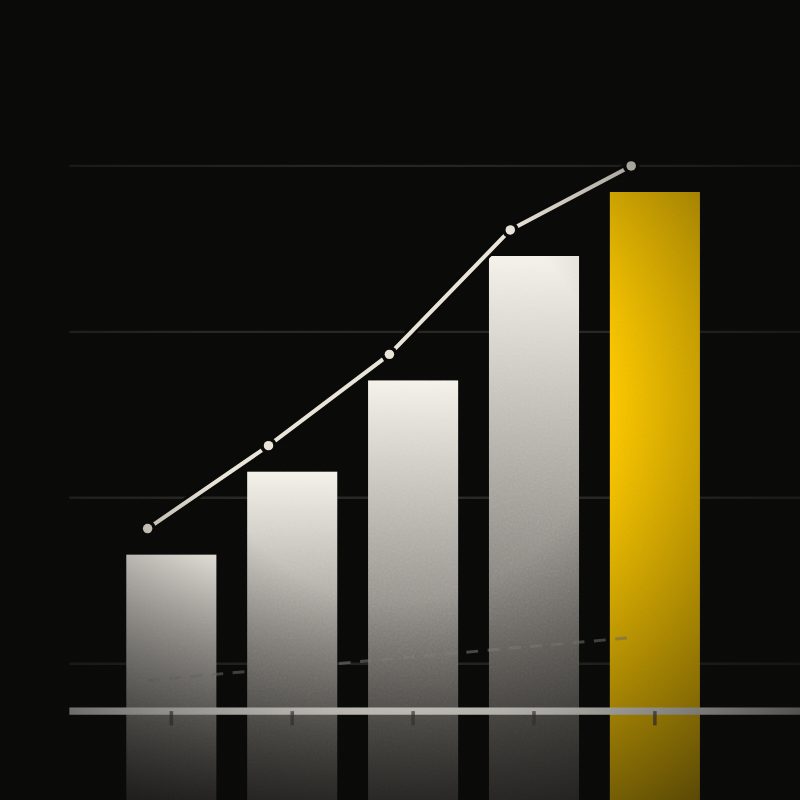
The structure of global wealth in 2024: $680.7 trillion, and 57.8% of it is real estate
Global wealth in 2024 is put at $680.7 trillion. Residential property accounts for $286.9 trillion, or 42.1% — more than every share and bond in the world combined. Gold is $16.6 trillion, 2.4%. The six asset classes, their shares, and what follows for a private investor.

Dubai Creek Gardens: 1 400 homes in Al Jaddaf and the UAE’s first Westin and Renaissance Residences
Construction has started on Dubai Creek Gardens in Dubai Healthcare City Phase 2 (Al Jaddaf): an AED 3bn community of more than 1 400 homes on 127 000 sq m, 70% of it green, with the UAE’s first Westin and Renaissance residences. Completion 2030.

Your own Red Sea island: Saudi Arabia opens sales on Laheq Island from $1.6 million
Saudi Arabia real estate is going global: Laheq Island, a 400-hectare private island on the Red Sea, offers villas from SAR 17.6 million and apartments from SAR 5.9 million. Who is building it, what the masterplan includes and whether buying property in Saudi Arabia makes sense yet.
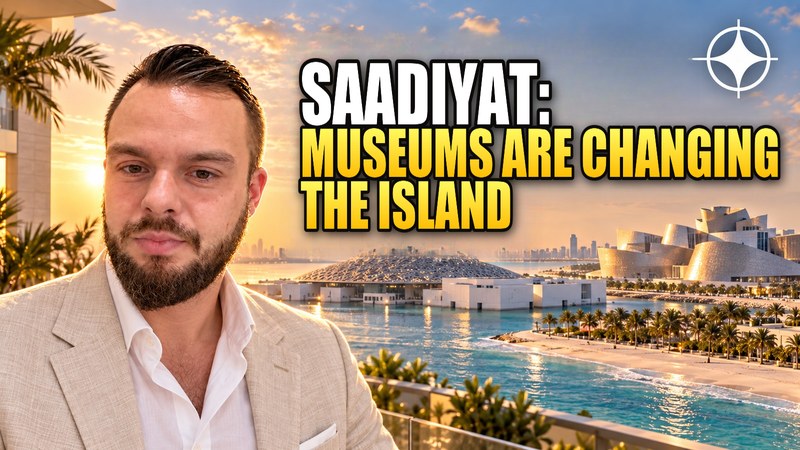
Saadiyat Cultural District in 2026: Zayed National Museum open, Guggenheim due in December — what it means for property
Zayed National Museum opened on 3 December 2025, the Natural History Museum on 22 November and teamLab Phenomena in April 2025. Guggenheim Abu Dhabi is set for 11 December 2026. What is finished, what is not, and how it feeds Saadiyat prices and rents.

Emirates National Investment: what insurance actually covers, and what it does not
A developer with tall Business Bay towers from 2016. The building has a policy and you probably assume it covers you — here is where the line falls.