
Yango in Dubai: what the ride-hailing brand is, and what it tells a property buyer
Yango is an international brand built on technology first developed inside the Yandex ecosystem — ride aggregation, logistics, delivery, mapping. In Dubai it runs as a locally licensed ride-hailing service that owns no cars. For a property buyer it is a useful marker of how complete the city’s service layer has become, and of where tenants come from.
What is Yango, and where did it come from?
Yango is the international arm of a technology stack that grew up inside the Yandex ecosystem: taxi aggregation, logistics, delivery, and mapping and navigation tools. Under this brand the services operate in dozens of countries across the Middle East, Africa, Latin America and other regions.
In each market the product is adapted to local rules rather than exported unchanged. That means local fleet partners, local payment systems and an interface in the languages the market actually uses, which is why the app feels native in places that have little else in common.
In the UAE the brand established itself first in city rides, where it competes with global and regional players. Cars carrying its white-and-red logo have long been an ordinary part of Dubai traffic rather than a novelty.
Talk to a licensed broker: WhatsApp +971 50 120 32 64 · Telegram
How does the service work in Dubai?
On the classic aggregator model. Yango does not own vehicles: it connects licensed carriers with passengers and earns from the technology platform that sits between them. For a user in Dubai it is a self-standing local service, licensed under UAE rules.
What the passenger sees is a familiar app, predictable prices and a short wait for the car. Those three things sound trivial, and they are exactly what a newly arrived expatriate uses to judge how comfortable a city is going to be.
It is not the same thing as Yandex for any practical purpose. Yango is a brand that grew out of that technology and now works on foreign markets as a separate line of business with its own structure.
Why do technology brands choose Dubai as a base?
Because the emirate deliberately built an environment in which an international business is easy to land. Five things do most of the work: regulatory openness, a concentrated paying audience, the hub role, the tax regime with its free zones, and the labour market.
The authorities license new models readily, from aggregators to autonomous transport, and treat the city as a showcase for technology. Behind that sit millions of residents and tourists, with a high share of them active users of mobile services.
Operations across the Middle East, Africa and South Asia are convenient to run from here: time zones, air links and banking infrastructure all point the same way. Conditions for holding and operating structures remain among the most attractive in the world.
The city also accumulates international specialists, among them a visible Russian-speaking technology diaspora. The labour market is part of what is on offer to an arriving company, not an obstacle it has to work around.
What does the service layer look like to a newcomer?
Deeper than most people expect. Rides, food and grocery delivery, renting a home, utility payments and government services have all been moved into apps, and the degree to which the city is digitised tends to surprise those who relocate here.
Competition between aggregators keeps the standard high. A car that arrives within minutes and a delivery that arrives within the hour are treated as the norm in Dubai, not as a premium option somebody pays extra for.
For Russian-speaking residents there is an added soft-landing effect: services whose interface logic is already familiar take some of the domestic stress out of a move. It is part of a wider pattern, in which a Russian-speaking business environment of agencies, clinics, schools, restaurants and media has formed in the city.
The general point is larger than one community. Dubai knows how to receive communities whole, and its service infrastructure adjusts to them quickly.
What does any of this have to do with property?
More than it seems. The offices of international companies create demand for commercial space and, more importantly, for rented homes for their staff. Relocated teams form a durable layer of tenants in the districts around business clusters.
A developed service environment is also capitalised into prices in its own right. Districts where everything is delivered and everything is close are consistently dearer and more liquid than districts where that is not yet true.
The quality of city logistics redraws the map of attractive locations as well. When a ride and a delivery are available everywhere, living outside the central districts stops being a compromise, demand spreads into new neighbourhoods, and investors follow it there.
Finally, every prominent arrival of a global brand in the UAE is a signal of confidence in the jurisdiction. Private investors deciding where to buy assets read that signal too.
Gift boxes, bloggers and the marketing of presence
A box of branded merchandise sent to bloggers and partners is a small thing and a telling one. When a service starts doing that in Dubai, it has taken root in the market in earnest and is competing for a local audience.
Gift sets, collaborations with local creators and event sponsorship are the standard toolkit for winning loyalty on a new market. In Dubai that marketing is especially active: the city lives on social media, and competition for attention is high in every segment from delivery to property development.
For bloggers and entrepreneurs it means a live market for partnerships, with brands willing to invest in local content. Influencer marketing in the UAE has long been a professional industry with its own rules, including requirements on the transparency of advertising.
Can you live in Dubai without a car?
In the central and coastal districts, realistically yes: aggregators, the metro and delivery cover most everyday scenarios. In the outlying villa communities a private car remains the practical choice.
That split is the same one the property market draws. Where rides and deliveries are dense, a home is easier to live in and easier to let; further out, the car is part of the cost of the address and should be counted as such.
Frequently asked
Is Yango the same company as Yandex?
Yango is an international brand that grew out of Yandex technology and works on foreign markets as a separate line of business with its own structure. For a user in Dubai it is a self-standing local service, licensed under UAE rules.
Is it realistic to live in Dubai without a car?
In the central and coastal districts, yes: ride aggregators, the metro and delivery cover most everyday needs. In outlying villa communities a private car remains the practical choice.
Do services like Yango affect property prices in Dubai?
Indirectly, yes. Districts with denser services and better logistics are consistently more liquid, and the offices of international companies create steady rental demand near business clusters.
Why are there so many Russian-speaking services and businesses in Dubai?
The city became one of the main destinations for business relocation in recent years. The tax regime, safety and infrastructure drew entrepreneurs and specialists, and the services they were used to followed them.
✍️ Message me on WhatsApp for a free consultation — off-market stock, payment plans and honest numbers on any of the projects covered here.
✅ Subscribe on YouTube — investment, property, business and relocation in the UAE and beyond.


In the news
The same subject in writing — analysis and news related to this video.
The UAE is investing $12bn in space through 2031
Over AED 44 billion goes to the National Space Strategy: extending the Hope probe’s Mars mission, an expedition to the asteroid belt and an AI-based space data centre. The goal is a place in the world’s top ten space economies.
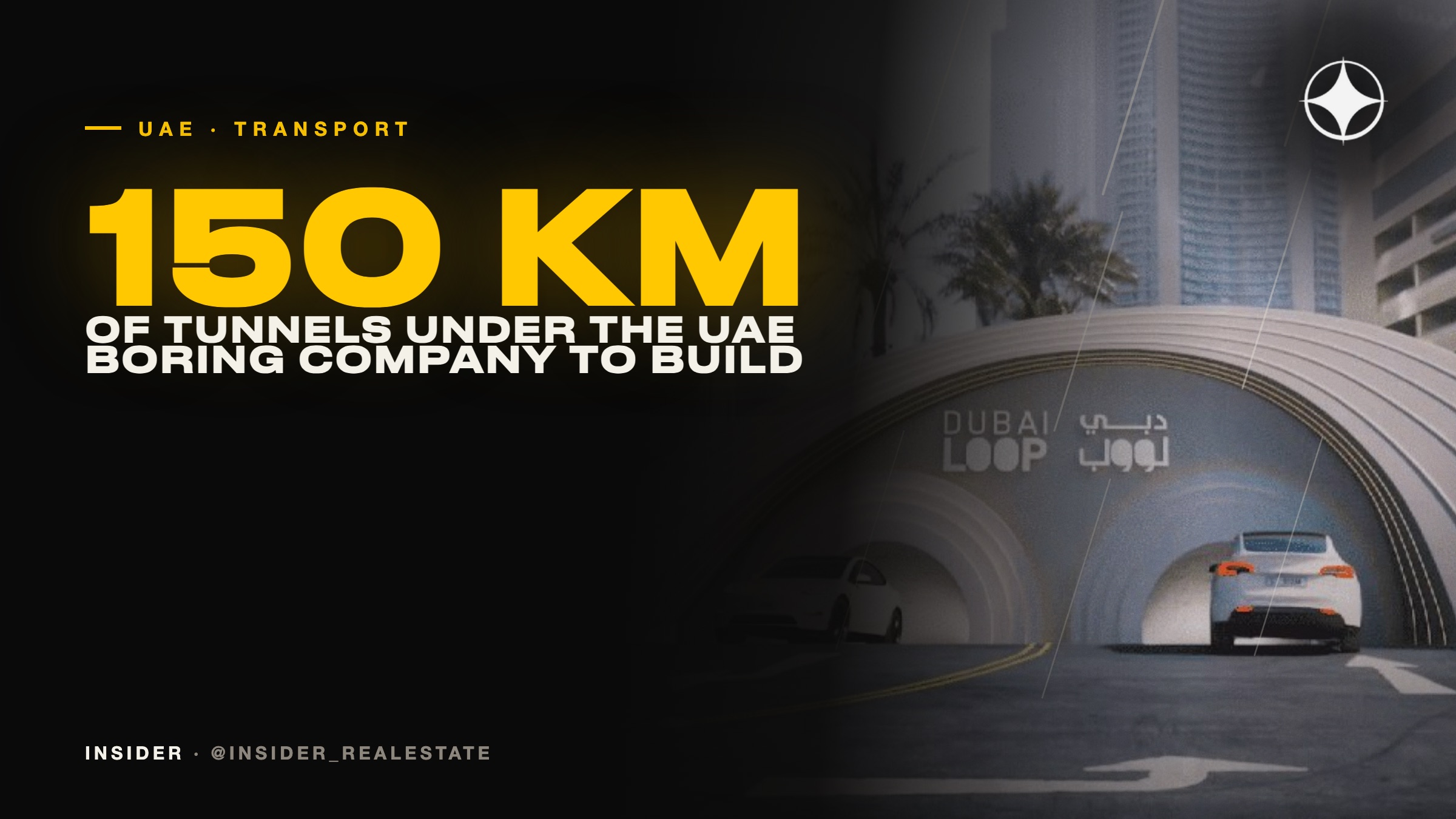
Elon Musk's Boring Company to build 150+ km of tunnels across the UAE
The Boring Company raised $3 billion in a UAE-led round and plans more than 150 km of tunnels across the country, on top of Dubai Loop. Routes, timelines and what it means for DIFC, Downtown and Business Bay property.

Abu Dhabi 2040: a doubling population, AED 240bn of infrastructure and the transport pipeline
Abu Dhabi expects its population and GDP to double by 2040; the emirate had 4.14m residents at the end of 2024. AED 240bn is earmarked for housing, transport, health and schools. The widely quoted "6 million by 2040" is not an official figure. What is actually being built.