
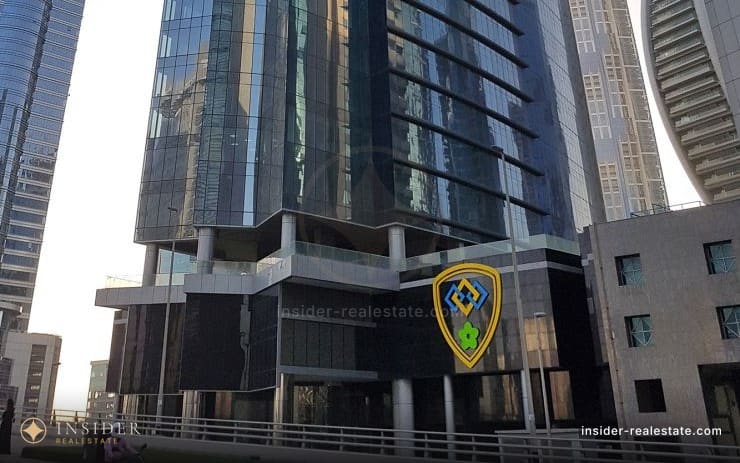

IAH Project Development: what happens when a landlord and tenant disagree
A developer with a Business Bay tower from 2016. Rental disputes in Dubai go to a dedicated tribunal, and the outcome usually turns on paperwork rather than on argument.
Not a classic ground-up developer but a company specialising in completing projects that had previously been frozen or abandoned by their original developer — a rare and instructive role in a market where investors usually only see the finished result and never think about what happens when construction stops for years.
1 project by this developer in the catalogue. Nothing of theirs is in the discounted stock right now — nearby listings are below.
Checkable facts about the developer itself. Unlike the figures above, these are not about our stock and do not move with what happens to be listed today.
IAH Project Development is not a developer in the usual 'designed and built from scratch' sense — it is a structure that took on completing an already-started and paused project: coordinating a new sale contract, finalising construction, and handing the building over to investors after the original construction had been stopped for years. This kind of role rarely becomes its own topic of conversation in the market, but it directly affects the fate of specific buyers whose money had already gone into the original project.
For the Dubai property market as a whole, stories of paused and later revived construction are not a one-off, especially among projects that started before the global financial crisis of the late 2000s. Understanding exactly how a specific building was revived, and who took responsibility for finishing it, gives far more risk information than a polished description of the now-finished building.
The tower began construction in the late 2000s but ran into a multi-year pause in the early 2010s — a typical fate for projects that launched at the market's peak and then hit the subsequent downturn. Construction resumed only years later, under new management, and was carried through to handover in the second half of the decade — meaning nearly a decade passed between groundbreaking and key handover, far longer than the timeline originally announced.
For investors who bought units at the original stage, that history meant years of uncertainty before the project was finally completed. For today's resale buyer, that stage is already behind the building, but the history is worth knowing — it explains why this particular building took so much longer to deliver than a typical construction cycle.
The main practical lesson from Park Lane Tower's history is not about this specific company but about the risk mechanism itself: even started construction is not a guarantee of uninterrupted completion, and the reasons for a pause are usually tied to the developer's financing or the broader market cycle rather than the quality of the specific project. Escrow accounts, introduced later as a mandatory requirement, reduce this risk for new projects today but do not eliminate it entirely.
For a buyer, this is an argument for looking beyond the render and the price when choosing an off-plan project, at the developer's overall financial resilience — its ability to survive a market downturn without stopping construction, not just its ability to deliver when market conditions are favourable.
The building sits in Business Bay, one of Dubai's most business-dense districts, with direct access to Sheikh Zayed Road and proximity to DIFC and Dubai Mall. The building's mixed use — commercial and hotel space in one complex — is typical for a district where offices, apartments and retail often sit side by side in the same tower.
Today, years after handover, the building is part of the district's dense development alongside its neighbours, and its construction-pause history most likely no longer affects day-to-day operations — but it is worth checking how the pause affected the engineering systems and materials used when construction resumed after the break.
For a purchase in this specific building, check the owners' association's history and the condition of engineering systems, which may have been built in two separate periods by different contractors before and after the pause. For any other off-plan project, the general lesson from this history: check the developer's financial resilience, whether an escrow account is in place, and who exactly is responsible for completing the project if the original developer runs into problems.
It is also worth confirming the building's current management structure and which company handles customer service today — after a developer change during project completion, support responsibility may also have shifted to a different entity than the one named in the original documents.
The developer is inferred from the project name — there is no developer column in the base. So the figures describe our stock, not the company's share of the Dubai market: a developer sitting on an enormous volume of completed housing can look smaller here than one whose projects reach the resale market more often.
These are asking prices, not closed transactions. For a specific building I pull the registered Land Department sales and show where deals actually closed.
A developer with a Business Bay tower from 2016. Rental disputes in Dubai go to a dedicated tribunal, and the outcome usually turns on paperwork rather than on argument.
Above on this page: 1 project by IAH Project Development from our catalogue, each with a passport covering floors, units, handover and bedrooms. Lots on sale, when there are any, sit right under the project.
For an off-plan buyer the price is identical, because the developer covers the broker’s commission. Going straight to IAH Project Development is therefore no cheaper, and the choice there is limited to its own projects — you will not get a comparison with neighbouring buildings or a candid read on handover dates. On resale and assignment the commission is standard: 2% plus VAT.
That depends on what you buy and why. Describe the budget and the aim — I will point out which of this developer’s buildings are justified today and which are better left alone.
Ask on WhatsAppTelegram is the fastest way — I answer personally.
Message on Telegram