
Taxis in Dubai and Abu Dhabi in 2026: roof colours, women-only taxis and fares
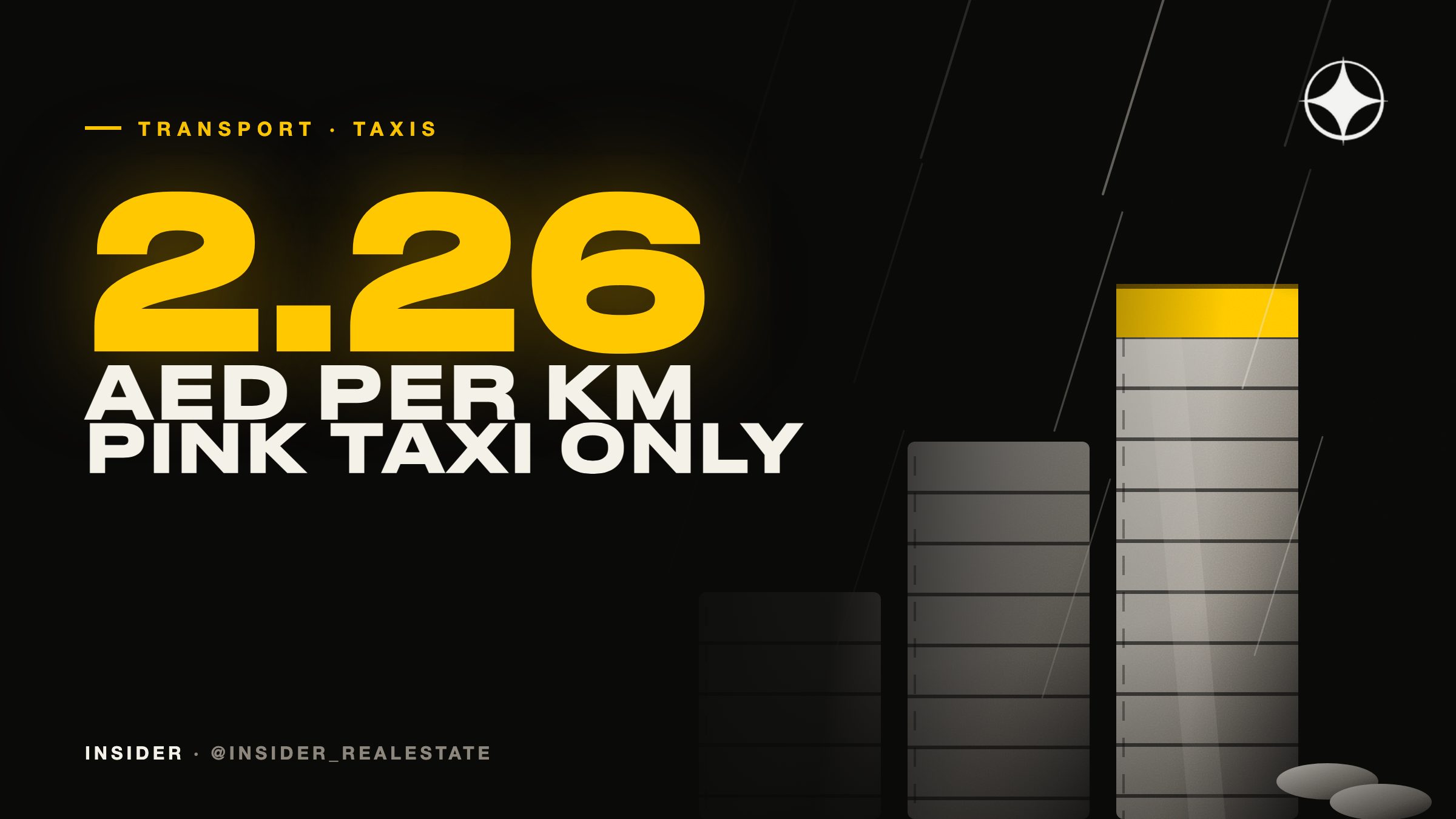
Roof colour in Dubai shows the operator, not the price — the RTA fare is the same for everyone: from AED 5 flag-fall by day and AED 2.26 per km. A pink roof means women- and family-only. In Abu Dhabi, Yango now runs alongside Careem.
Before a local driving licence is issued and before a car is bought, taxis in Dubai and Abu Dhabi are not a backup option — they are the main way to get around. Here is what the roof colours mean, which apps work in 2026, and what it actually costs.
Roof colour is the operator, not the fare
A Dubai taxi's body is always beige; the roof colour identifies the operator. A red roof is the most common — Dubai Taxi Corporation, part of the RTA, with over 5,000 cars and 12,000 drivers; brown belongs to Oneroad, around 2,000 cars; yellow and green mark National Taxi and Arabia Taxi respectively; blue, being gradually replaced by purple, belongs to Kabi. A pink roof means a women- and family-only taxi, driven by a female driver, running around the clock and used especially by families with children and by women travelling alone.
The key point for a newcomer: roof colour has no effect on the fare. Every car with an RTA yellow meter charges on the same grid — flag-fall from AED 5 and AED 2.26 per kilometre by day (6am–10pm), AED 5.5 flag-fall at the same per-kilometre rate at night (10pm–6am). You can flag a taxi on the street, book through the RTA's S'hail app, or use aggregators — Hala, Bolt, Yango and ZED — which now also dispatch the official yellow-meter taxi, not only private drivers.
Talk to a licensed broker: 📲 +971 50 120 32 64 on WhatsApp, @dubai_oleg on Telegram
Careem, Uber and the difference from private hire
Careem and Uber run alongside the RTA network as a separate category — private drivers in their own cars, with no yellow meter and dynamic pricing at peak times. The difference is most noticeable at rush hour: aggregator prices can rise 50–100%, while the RTA's regulated fare stays fixed at any time of day.
Abu Dhabi: Yango moves past its pilot
In Abu Dhabi, Yango came out of its pilot phase in 2024 and began full operation, launching with around 1,500 registered cars. Together with Careem, that gives the capital two large aggregators alongside the state taxi network — by 2026 the added competition has noticeably cut pickup times at peak hours compared with a couple of years earlier.
What it means for someone relocating
Until a licence is issued — which, by our estimate in our guide to the UAE driving licence, takes one to three months — regular taxi trips are worth budgeting as a separate line item, especially if the apartment is not near the metro. For a family with children, or a woman travelling alone, it is worth saving the pink-taxi booking option in advance — it is not always bookable directly through the standard app flow and is often a separate number or a specific option inside S'hail.
The full transport cost breakdown, including taxis, a car and Salik, is folded into our wider budget in the 2026 Dubai cost-of-living guide.
In the news
Other write-ups on the site about the same thing.

Cycling and e-scooters in Dubai in 2026: the bike-lane network, RTA rules and the JBR ban
Dubai's cycling network grew from 560km at the end of 2024 to 636km by the end of 2025, targeting 819km by the end of 2026. E-scooters are capped at 20km/h with a mandatory helmet, and devices have been banned at ground level in JBR since August 2024.

UAE driving licence for foreigners in 2026: direct swap, Golden Chance and driving school costs
RTA swaps licences from 57 countries with no test for about AED 1,000–1,200. Everyone else goes through a driving school — 10 to 20 mandatory hours and AED 4,500–7,500. All three routes, and where people lose money.

Renting in Dubai with a dog or cat in 2026: which districts and homes actually work for pet owners
Written landlord permission for a pet in Dubai is mandatory — a verbal agreement is not enough. Keeping a dog in Downtown or Business Bay is close to impossible, while a villa in Arabian Ranches or Al Furjan solves the walking problem by design.

Dubai utility bills in 2026: the DEWA bill, the housing fee, and what it costs a month
One DEWA bill bundles electricity, water and the housing fee — a 5% municipal levy on annual rent, split into 12 instalments. A two-bedroom apartment runs about AED 300–500 a month; a villa with a chiller, AED 700–1,000-plus.
Hatta in 2026: the mountain exclave of Dubai, 50km of bike trails, and what real estate looks like there
Hatta is part of the emirate of Dubai, tucked into the Hajar Mountains, about 90 minutes to two hours from the city. A mountain-bike centre with 50km of trails, hiking, kayaking on Hatta Dam and a night sky free of city glow. What the enclave offers, and what housing there actually is.

Mandatory health insurance in Dubai and Abu Dhabi in 2026: what the basic plan covers
Since 1 January 2025, health insurance has been mandatory nationwide for private-sector staff, but the rules differ by emirate: Abu Dhabi employers must cover up to four family members, Dubai only the employee. What a basic policy covers, and where you pay extra.