DIFC Wills
The registry at the courts of Dubai’s financial centre, based on English common law. English-language and popular with expats for its predictability.
Inheritance is the most underrated item on a buyer’s checklist. The Emirates’ legal system is historically rooted in Sharia, and without a will a court may apply local rules to a foreigner’s assets: shares are divided among a circle of relatives, and a spouse does not automatically become the sole heir.
While this is decided, accounts can be frozen and property transactions suspended. UAE law allows the law of the deceased’s nationality to apply, but that route runs through the courts, with time and cost.
The UAE expressly allows non-Muslim foreigners to dispose of their assets as they wish. A registered will removes the uncertainty: the court carries out the owner’s wishes, the process is faster, and the assets go to the people intended.
Talk to a licensed broker: 📲 +971 50 120 32 64 on WhatsApp, @dubai_oleg on Telegram
Without a will recognised in the Emirates, assets held here may not pass the way the owner assumed. What DIFC Wills give a non-Muslim owner, what the mainland register offers instead, and why this is done before the next purchase rather than later.
Read the full article →The registry at the courts of Dubai’s financial centre, based on English common law. English-language and popular with expats for its predictability.
Registration through the emirate’s state courts — a workable route and often more economical.
The non-Muslim wills office at the emirate’s judicial department, with civil inheritance rules for foreigners.
For non-Muslim foreigners UAE law allows the law of nationality and civil rather than religious inheritance. It does not apply by itself: without a document heirs have to prove it in court while accounts stay frozen.
The working scheme is a local will in the system of the emirate where the assets are, aligned with the will in your home country. Lawyers usually split the documents by where the assets sit, so each covers its own and they do not contradict each other.
You do not have to fly in. The consultation, the draft and the review of wording happen online, and in several systems registration with identity confirmation is available by video link. The whole process usually takes from a few days to a couple of weeks.
Name and number — we will ask about assets and family and choose where to register.
Rather not leave a number? Message us directly: WhatsApp or @dubai_oleg.
Without a will, not necessarily and not in full: the court may divide shares among relatives under local rules. A registered will removes that uncertainty.
A court may take it into account, but recognition is slow and not guaranteed. A separate will registered in the UAE is more reliable.
On buying or selling property, a change in family status or the birth of children. Checking it against your assets once a year is sensible.
Articles and news on the subject of this service.
Without a registered will the matter goes to court, and the slowest part is not the property — it is the frozen accounts while the service charge and the mortgage keep running. What a DIFC will does, and what survivorship does that a will alone cannot.
A developer with a Downtown Dubai tower completed in 2015. How you hold the title changes succession, transfer costs and privacy — and the default outcome surprises most foreign owners.
The administrative sequence after a death in another country is unfamiliar to everybody who needs it. Knowing the order in advance is the only preparation that helps.
The question nobody asks at the point of purchase and everybody’s family asks later. Which law applies, what a will has to say, and why the default may not be what you assume.
They are used interchangeably in conversation and mean entirely different things in law. One follows where you live; the other can follow you for decades after you leave.
Citizenship by descent is the best route in this field and the easiest to sell dishonestly, because the research is genuinely hard and the client cannot check it.
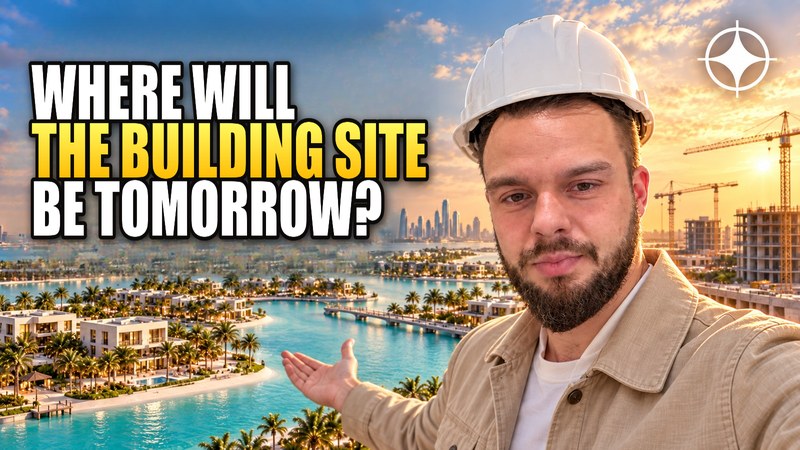
In a large master plan it matters not only what gets built but when and where. The phasing plan tells you where the construction site will be for the next few years.
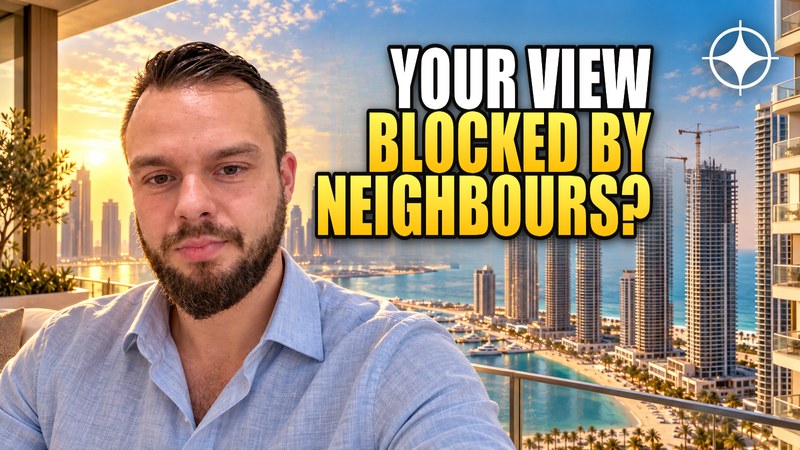
A dense cluster of towers on reclaimed land between the Marina and the sea. The main risk to the view is not someone else’s plot but the next phase of the same project.
The standard objection to buying an office here is that everyone saw the shortage and started building. Testing it against the pipeline: 24.2m sq ft to 2030 against a stock of 122m, and why 4% a year is absorption rather than oversupply.
Telegram is the fastest way — I answer personally.
Message on Telegram