
Small offices as an investment: buying commercial at pre-launch
Almost every private buyer in Dubai looks at apartments, which is exactly why the small-office market is worth understanding. The tenants are companies, the leases are longer, the yields are usually higher — and almost everything about the transaction works differently from residential.
What a small office actually is as an asset
The tenant is a business: a consultancy, a clinic, a trading company, a professional services firm. Businesses move less often than people, leases run longer, and a tenant who has fitted out a space has a strong reason to renew. That stickiness is the core of the case.
The counterweight is void risk. A vacant apartment re-lets in weeks; a vacant office in a soft market can sit for a year while service charges keep arriving. Model a long void and see whether the purchase still works — if it does not, the yield was never the real number.
Two lines exist here that residential buyers never meet. Commercial property carries 5% VAT, and fit-out is a real cost cycle — either you deliver a fitted space and charge for it, or you deliver a shell and accept a rent-free period while the tenant builds it.
Talk to a licensed broker: WhatsApp +971 50 120 32 64 · Telegram
Where the demand is
Location logic differs from residential. What an office tenant buys is address credibility, parking, access for staff and clients, and proximity to whichever licensing authority governs their activity. Free-zone and mainland status matter: a company licensed in one cannot always operate from premises in the other.
That is why central-adjacent districts with good road access and a licensing story — Business Bay, the creekside districts, the established free-zone clusters — carry office demand that outlying areas do not, whatever the price per square foot suggests.
Parking is the item most often underestimated. An office with too few bays for its area is discounted by every serious tenant, and the allocation is fixed at design stage.
Does buying at pre-launch help?
It helps with price and with choice of floor, in exactly the way it does in residential: the earliest phase is priced to build momentum and the good units go first. On commercial that choice matters more, because floor plate shape and column positions decide what a tenant can do with the space.
It does not help with the thing that actually determines your return — whether there will be tenants in that building for that size of unit when it completes. Ask what has let nearby, at what rate, and how long it took.
And check the strata arrangements: how the building is managed, what the service charge is, and what the rules say about signage, fit-out and hours. In commercial buildings those rules decide which tenants can even consider you.
Frequently asked
Do offices yield more than apartments in Dubai?
Typically yes on gross, with longer leases and stickier tenants. The offsetting risks are longer void periods, 5% VAT on commercial property, and fit-out cycles that residential owners never encounter.
What size of office is easiest to let?
Smaller units suited to consultancies, clinics and trading companies have the deepest tenant pool. Very large floor plates are limited to a small number of corporate tenants and take far longer to fill.
Does free-zone or mainland status matter for an office?
Yes. A company's licence determines where it may operate from, so the building's status narrows your tenant pool before anything else does. It is the first question to ask about a commercial unit, before price.
✍️ Message me on WhatsApp for a free consultation — off-market stock, payment plans and honest numbers on any of the projects covered here.
✅ Subscribe on YouTube — investment, property, business and relocation in the UAE and beyond.


Below market right now
From the daily off-market feed. Availability and price are confirmed on request.
All below-market listings →
In the news
The same subject in writing — analysis and news related to this video.

Ready Office at 3% or Off-Plan at 12%: Why Investors Still Choose the Lower Yield
Rising rents have pushed ready Dubai office prices so high that buying outright now yields just 2-3% a year. An off-plan office at AED 1 360/sqft with a forecast AED 200 rent pencilled out to a 12.3% ROI. Here's what pays for that gap.

Dubai’s primary office market: AED 13.1bn and 1 668 transactions in a half-year
Residential takes all the attention while off-plan offices posted their best half-year on record. The average ticket says who the buyer is.

Continental Investments: how to judge a central district nobody talks about
A developer building in Al Jaddaf, minutes from the centre and rarely mentioned. Overlooked districts are either an opportunity or a trap, and four checks tell you which.

Dubai offices are being let 12–18 months before the building completes
A practice that used to be an exception is now standard: tenants sign before delivery, fixing rate and floor area. What drives it, and what it does to the classic risk of buying an office off-plan.

Dubai Commercial Property 2025 Review: Resale Holds 72% of the Market, Offices Lead
Dubai's commercial resale market holds a 72% share versus 28% for off-plan — the mirror image of residential. A shortage of new supply is keeping prices up, while interest in off-plan offices grew almost 600% in a year.
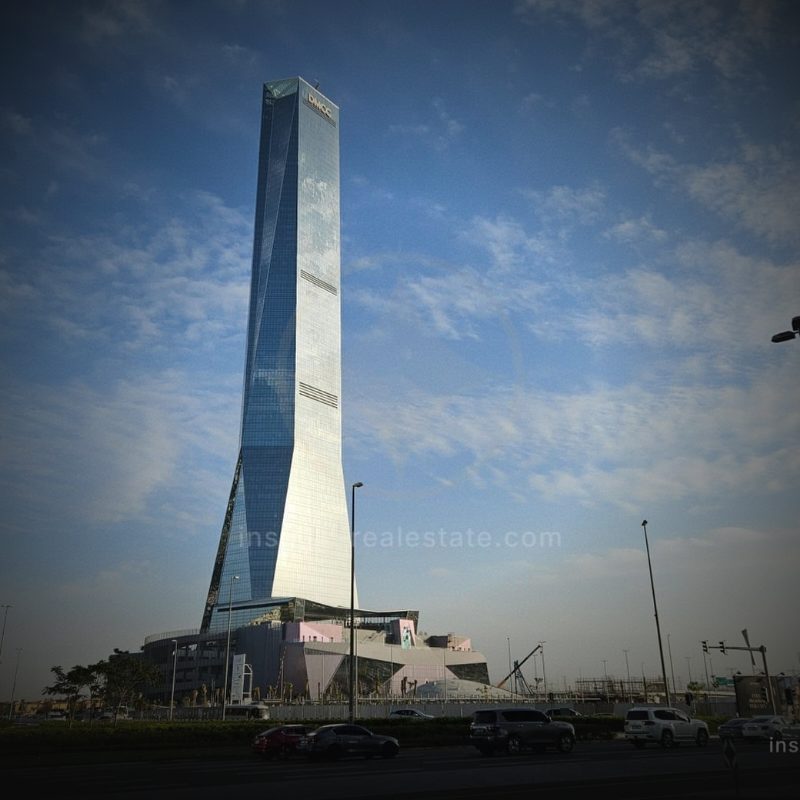
Grade A offices in Dubai: DMCC launches One Uptown Place and Two Uptown Place
DMCC is adding two office towers to Uptown Dubai — 21 and 15 storeys, more than 560 000 sq ft of Grade A space and 82 000 sq ft of retail. Leasing opens in the second half of 2026 and completion is due in Q1 2028, taking the district past 1m sq ft. What it means for nearby owners.