
Sweid & Sweid and Banyan Tree
A company whose core business is not housing: Sweid & Sweid has spent two decades building commercial and industrial real estate for named international tenants, and only stepped into residential once — a single branded tower on the JLT canal, delivered with the Banyan Tree hospitality group.
1 project by this developer in the catalogue. Nothing of theirs is in the discounted stock right now — nearby listings are below.
- A single canal-view purchase in JLT
- A buyer who values a hospitality brand — Banyan Tree — running the building
- An investor curious about the industrial-real-estate side of a residential developer
- Someone who wants a building with years of operating history rather than a fresh launch
The company in brief
Checkable facts about the developer itself. Unlike the figures above, these are not about our stock and do not move with what happens to be listed today.
- Founded
- 2006; headquartered in Dubai
- Focus
- development, investment and build-to-suit across commercial, residential, mixed-use and industrial real estate
- Flagship residential project
- Banyan Tree Residences, Jumeirah Lakes Towers — 32 storeys, 244 residences, delivered in 2019
- Expansion
- from the mid-2020s the group has built an industrial and logistics platform in the US under Sweid & Sweid America, and announced the Terralogix logistics park in Dubai
- Commercial tenants
- past corporate tenants named by the company include Visa, Oracle, Redbull, Snapchat and SAP
What kind of developer this is
Who they are, and why housing is not the main business
Sweid & Sweid has operated for nearly two decades and built most of its record not on selling apartments to individual buyers but on build-to-suit development — commercial, industrial and mixed-use assets constructed for a named institutional tenant, from logistics facilities to Grade-A office buildings. That is a fundamentally different model from a developer who launches a tower and sells it off-plan in slices: here a tenant or a buyer for the whole asset is typically secured first, and the building is designed around their requirements, so a schedule slip does not just dent resale sentiment — it breaches a contract with a corporation that enforces its own penalty clauses.
For a residential buyer, the practical read is that a company with this background tends to be more conservative on timelines and budgets, because it is used to counterparties who price delays far more aggressively than individual off-plan buyers do. The flip side is that its residential experience is shorter and narrower than a developer that has only ever built apartments.
The one residential address, and why that format
Banyan Tree Residences in Jumeirah Lakes Towers is not a multi-building master plan but a single tower on the canal, delivered with the international Banyan Tree hospitality group as a branding and management partner: building services run to a hotel-grade standard rather than a typical owners'-association setup. That is a common pattern for a developer stepping into residential rarely — rather than spreading effort across a series of towers, put the full effort into one status address where the hotel partner's own reputation underwrites part of the developer's risk.
That gives a buyer a useful benchmark for judging operating quality — services are tied to a hotel operator whose global reputation is a known, harder-edged one — but it does not give what a serial residential developer offers: a track record of the same mistakes being fixed, project after project.
What the move into industrial real estate signals
In recent years Sweid & Sweid visibly grew its industrial and logistics business — in the US, where it is building a platform to lease to large corporate occupiers, and in Dubai, with the announced Terralogix logistics park. Industrial real estate runs on long payback horizons and institutional tenants who need years of predictability; developers who survive in that market tend not to chase the fast, aggressive sales pace and payment plans common in parts of the off-plan residential market.
That is broadly reassuring: capital committed to long-term institutional leasing is usually more patient than capital looking for a quick exit through unit sales. But it also means residential is not the centre of this company's business, and a new residential launch should be judged as an occasional side project rather than the next unit off an established assembly line.
What to check with a developer of this profile
With a short residential track record, due diligence should shift from marketing materials to primary sources: is the specific project and its escrow account registered, and who is the main contractor and what is their own delay history — for a developer new to residential, the contractor's record often matters more than the developer's brand. It is also worth visiting the one delivered building in person rather than in renders: the state of the lobby and lifts after several years of operation says more about real maintenance culture than any brochure.
It is also worth checking whether the announced management partner for a new project matches the hospitality standard set at Banyan Tree Residences — if it does, that is a meaningful signal; if management is handed to an unknown operator, the single past address carries much less weight.
Who this suits
A buyer after one specific canal-view apartment in JLT who values hotel-grade service over a developer's full ambition list will find the single residential project reassuring rather than a red flag — it reads as a deliberate choice, not a project caught mid-pipeline. An investor who normally screens developers by land bank size and the number of parallel sites under construction should keep in mind that this company's entire residential experience is one delivered address, and size the risk of any new launch accordingly.
Projects by Sweid & Sweid and Banyan Tree
All projects →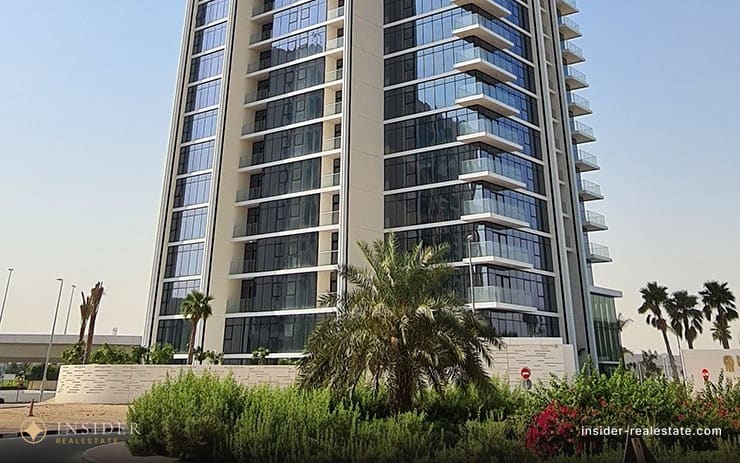
What these numbers mean, and what they do not
The developer is inferred from the project name — there is no developer column in the base. So the figures describe our stock, not the company's share of the Dubai market: a developer sitting on an enormous volume of completed housing can look smaller here than one whose projects reach the resale market more often.
These are asking prices, not closed transactions. For a specific building I pull the registered Land Department sales and show where deals actually closed.
Other developers
All developers →Sweid & Sweid and Banyan Tree: questions and answers
Is Sweid & Sweid and Banyan Tree a reliable developer?
Founded: 2006; headquartered in Dubai. Check Sweid & Sweid and Banyan Tree in the Land Department’s open register, not in the marketing: licence status, per-project construction progress and the registered escrow account are all there. Off-plan payments land in that escrow under RERA supervision and reach the developer only against verified construction milestones. The full dossier is further up the page.
What projects is Sweid & Sweid and Banyan Tree building?
Our catalogue holds 1 project by this developer, each with a building passport: storeys, unit count, handover date, the mix of bedrooms. The list is on this page. Under each project sit the lots on sale, where there are any.
Should I buy from Sweid & Sweid and Banyan Tree direct or through a broker?
For an off-plan buyer the price is identical, because the developer covers the broker’s commission. Going straight to Sweid & Sweid and Banyan Tree is therefore no cheaper, and the choice there is limited to its own projects — you will not get a comparison with neighbouring buildings or a candid read on handover dates. On resale and assignment the commission is standard: 2% plus VAT.
Is Sweid & Sweid and Banyan Tree worth buying
It depends what you are buying and why. Send me your budget and the job it has to do — I will tell you which of this developer's projects make sense right now and which I would walk past.
Ask on WhatsAppAsk a question
Telegram is the fastest way — I answer personally.
Message on Telegram