
Electric vehicles in the UAE in 2026: the DEWA charging network, tariffs, and what it means for a homeowner
Registered users of DEWA’s EV Green Charger network grew from 16,828 in September 2024 to 23,600 by mid-January 2026. The public charging tariff — AED 0.70/kWh on AC, AED 1.20/kWh on fast DC — has held since September 2024. How the network is built, and what it means for a home with charging.
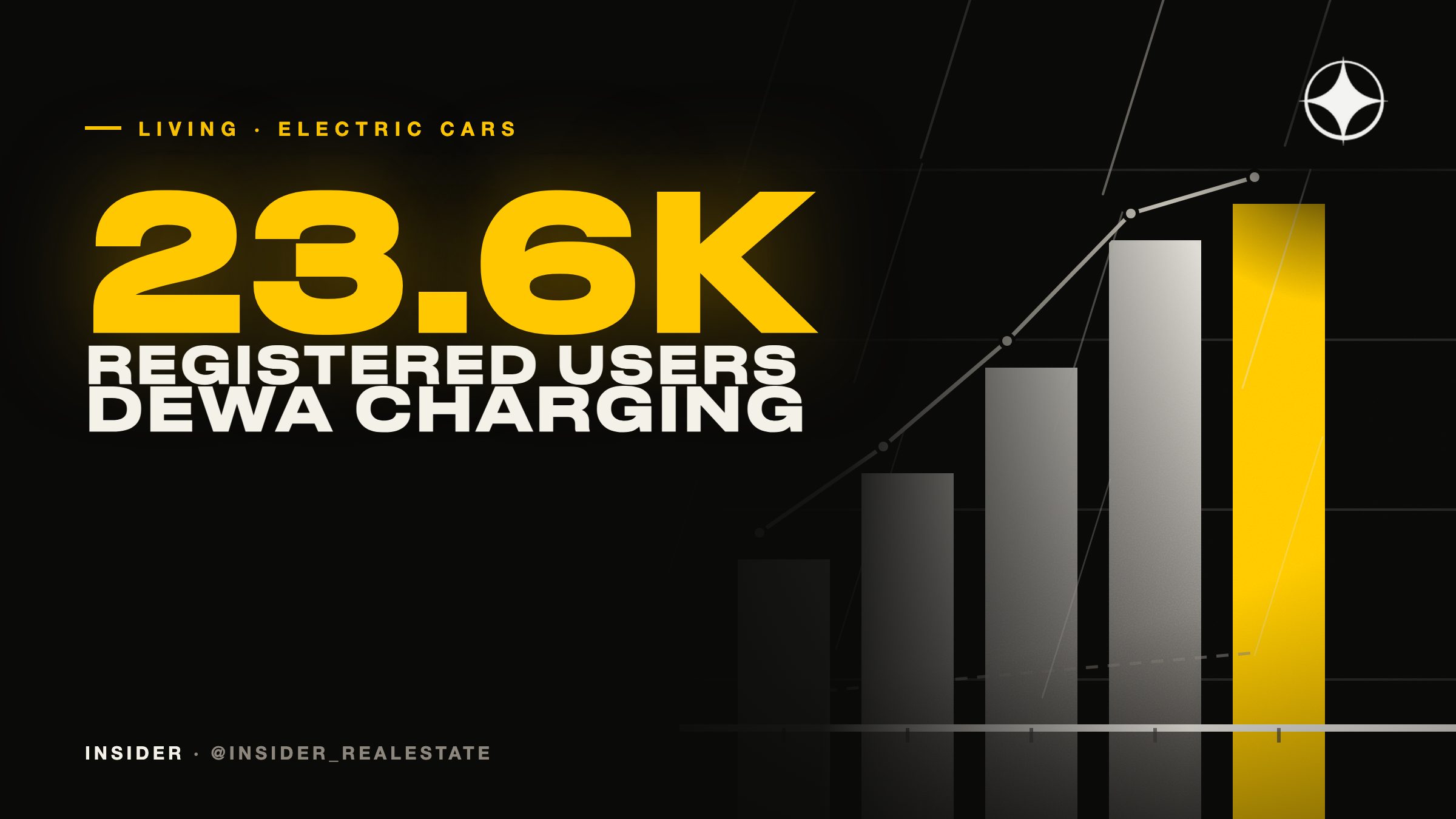
Electric vehicles in Dubai have stopped being a niche topic: the charging network is growing several times over, and the number of registered owners is up by nearly 40% in just over a year. For a homebuyer that is no longer an abstract environmental question — it is a practical one, about whether the building has charging, whether the mall on the commute does, and whether a villa can take a home charger.
How big the DEWA network actually is
Dubai's utility, DEWA, has run its EV Green Charger network since 2015, when it counted around 100 stations. By 2025 the network had grown past 400 stations, with DEWA targeting 1,000 by the end of that year. According to industry coverage from Zawya, Dubai had roughly 740 charging points by the end of 2024 across DEWA and licensed private operators, and around 1,860 more were added over 2025, with EV registrations up 28% over the same period. The number of users registered in the EV Green Charger programme grew from 16,828 at the end of September 2024 to 23,600 by mid-January 2026, according to DEWA.
Summer 2026 also brought new infrastructure aimed at commercial fleets: in July, DEWA and Dubai Taxi Company opened Dubai's first ultra-fast charging hub — 24 points at 360kW each at DTC's headquarters, the first phase of an agreement signed in October 2025 to deploy more than 200 ultra-fast points for the taxi fleet. That same month, DEWA installed 46 charging points at the Al Shera'a building.
Talk to a licensed broker: 📲 +971 50 120 32 64 on WhatsApp, @dubai_oleg on Telegram
What charging actually costs
Since 30 September 2024, under Cabinet Resolution No. 81 of 2024, charging at public EV Green Charger stations is paid. Current tariffs:
- AC charging — AED 0.70 per kWh plus VAT.
- Fast DC charging — AED 1.20 per kWh plus VAT.
- Home charging — billed at the standard residential DEWA tariff, with no EV surcharge.
These tariffs still apply in 2026. Public fast charging costs noticeably more than AC, so for an EV owner with a private parking spot, charging overnight at home remains meaningfully cheaper than relying on public fast chargers.
What it means when choosing a home
Charging infrastructure in or near a residential community is becoming part of choosing a district, on par with proximity to a mall or a school: a villa or townhouse without dedicated parking makes installing a private charger harder and requires DEWA approval, while communities where the developer has already wired in charging points remove the question entirely. Dubai's clean-energy push, of which the charging network is one piece, is covered in more depth in DEWA's 2030 clean energy target.
Budgeting a move with utility costs in mind? Our cost of living in Dubai guide breaks down what DEWA actually costs a household each month.
In the news
Other write-ups on the site about the same thing.

DEWA raises the bar: 36% clean energy in Dubai by 2030, up from 25%
Dubai Electricity and Water Authority has revised its target — clean energy will reach 36% of the mix by 2030 instead of the planned 25%. The backbone is the Mohammed bin Rashid solar park, a green hydrogen plant and the Hatta pumped-storage station.
Dubai utility bills in 2026: the DEWA bill, the housing fee, and what it costs a month
One DEWA bill bundles electricity, water and the housing fee — a 5% municipal levy on annual rent, split into 12 instalments. A two-bedroom apartment runs about AED 300–500 a month; a villa with a chiller, AED 700–1,000-plus.
DEWA and the cooling account: the bills that do not follow the title deed
Electricity, water and cooling are separate accounts with separate providers and separate deposits, and none of them moves automatically when the property does. What to close, what to open, which deposit comes back, and why an empty apartment still runs a bill.
What a Dubai apartment costs to run: the bills that are not the service charge
Cooling, DEWA, internet, insurance and the appliances inside your own walls sit outside the service charge entirely. The list of what an owner pays after the purchase, and the one line that separates a villa from a flat.