
Guaranteed yield and “high ROI” in Dubai listings: what stands behind the number
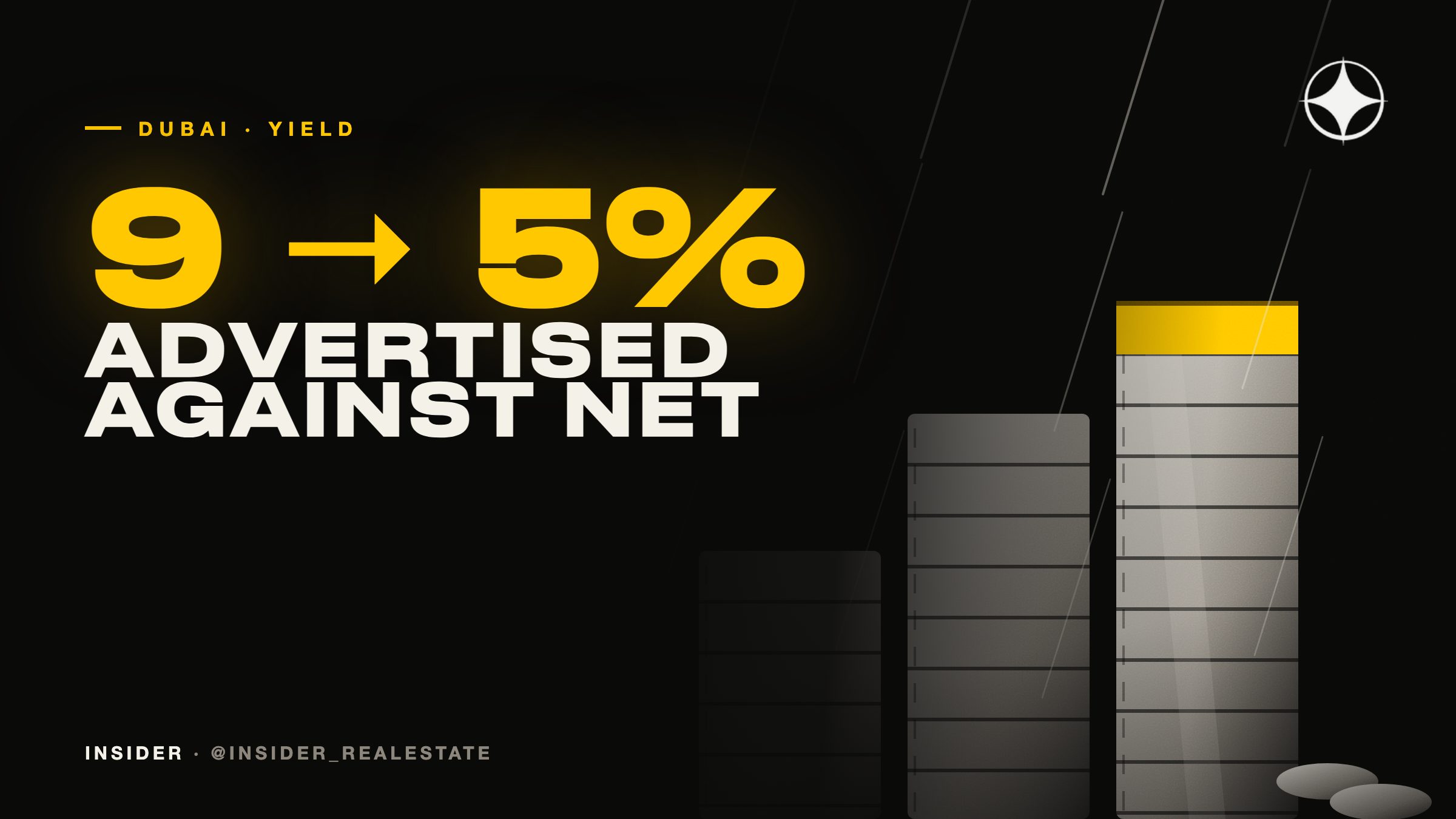
A guaranteed return is a contract with an end date, and an advertised ROI is usually a gross figure with the costs removed. How both are constructed, and the four deductions that turn 9% into something closer to 5%.
Two numbers dominate Dubai investment marketing: a guaranteed return for a fixed period, and a headline ROI attached to a listing. Both are real. Neither means what a buyer usually takes it to mean.
Guaranteed yield: a contract with an expiry date
A guaranteed return is a commercial undertaking by the developer or an operator to pay a fixed percentage for a defined term — commonly two to five years. It is genuine while it runs, and it ends.
What matters is what happens on the day after. If the guaranteed rate sits above what the property actually earns in the open market, the price you paid embedded that guarantee, and when it lapses both your income and your resale value adjust to the real number. The questions are therefore: who is paying the guarantee and out of what, what the market rent for this unit is without it, and what the exit looks like once it ends.
Talk to a licensed broker: 📲 +971 50 120 32 64 on WhatsApp, @dubai_oleg on Telegram
A guarantee funded out of an inflated purchase price is not income. It is your own money returned to you in instalments.
Advertised ROI: gross, not net
The percentage attached to a listing is almost always annual rent divided by price. It is arithmetically correct and it omits everything that happens between the tenant's cheque and your account.
- Service charge. Levied per square foot per year, from roughly AED 10–15 in mid-market schemes to over 40 in branded and waterfront ones. On a 1 000-foot apartment that is AED 10 000–40 000 a year.
- Void periods. Even in a liquid district, a change of tenant costs weeks. One month empty is 8% of the annual rent.
- Letting commission and Ejari. The agent's fee is a share of the annual rent, plus registration and, on renewal, often a further fee.
- Maintenance and replacement. Air conditioning, white goods, repainting between tenants. In this climate these are annual costs rather than occasional ones.
Take a headline 9% through those four and you commonly land near 5–6%. That is still a decent return; it is simply a different number from the one in the advertisement, and it is the one your bank account will show.
How to test a claim in five minutes
- Ask for the service charge in dirhams per year for that specific unit, not the rate per foot.
- Ask what the property actually let for last year, and for the year before.
- For a guaranteed scheme, ask for the market rent of a comparable unit without a guarantee.
- Ask what the seller's own net figure was after all costs. A seller who cannot produce it has not calculated it either.
Where the honest numbers live
Percentage returns are highest in dense mid-market districts and lowest on the waterfront and in branded stock. That is not a defect of the premium segment — it is what it is for. Premium buys stability, tenant quality and capital preservation; the mid-market buys yield. Any listing offering both at once is describing a gross number.
Video on this topic
The same subject on the English channel — each clip has a written version of its own.
 11:44Dubai Hills ready apartments: the park, the schools and a 6–7% long-let yield23 September 2023
 10:22Australia vs Dubai property investment: 10/90 payment plans, tax and rental yield10 October 2026
 3:02Shared accommodation in Dubai: what Law No. 4 of 2026 changes for owners and sublets18 October 2026
 8:54Address Sky View: the twin towers with the bridge, reviewed properly31 May 2024


In the news
Other write-ups on the site about the same thing.
How to actually calculate the return on a Dubai apartment, with every cost included
Gross yield, net yield, cap rate and return on equity are four different numbers and get confused constantly. A worked structure that turns an advertised 9% into the figure your account will show.
Resale or rental in Dubai: two investor strategies compared, plus a third — flipping
Selling before handover returns 25% on capital if prices rise 10% and you have paid 40%. Renting pays 5.5–6.5% net every year. Flipping a villa: buy at AED 12.5m, spend 3m, sell from 19m. Three Dubai strategies compared on cash, time and risk.

Dubai property investment mistakes: five errors that cost investors money, with the numbers
Five mistakes Dubai property investors repeat: trusting the 8% listing yield when the net is 6.7%, comparing prices instead of payment plans, buying the district not the building, entering with no exit plan, and believing a guaranteed 7%.

Payback period: why Dubai’s low ranking is good news
International tables measure how many years of rent it takes to repay a home’s price. Dubai is regularly at the bottom — and that is the right place to be.
Rent in Dubai is paid a year in advance — and it changes the whole calculation
One feature of Emirati practice drops out of most models even though it affects the outcome more than a couple of tenths of a percentage point of yield.

Trophy property: why it has no ROI, and what to calculate instead
A unique asset cannot be modelled like a rental flat: no comparables, no predictable income stream, no predictable exit. What actually sets price at the top of the market, and which calculations are worth doing there.