
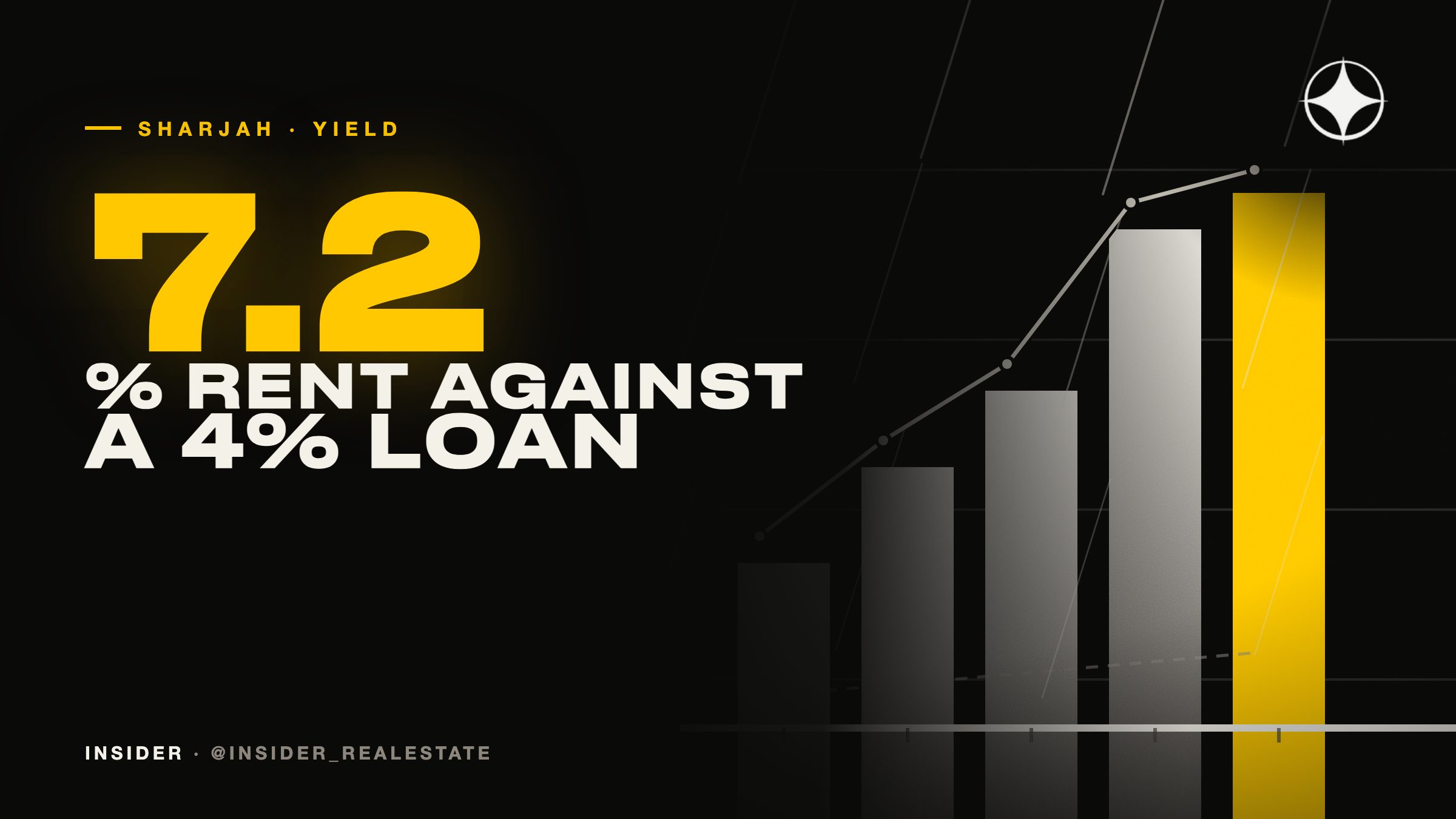
Sharjah as an arithmetic exercise: 7.2% rental yield against a 4% loan
Investment analysis in the UAE is usually built around Dubai. The neighbouring emirate runs on a different price level and different maths — a worked scenario with a mortgage and positive leverage.
Investment write-ups in the UAE are usually built around Dubai. It is worth looking at the neighbouring emirate, where the price level is different and so is the arithmetic.
The scenario
- Location: central Sharjah, a forming community with a mall, branded residences, schools and business centres.
- Budget: AED 700 000 to 1m, using a mortgage.
- Property: a one-bedroom apartment in a completed building.
- Loan rate: around 4% a year.
The result
Expected rental yield of 7.2% against a cost of borrowed funds of 4%. After the mortgage payment, roughly 45% of the rental flow remains in hand — on the order of $6 500 a year.
Why it works
The mechanism is positive leverage: when the yield on the asset exceeds the cost of the debt financing it, borrowing increases the return on the equity you actually put in. That is the textbook case, and it is comparatively rare in Dubai's premium segment, where yields sit below or close to borrowing costs.
Talk to a licensed broker: 📲 +971 50 120 32 64 on WhatsApp, @dubai_oleg on Telegram
It works here because the entry price is low relative to rents. Sharjah houses a large working population, much of it commuting into Dubai, and rental demand is deep and price-sensitive rather than discretionary.
What the calculation does not include
- Void periods. The 7.2% is a gross figure; a month empty is roughly 8% of annual rent.
- Service charge, maintenance and letting commission, which take the net well below the gross.
- Rate risk. A 4% loan at a floating rate is not a 4% loan for the term. The scenario reverses if borrowing costs rise faster than rents.
- Ownership rules. Foreign ownership terms in Sharjah differ from Dubai's and are the first thing to verify, not the last.
- Liquidity. A smaller, more local buyer pool means a longer sale.
What it is useful for
As a demonstration that the highest percentage return in the UAE is generally not in the most expensive emirate, and that leverage only helps when the spread is positive. Both points transfer to any market; Sharjah simply makes them unusually visible.
Video on this topic
The same subject on the English channel — each clip has a written version of its own.
 3:02Shared accommodation in Dubai: what Law No. 4 of 2026 changes for owners and sublets18 October 2026
 10:22Australia vs Dubai property investment: 10/90 payment plans, tax and rental yield10 October 2026
 11:44Dubai Hills ready apartments: the park, the schools and a 6–7% long-let yield23 September 2023
 17:28Commercial mortgage in Dubai: offices, retail and warehouses under construction20 September 2026


In the news
Other write-ups on the site about the same thing.

Sharjah rent law: no rent increase for three years and new eviction grounds
Sharjah’s Law No. 5 of 2024, in force since September 2024, bars rent rises for the first three years of a lease without the tenant’s consent, and for two more years after an agreed rise. A tenant can be evicted after 15 days of non-payment.

A UAE mortgage for a non-resident: a 20% deposit, rates from 3.97%, and the arithmetic of leverage
The central bank cut its key rate from 5.4% to 4.9%, and banks were offering around 4% fixed for three years. With rental yields of 7–10%, borrowing starts working for the owner rather than against them.

A 7% guaranteed rent plus a mortgage: where the advertised 12% comes from, and what the model leaves out
Worked through on real numbers: how a developer’s 7% guaranteed rent becomes 12% a year on the cash you put in, purely through borrowing — and the five contract terms to check before you take that figure seriously.

Moscow vs Dubai mortgages in 2026: the rate, the payment and the total cost
Market mortgage rates in Russia sit near 18.7% in September 2026; a non-resident in Dubai can borrow from 5%. On a comparable loan the total cost over 25 years differs several times over. We run the numbers and explain who can actually access the Dubai rate.

Guaranteed yield can end: a hotel chain suspended payments to investors
It sounds like a bond and is sold as risk-free income. In 2026 a large chain paying 7% on ten-year contracts notified clients it was suspending them.
Sharjah is spending AED 1.65bn on roads and stormwater drainage
Two of the largest construction programmes in the emirate’s history are running at once. They, rather than any developer’s payment plan, will determine what these districts look like in five years.