
Hatta: the mountain half of Dubai nobody puts in the brochure
Say Dubai and you picture towers, beaches and malls. The emirate also owns a mountain: Hatta, an exclave in the foothills of the Hajar range roughly ninety minutes from the city, where the landscape is rock and turquoise reservoir rather than glass, and the air is genuinely cooler. The contrast is the point — and over the last few years the government has been deliberately turning it into an ecotourism cluster.
Where it is and why it is separate
Hatta is administratively part of Dubai but geographically detached from it, sitting against the Omani border with other emirates' territory in between. That is a legacy of how the region was historically settled rather than a modern planning decision.
The drive from the city takes around ninety minutes on a good road. That distance is what preserved the place: it was never close enough to be absorbed into the metropolis.
The altitude does the rest. It is not alpine, but the difference in summer temperature against the coast is enough to change what you can do outdoors.
Talk to a licensed broker: WhatsApp +971 50 120 32 64 · Telegram
What is actually there
The dam and its reservoir are the signature image — a band of turquoise water between bare rock, with kayaks on it. The heritage village and restored fort cover the history, and the surrounding wadis carry hiking and mountain-bike trails.
Accommodation has expanded from almost nothing to a mix of hotels, lodges and organised camping, aimed at weekend visitors from the city rather than at international tourists.
The overall proposition is a two-day break without a flight, which for a city of expatriates who fly constantly turns out to be a real market.
The development programme
This is a state project rather than an organic tourist boom. Dubai has published a development plan for Hatta covering hospitality, sports infrastructure, trail networks and facilities intended to keep visitors overnight rather than for an afternoon.
The stated logic is diversification: giving the emirate a mountain and adventure product to sit alongside the beach and the shopping, and giving residents somewhere to go inside the emirate.
That backing matters for anyone thinking about it commercially. Where the state builds the infrastructure, the risk profile is different from a private resort betting on demand it must create itself.
The property angle, kept honest
Hatta is not an investment market in any conventional sense. The residential stock is small, the transaction volume is tiny, and there is no rental market resembling the city's.
What exists is a hospitality and leisure story: lodges, camps, tour operations, and the businesses that serve weekend visitors. That is an operating business rather than a passive asset.
If someone tells you Hatta is the next Dubai property play, ask them to show you comparable transactions. The absence of an answer is the answer.
If you are going
Winter, obviously — the season runs roughly November to March, and outside it the mountains are as hot as everywhere else.
Weekdays if you can. The dam is genuinely busy on Fridays and Saturdays, and the point of the place is that it is quiet.
And treat the border seriously: parts of the surrounding area sit close to Oman, and some trails cross terrain where that matters. Standard advice, but worth stating.
Why it still belongs in this series
Because it shows how the emirate builds demand deliberately. Hatta had scenery and nothing else; the visitors followed the trails, the hotels and the access road, in that order.
That is the same mechanism at work in every district covered elsewhere in this section: infrastructure first, then people, then prices. Hatta is the version where the sequence is visible because it is happening in one small place at one time.
It is also a useful corrective to the idea that Dubai is only the coastal strip. The emirate is much larger than the part that appears in photographs, and the planning applies to all of it.
What I would take from it
As a resident: the best short break the emirate offers, and the reason to own something with a boot big enough for bikes.
As an investor: a case study rather than a market. Watch what the state builds and how fast visitors follow — the same pattern repeats in the districts where you actually will buy.
And as a counterweight to the brochure version of Dubai, which is a useful thing to have when you are deciding where to spend a large amount of money.
There is also a quieter argument here about the emirate itself. A government that invests in a mountain village with a few thousand residents, on a horizon of decades and with no obvious commercial return, is behaving like an owner rather than a promoter. For anyone buying an asset that depends on how the place is run for the next twenty years, that pattern is worth more than any single project.
Frequently asked
Can foreigners buy property in Hatta?
The residential stock is very small and transactions are rare, so this is not a market in the way the city is. Ownership rules vary by plot and need checking case by case. Anyone presenting Hatta as a property play should be able to show comparable sales; usually they cannot.
When is the best time to visit?
Roughly November to March. Outside that window the mountains are as hot as the rest of the emirate and the outdoor activities that make the trip worthwhile stop being pleasant. Weekdays are considerably quieter than Friday and Saturday.
✍️ Message me on WhatsApp for a free consultation — off-market stock, payment plans and honest numbers on any of the projects covered here.
✅ Subscribe on YouTube — investment, property, business and relocation in the UAE and beyond.


In the news
The same subject in writing — analysis and news related to this video.
Hatta in 2026: the mountain exclave of Dubai, 50km of bike trails, and what real estate looks like there
Hatta is part of the emirate of Dubai, tucked into the Hajar Mountains, about 90 minutes to two hours from the city. A mountain-bike centre with 50km of trails, hiking, kayaking on Hatta Dam and a night sky free of city glow. What the enclave offers, and what housing there actually is.
The Dubai average that describes nobody: villas and apartments in one figure
In July 2026 the blended residential index was down 1.6% over the year. Underneath it, villas were flat and apartments were down 4.2%. The blended figure was accurate and told a buyer of either nothing at all.
Retail is growing where nobody expected: International City, JVC, Majan and Arjan
Transaction statistics on Dubai retail units give an unexpected picture: activity leads not at prestige addresses but in mass residential districts.

Al Warqaa: buying in a district nobody developed
Most of Dubai is somebody’s project, with a master plan and a community charge. Al Warqaa was built plot by plot, and that changes five practical things.
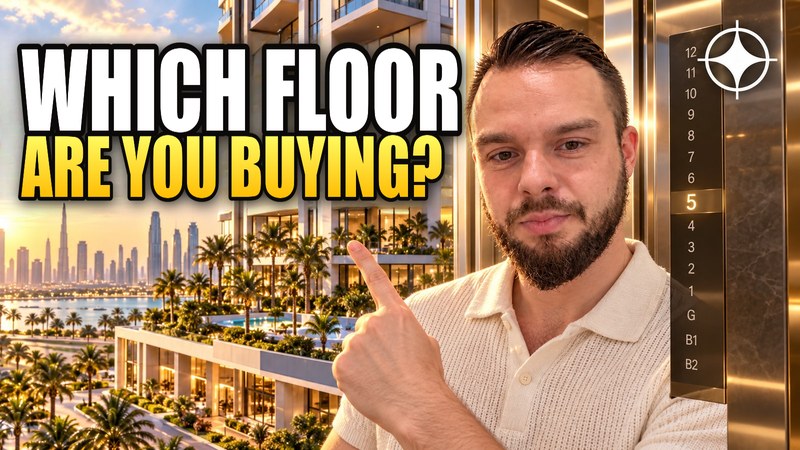
2B + G + 3P + 19: how to read floor counts in a Dubai brochure
Residential brochures state height as a formula. Decoded, it explains why the “fifth floor” in a Dubai tower can be at the height of a ninth — and whether paying for height is worth it.

Halcon Real Estate: how to spot a building where nobody is in charge
A Dubai Marina tower from 2011. In buildings owned mostly by absent investors, decisions stop being made — and the symptoms are visible in an afternoon if you know them.