
Jumeirah Islands: fifty islets, a handful of houses on each, and one shared postcode that is not the same place
Two kinds of listing arrive under this name. One is a villa on an islet with water on two or three sides of the plot. The other is an apartment or townhouse in Jumeirah Heights, which shares the postcode and is a different product, a different price and a different tenant.
What the community is
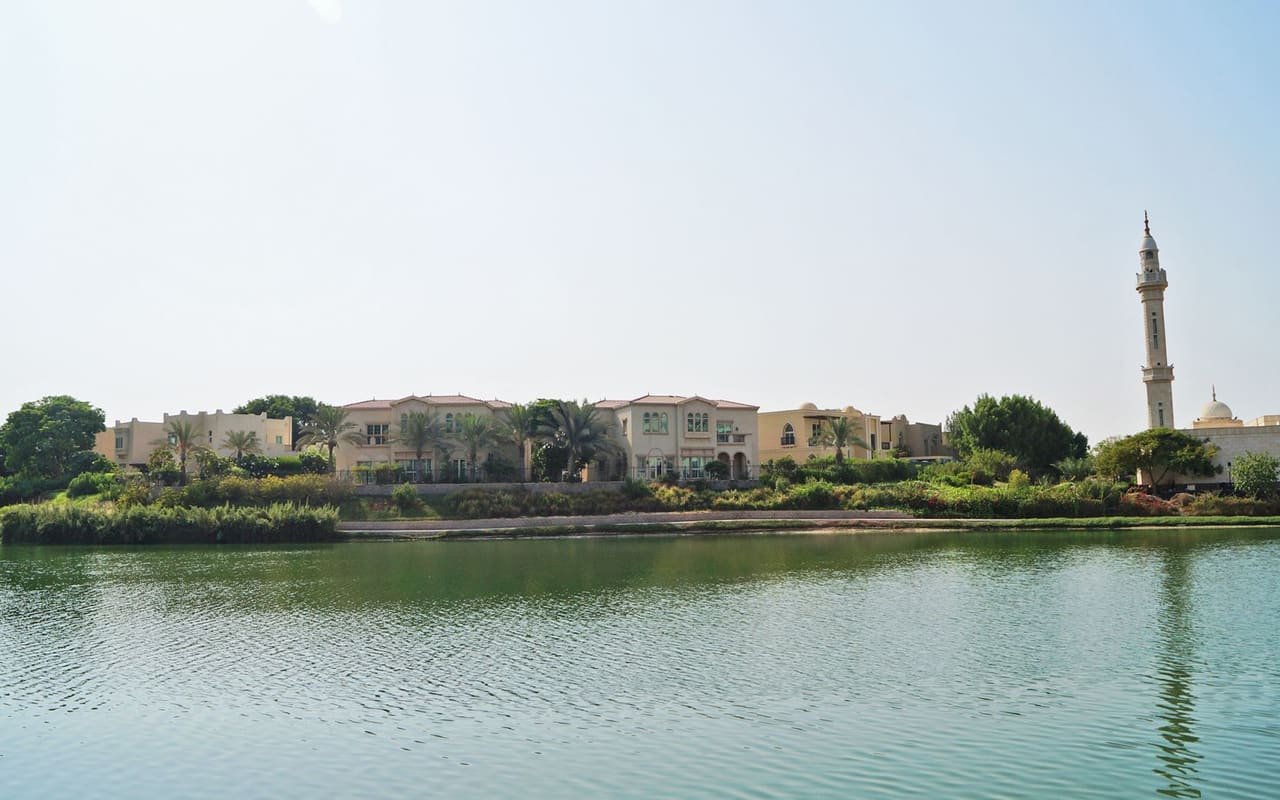
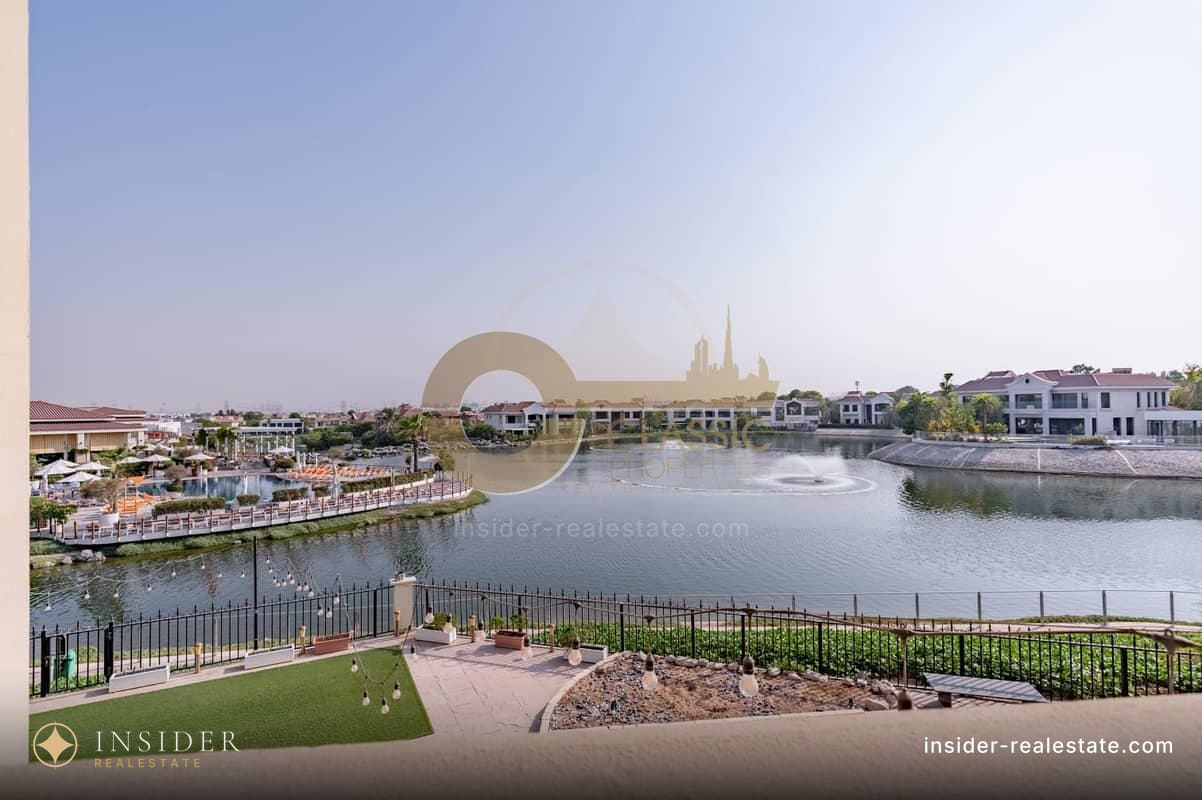
Jumeirah Islands is a Nakheel development of around fifty man-made islets, each carrying a small cluster of villas and surrounded by lakes. It sits directly behind Jumeirah Lake Towers, off Sheikh Zayed Road.
Each islet holds only a handful of houses, which is what produces the community’s defining quality: very few neighbours, and water on most sides of most plots.
The villas are large, in several architectural families — Mediterranean, Oasis, Garden Hall and so on — and the landscaping has been growing for the better part of two decades.
Talk to a licensed broker: WhatsApp +971 50 120 32 64 · Telegram
The Pavilion clubhouse sits at the centre with a gym, pool and restaurants. Jumeirah Heights, an adjoining cluster of apartments and townhouses, shares the same postcode and is a different product entirely.
Reading the offer
Villa listings are identified either by architectural family or by cluster number, and both matter more than they look. A cluster of four houses on its own islet is a different living arrangement from a street of forty, and the position within the islet decides how much of the plot boundary is water.
Water on three sides and water on one side are different houses at different prices, and the site plan does not always make it obvious. This is the single variable that most separates two otherwise identical listings.
The Jumeirah Heights side is apartments and townhouses rather than detached houses. It shares the address, the road access and some of the amenity, and it shares almost nothing else — treat it as a neighbouring community in the analysis, not as a cheaper tier of the same one.
Both sides are twenty-year-old stock, and both have been renovated to widely varying standards. Condition is a larger component of value here than in any newer district.
How this differs from other villa districts
Water at the plot boundary rather than water in the distance. In most Dubai communities the lake is an amenity you walk to; here it is what your garden ends at.
Density is the lowest of any comparable district, by design rather than by accident of the site.
The location is unusually central for a villa community: JLT, Marina and Media City are all minutes away, which villa buyers normally trade away for space.
The consequence is a small, specific market. Few houses, few buyers, and prices set by negotiation rather than by a deep run of comparables.
Who lives here and who rents
Established families and senior professionals, many of them owner-occupiers, in a community where people tend to stay for years rather than cycle through.
The rental layer is thin but well paid: tenants who want villa space with a Marina-area commute and are not willing to move out to Ranches or the Meadows for it.
Turnover is low. When a house does come to the rental market it is not usually available for long, because there is nothing directly comparable.
Short letting is not a feature of this community and would sit awkwardly with how it is arranged.
What the water actually costs
The lakes are engineered infrastructure, not scenery. They need circulation, treatment and constant management, and every part of that is paid for by the owners.
When maintenance has lapsed here, residents have noticed quickly — water quality and algae are visible problems in a community where the water is at the end of the garden rather than somewhere in the middle distance.
Ask specifically what the lake maintenance regime is, who performs it, what it costs and what the recent history has been. It is the single question most buyers skip and most owners end up caring about.
The same logic applies to the house. A villa beside standing water in this climate is harder on external finishes, and the maintenance cycle is shorter than for an inland property of the same age.
The drawbacks, and the comparison
Liquidity first. A thin market cuts both ways, and selling here takes months rather than weeks — which is a structural feature of fifty islets with a few houses each, not a sign of weak demand.
Cost of ownership, which surprises buyers who priced the purchase but not the year that follows it. And age: two decades of sun and humidity on houses beside standing water is demanding on structures and finishes alike.
No metro despite the central location — JLT’s stations are close by car but not on foot from most of the islets.
The realistic comparisons are the Meadows and the Lakes, with deeper markets and lakes as amenity rather than boundary; Emirates Hills, the tier above with bigger plots and an even thinner market; and Palm Jumeirah villas, which offer actual sea at far higher prices and far more traffic.
Frequently asked
What is the difference between Jumeirah Islands and Jumeirah Heights?
Jumeirah Islands is detached villas on around fifty man-made islets with water at the plot boundary. Jumeirah Heights is an adjoining cluster of apartments and townhouses that shares the postcode and the road access but is a different product, price point and tenant. Listings do not always make the distinction clearly.
Do all Jumeirah Islands villas have water around them?
Most have water on several sides of the plot, but the amount varies by position on the islet, and water on three sides versus one side is a real price difference. The site plan does not always make it obvious — establish the exact position before comparing two listings.
Who maintains the lakes at Jumeirah Islands?
Lake maintenance is funded by the owners through the community charge, and it is the community’s main asset and main running cost. Ask what the regime is, who performs it, what it costs and what the recent history of water quality has been — it is the question most buyers skip.
✍️ Message me on WhatsApp for a free consultation — off-market stock, payment plans and honest numbers on any of the projects covered here.
✅ Subscribe on YouTube — investment, property, business and relocation in the UAE and beyond.


Below market in Jumeirah Islands right now
From the daily off-market feed. Availability and price are confirmed on request.
All below-market listings →

In the news
The same subject in writing — analysis and news related to this video.
Waterfront villas in Dubai: from AED 21m on Palm Jebel Ali to 39.5m on Pearl Jumeirah
A five-bedroom villa is the most sought-after coastal format, which makes it a convenient way to compare locations. Four reference points, and the three factors behind the near-twofold gap.
Nakheel: the master developer of the islands, and what that title means
The state developer behind Palm Jumeirah and the Dubai Islands. The difference between a master developer and a building developer, and why it matters for what you own.

Jumeirah Golf Estates: a fairway view and the right to play are different purchases
A community around tournament golf courses. Buyers routinely assume ownership includes membership — it does not, and both cost separately.

Jumeirah Park: the plot, the house, and which one holds value
A villa community with generous plots. A house price splits into two components that behave in opposite directions, and listings quote the wrong one.

Lanai Islands: 13 villas on a private island inside Tilal Al Ghaf
Architecture by SAOTA, interiors by Kelly Hoppen, up to seven bedrooms. Why building around water rather than a golf course changes what the product is — and why thirteen houses rather than three hundred.
Dubai Islands: the last waterfront land, from about $5,200 a square metre
A chain of reclaimed islands under a single government master plan. Almost no coastal land with direct beach access is left inside the emirate — and one or two new projects launch here every month. The opportunity and the risk are the same fact.