
SOURCE 2 by Aldar: buying next to the museums on Saadiyat Island
Saadiyat Island is the only place in the Gulf where a residential district was planned around museums rather than around a mall or a marina. SOURCE 2 is an Aldar launch on that island — which means the thing to evaluate is not the building but what a cultural quarter does to the people who live beside it.
What the cultural district actually delivers
The Louvre Abu Dhabi is open, further institutions are in construction on the same quarter, and NYU Abu Dhabi is already on the island. Between them they produce a resident population that most new districts spend a decade trying to attract: academics, curators, diplomatic and corporate staff on multi-year contracts.
That tenant profile is the investment case in one sentence. These are households that arrive for years rather than seasons, sign long leases and do not move for a better view. Turnover is low and the demand is not tourism-dependent.
The island also holds the natural beach and the golf course, and Abu Dhabi's centre is a short drive across the bridges. It is a rare combination of quiet and connected — and the quiet is enforced by the masterplan rather than by distance.
Talk to a licensed broker: WhatsApp +971 50 120 32 64 · Telegram
Reading an Aldar launch
Aldar dominates development in the emirate and has delivery behind it at scale, which removes much of the uncertainty that sits under an off-plan purchase. The trade is choice: a market with one very large developer offers consistency and fewer alternatives.
The specific checks are the ordinary ones. What is built around the plot and when, the approved heights between the building and the sea, the service charge for the tower type, and what comparable delivered Saadiyat stock actually lets and resells for.
One extra check applies in Abu Dhabi and not in Dubai: confirm the plot sits inside a designated investment zone, where non-GCC buyers hold freehold title. Saadiyat is one, but the zone is part of the diligence rather than an assumption.
Abu Dhabi against Dubai
Smaller, steadier, less speculative. Fewer launches and fewer transactions mean prices move less sharply in both directions, and the resale market is thinner. For a long-horizon owner that stability is the attraction; for anyone who might need a quick exit it is a genuine constraint.
Rental demand is institutional rather than fashionable — universities, museums, government and energy sector employers — which is exactly why it holds up when Dubai's tourist-facing districts wobble.
The summary a buyer should carry: the same money buys a calmer life and a slower market, not a better return. That is a legitimate reason to buy here and a bad reason to expect Dubai's liquidity.
Frequently asked
Can foreigners buy on Saadiyat Island?
Yes — Saadiyat is one of Abu Dhabi's designated investment zones, where non-GCC buyers can hold freehold title. Outside those zones the position differs, so the zone is part of the due diligence.
Who rents on Saadiyat Island?
Academics, museum and cultural-sector staff, diplomatic and corporate families — households on multi-year contracts. Turnover is low and the demand is largely insulated from tourism cycles.
Is Abu Dhabi a better investment than Dubai?
Different rather than better: steadier prices, institutional tenants and long tenancies, against a thinner resale market and fewer transactions. It suits owner-occupiers and long-horizon investors more than anyone who may need to sell quickly.
✍️ Message me on WhatsApp for a free consultation — off-market stock, payment plans and honest numbers on any of the projects covered here.
✅ Subscribe on YouTube — investment, property, business and relocation in the UAE and beyond.


In the news
The same subject in writing — analysis and news related to this video.

Baccarat Residences Saadiyat: 77 Homes With Louvre and Guggenheim Views
Aldar brings the Baccarat brand to Abu Dhabi’s residential market: 77 residences in Saadiyat’s cultural district — two- and three-bedroom apartments, four-bedroom sky villas and two signature penthouses.

Aldar buys 2.3m sqm of land on Yas and Saadiyat: 3 000 homes worth AED 23bn
In February 2026 Aldar added more than 2.3m sqm on Saadiyat, Yas and next to Yas for about 3 000 homes with a GDV near AED 23bn ($6.26bn). That averages AED 7.7m per home — what it says about the launches to come.

Saadiyat Island apartments: Mandarin Oriental Residences and Henge Residences beside Abu Dhabi’s museums
Two branded launches on Saadiyat six months apart: Aldar’s Mandarin Oriental Residences (about 228 homes, designed by BIG, from AED 6.2m, Q3 2028) and Nord’s Henge Residences (166 homes, from AED 1.1m, 2028). Guggenheim Abu Dhabi opens on 11 December 2026.

Saadiyat Island apartments: Nobu Residences and The Source Terraces by Aldar, two years on
Two premium Aldar launches on Saadiyat: Nobu Residences (88 homes, November 2023, from about AED 7m) and The Source Terraces designed by BIG (June 2024, from about AED 3m). Both are sold out and due in 2027 — so the only way in now is a resale contract.
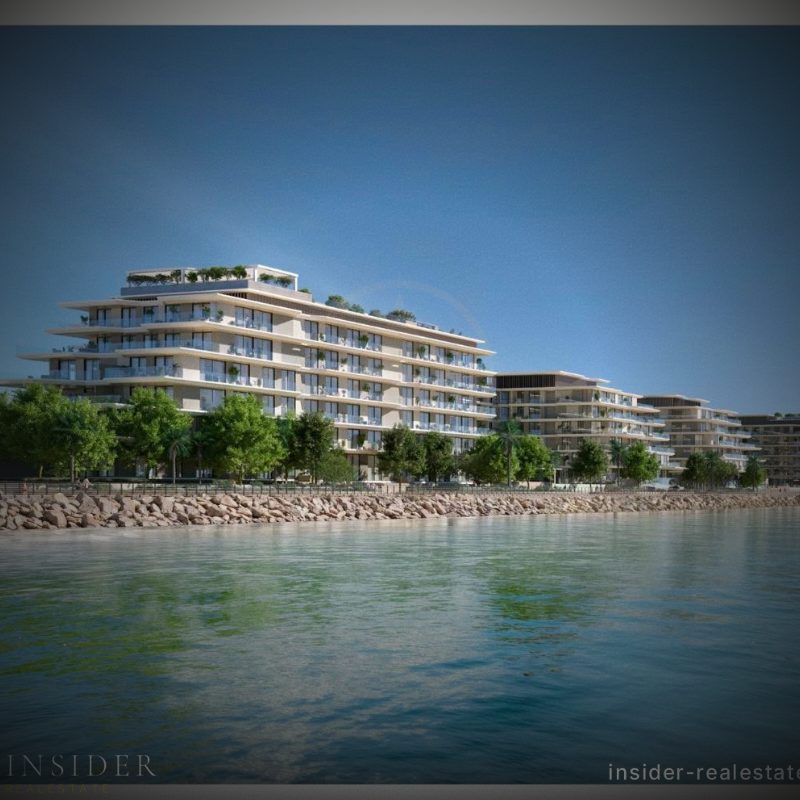
Bashayer on Hudayriyat Island sold out in a day: Modon banked AED 3bn on one launch
Modon's first residential project on Hudayriyat Island — 157 villas and 330 apartments — sold out completely on launch day, bringing in about $820 million. The developer has already followed up with Bashayer Final Phase, the last release in this cluster.
Riviera Residences on Al Reem Island: a pearl facade by Herzog & de Meuron
Mered has entered Abu Dhabi with a 240 000 sqm waterfront project on Oval Bay, designed by Swiss firm Herzog & de Meuron, complete with a private marina. Handover is set for March 2029; deep-foundation works began in spring 2026.