
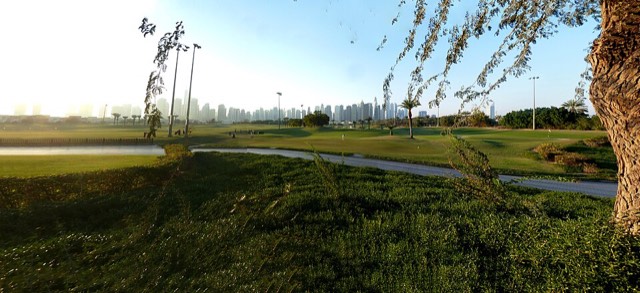
 Illustrative photo −11%
 Dubai Investments
Real estate is not this company's core business but one arm of a diversified public holding: Dubai Investments has been listed on the local exchange since the mid-nineties, and builds housing both through its own development unit and through stakes in other developers, rather than as a narrowly focused development firm.
2 lots in stock across 1 project. Of the 2 with a known status: 2 ready, 0 under construction. By median price — 43rd of 139.
- A buyer who values a developer's financial transparency — a public company publishes its accounts
- Someone considering Mirdif as a quiet, family-oriented, less hyped district
- An investor who values a diversified holding with assets beyond residential real estate
- Not for a buyer looking for a specialised developer narrowly focused on premium housing
Median price $899K AED 3 300 000
Entry price $899K AED 3 300 000 — the cheapest lot
Completed stock 100% 2 lots discounted, deepest −11%
The company in brief
Checkable facts about the developer itself. Unlike the figures above, these are not about our stock and do not move with what happens to be listed today.
- Founded
- 1995, a public company listed on the Dubai Financial Market
- Shareholders
- more than 15,000
- Capital
- paid-up capital of AED 4.25 billion, group total assets of AED 20.9 billion
- Development unit
- Dubai Investment Real Estate (DIR), spun out in 2006
- Flagship project
- Mirdif Hills — the first freehold development in Mirdif, around 4 million sq ft, roughly 1,300 apartments, a four-star hotel
- Project extension
- the Asayel Avenue residential cluster at Mirdif Hills — 193 units, an investment of around AED 400 million, construction starting Q2 2025, handover Q2 2027
What kind of developer this is
Who they are: a public holding, not a specialised developer
Dubai Investments PJSC was incorporated in the mid-nineties and was built from the outset as a diversified investment group rather than a residential developer. The company is listed on the Dubai Financial Market, has tens of thousands of shareholders and substantial paid-up capital, with group total assets at a scale comparable to major developers, but built across a spread of businesses: real estate, building-materials manufacturing, contracting, financial services, healthcare and education.
For a housing buyer, the company's public status is a practical advantage: the holding's financial statements are open and verifiable, which is rare in Dubai development, where most developers are private entities under no obligation to publish a balance sheet. That does not guarantee a flawless residential product, but it reduces the information gap when assessing the company's overall financial stability.
How the development arm is structured
The company's residential business sits in a dedicated unit, Dubai Investment Real Estate (DIR), spun out in its own time specifically for development and property management within the group. The unit's key asset is Mirdif Hills, the first freehold development in the Mirdif district, a mixed residential and commercial complex of substantial size with hundreds of apartments, a four-star hotel and a retail component, next to Mushrif Park and near Dubai International Airport.
The company keeps extending the same master plan rather than spreading into new locations: the recently announced Asayel Avenue residential cluster, of notable scale, is a direct extension of Mirdif Hills. Deepening one district rather than spreading across the city is typical of a developer with non-specialist origins: it lowers operational complexity and lets the company reuse infrastructure the district already has.
Joint structures and cross-holdings
Some projects are delivered not directly but through joint ventures with other market developers. Green Community West Phase 3, for example, is being built by Properties Investment LLC, where the controlling stake belongs to Dubai Investments and a minority stake to listed developer Union Properties, which has historically close corporate ties to Dubai Investments itself. For a buyer, that means the formal developer and escrow holder for a project like this may not be the headline Dubai Investments brand but a separate joint entity with its own registration.
That structure is neither worse nor better than direct development on its own — it is common market practice — but it calls for more careful checking of the specific project's paperwork: the developer named in the sale contract may not match the recognisable brand on the marketing material.
What the holding's diversification provides
Having real estate inside a broad industrial-and-financial holding gives the development arm access to the group's own building-materials production and contracting capacity — a vertical that specialised developers usually have to build through external tenders. That potentially reduces dependence on outside contractors at certain stages and makes quality control easier along the supply chain.
The flip side of diversification is that success or trouble in the group's other segments, from healthcare to financial services, shapes the company's overall credit profile and indirectly affects how much capital the holding is willing to direct to development at any given point in the cycle.
Who this suits
This developer suits a buyer who values financial transparency and the scale of a public holding more than narrow specialisation in premium housing. It suits someone considering Mirdif — a quiet, family-oriented district near the airport — as a sensible alternative to more hyped and expensive locations. It does not suit a buyer looking for a developer with a single focus on residential real estate and the shortest possible distance between the brand in the marketing and the legal entity in the contract: here that distance sometimes runs through joint structures worth checking separately for each specific project.
Dubai Investments listings in stock
All stock → Illustrative photo −11% 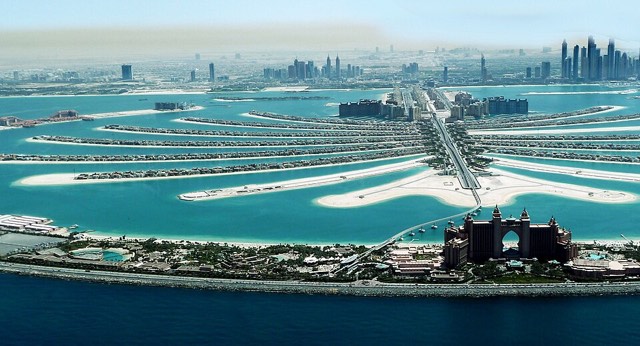 Illustrative photo −6%
 What these numbers mean, and what they do not
There is no “developer” column in the base — a lot is attributed by its project name. The figures on this page speak about our stock, not about the company’s share of the Dubai market: a large developer with a big completed portfolio may appear smaller than one whose units come up for resale more often.
Prices come from listings, not from closed deals. For a particular building I retrieve the registered Land Department sales and show the real closing prices.
Video
Dubai Investments on video
Project breakdowns from the English channel. Every clip has a written version on a page of its own.
Full reviews


In the news

UAE warehouses in 2026: a Grade A shortage, rising rents and who owns the market
Grade A warehouses in Dubai are close to full: JLL put occupancy in Jafza and Dubai Investments Park at 97–100% at the end of 2025, and industrial rents rose 6.8% year on year in Q2 2026 (5% in Abu Dhabi). Leases now run 7–9 years, not 3–5. Who owns the stock and what to check.
Other developers
All developers → Questions
Dubai Investments: questions and answers
How much does a Dubai Investments apartment cost?
The median across this developer's lots in our stock is $899K (AED 3 300 000), with entry from $899K. The figures come from asking prices in our base, not from the Dubai Investments price list, and they are recalculated nightly to reflect what is actually for sale today.
Are there discounts on Dubai Investments property?
Right now the base holds 2 lots from this developer priced below the market, with the deepest cut at 11%. This is not a Dubai Investments promotion: below-market prices come from private sellers on resale or assignment who need a quick exit. An algorithm sets the size of the discount against comparable property; no broker types it in by hand.
Is Dubai Investments a reliable developer?
Founded: 1995, a public company listed on the Dubai Financial Market. Check Dubai Investments in the Land Department’s open register, not in the marketing: licence status, per-project construction progress and the registered escrow account are all there. Off-plan payments land in that escrow under RERA supervision and reach the developer only against verified construction milestones. The full dossier is further up the page.
Should I buy from Dubai Investments direct or through a broker?
The price is the same: on off-plan the developer pays the broker’s commission, not the buyer, so going straight to the sales office saves nothing. The difference is elsewhere — a developer’s sales office shows its own projects only, and will not tell you that the same thing next door is cheaper or that this project is running later than advertised. On resale and assignment the commission is the standard 2% plus VAT.
Is Dubai Investments worth buying
It depends what you are buying and why. Send me your budget and the job it has to do — I will tell you which of this developer's projects make sense right now and which I would walk past.
Ask on WhatsAppAsk a question
Telegram is the fastest way — I answer personally.
Message on Telegram