
Louvre Abu Dhabi: how one museum revalued Saadiyat Island
The Louvre Abu Dhabi opened on Saadiyat Island in 2017, designed by Jean Nouvel beneath a flat dome about 180 metres across. It proved to be more than a museum: it is the anchor around which the island was revalued, from a strip of sand into the most prestigious residential address in the capital.
Was the Louvre name simply a bought brand?
That was the sceptics’ line when it opened in 2017: the emirate had paid France a considerable sum for the right to use the name of a great museum. Years later it looks like one of the most far-sighted investments in the region.
The museum became an anchor rather than a sight. Around it Abu Dhabi is building a new identity as a capital of culture, science and unhurried luxury — the opposite of the louder gloss of neighbouring Dubai.
It is an independent museum that uses the name under an agreement with France. Its subject is the universal history of humankind told through a dialogue of civilisations, not a national collection.
Talk to a licensed broker: WhatsApp +971 50 120 32 64 · Telegram
What did Jean Nouvel build?
A vast flat dome about 180 metres in diameter, assembled from eight layers of metal star patterns. Nouvel, the French architect and Pritzker Prize laureate, made it the central image of the building.
Sunlight passing through that lattice scatters inside as a “rain of light”. The reference is double: to the palm groves of the oases and to the ornament of Islamic architecture.
Under the dome stands a white medina of dozens of gallery pavilions. You walk between them as through the lanes of an old Arab town, and the water of the bay comes right up to the buildings.
This is architecture that justifies the visit by itself. Nouvel’s dome has become as much an icon of Abu Dhabi as the Burj Khalifa is of Dubai.
For a city that trades on its image, objects like that work for decades. They draw tourists and conferences and, which matters here, residents.
How does it differ from the Louvre in Paris?
In concept. It is the first universal museum of the Arab world, arranged not by geography but by the chronology of humankind, so artefacts of different civilisations from one era share the same rooms.
The idea of a dialogue between cultures is built into the display itself. The collection combines the emirate’s own acquisitions with a rotation of masterpieces from French museums, from antiquity to contemporary art.
A visit takes roughly two to four hours: the permanent display, the temporary exhibitions and a walk under the dome by the water. In summer the evening slots are more comfortable.
By car from Dubai the island is as a rule a little over an hour away, which is why many people fold the museum into a day trip.
Why is the cultural district a strategy rather than a gesture?
Because Saadiyat, an island a few minutes from the centre of Abu Dhabi, is being developed deliberately to a model of culture plus resort plus housing. The museum is one part of a designed sequence.
Museums of world standing create reputation and footfall. Five-star beach hotels monetise it. Residential quarters sell the right to live inside that setting, and a university campus adds an intellectual component.
As of mid-2023 other flagships were announced and under construction in the same district, including a Guggenheim museum and the Zayed National Museum. The cluster is conceived as a Middle Eastern answer to the museum island of Berlin and the embankments of Paris.
For the state this is diversification of the economy after oil in its purest form. For an investor it is a rare chance to watch value being made out of intangibles.
The name of a museum, an architectural icon and a cultural programme are capitalised into the price of the land and the housing around them.
What happened to property on Saadiyat?
Housing on the island — villas and apartments in the waterfront quarters — is consistently quoted in the top segment of the Abu Dhabi market, and closeness to the cultural district has become a selling argument in its own right.
Urbanists know the mechanism from Bilbao and its Guggenheim. A landmark cultural building redefines how a place is perceived, and the premium for the address then holds for a long time.
Three things carry the premium. The first is status: living beside the Louvre is a phrase that works on a global audience of buyers.
The second is limited supply. Construction on the island is governed by a master plan and density is lower than in Dubai, which protects prices.
The third is the resort component. Beaches and hotels provide rental demand and a second-home scenario for wealthy families.
As a rule people buy on Saadiyat for a long horizon. It is a market for preserving capital and a way of life, not for quick speculation.
Why would an investor hold Abu Dhabi alongside Dubai?
For balance. The property market of Abu Dhabi is smaller and calmer than Dubai’s: fewer launches, less speculative activity, smoother price movement. To some that is a drawback, because there are fewer chances to make money quickly.
To others it is the point. A stable market with anchor state investment in infrastructure and culture suits conservative capital.
The pairing of income-producing Dubai with steady Abu Dhabi appears more and more often in the portfolios of investors in the UAE.
The Louvre is an indicator of priorities in that picture. For decades the emirate has put money into what makes the capital attractive to live in, not merely a place for capital to pass through.
Bets of that kind have historically been repaid in house prices slowly but surely. The wider lesson of Saadiyat is that anchor projects can create a premium location from nothing.
Frequently asked
When did the Louvre Abu Dhabi open, and who designed it?
It opened on Saadiyat Island in 2017. The building is by the French architect Jean Nouvel, a Pritzker Prize laureate, and its central feature is a flat dome about 180 metres in diameter made of eight layers of metal star patterns.
How long does a visit to the Louvre Abu Dhabi take?
Roughly two to four hours, covering the permanent display, the temporary exhibitions and a walk under the dome by the water. In summer the evening slots are more comfortable.
Does the museum affect property prices on Saadiyat Island?
Yes. The cultural district is the core of Saadiyat’s premium positioning, and closeness to it is priced into housing in the same way a sea view is.
How far is the Louvre Abu Dhabi from Dubai?
By car the journey as a rule takes a little over an hour, and many visitors combine the museum with a day trip from Dubai.
✍️ Message me on WhatsApp for a free consultation — off-market stock, payment plans and honest numbers on any of the projects covered here.
✅ Subscribe on YouTube — investment, property, business and relocation in the UAE and beyond.


In the news
The same subject in writing — analysis and news related to this video.
Baccarat Residences Saadiyat: 77 Homes With Louvre and Guggenheim Views
Aldar brings the Baccarat brand to Abu Dhabi’s residential market: 77 residences in Saadiyat’s cultural district — two- and three-bedroom apartments, four-bedroom sky villas and two signature penthouses.
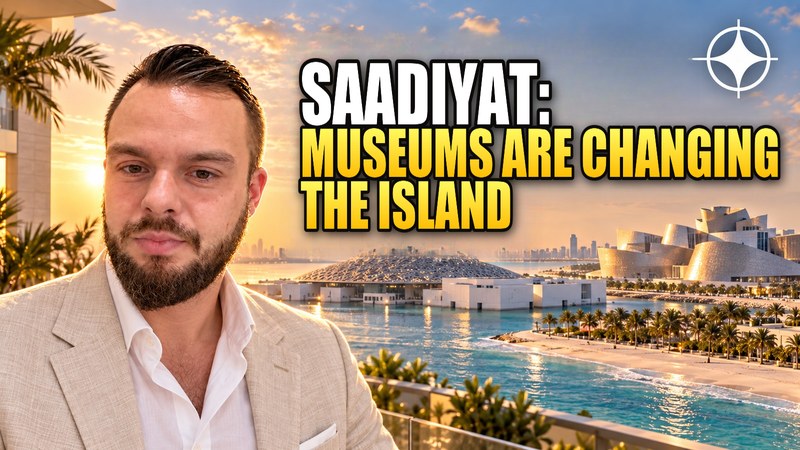
Saadiyat Cultural District in 2026: Zayed National Museum open, Guggenheim due in December — what it means for property
Zayed National Museum opened on 3 December 2025, the Natural History Museum on 22 November and teamLab Phenomena in April 2025. Guggenheim Abu Dhabi is set for 11 December 2026. What is finished, what is not, and how it feeds Saadiyat prices and rents.
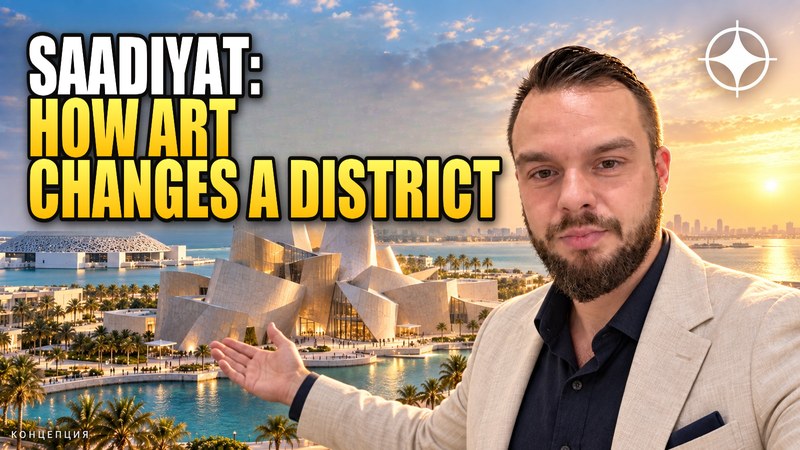
Dar al Funoon: Frank Gehry’s Arts Centre Joins Saadiyat’s Museum Cluster
Abu Dhabi’s cultural cluster is gaining an arts centre designed by Frank Gehry, standing alongside Louvre Abu Dhabi and the future Guggenheim. What museums do to property prices around them.
Saadiyat Island apartments: Mandarin Oriental Residences and Henge Residences beside Abu Dhabi’s museums
Two branded launches on Saadiyat six months apart: Aldar’s Mandarin Oriental Residences (about 228 homes, designed by BIG, from AED 6.2m, Q3 2028) and Nord’s Henge Residences (166 homes, from AED 1.1m, 2028). Guggenheim Abu Dhabi opens on 11 December 2026.
Weekend trips from Dubai: Fujairah, Khor Fakkan and Saadiyat Island in one or two days
Three weekend escapes from Dubai: the east coast at Khor Fakkan and Fujairah, 1.5–2 hours by car and now reachable by Etihad Rail from Abu Dhabi; and Saadiyat, where the Louvre is joined by new museums and the Guggenheim opens on 11 December 2026. What each tells a property buyer.

Aldar buys 2.3m sqm of land on Yas and Saadiyat: 3 000 homes worth AED 23bn
In February 2026 Aldar added more than 2.3m sqm on Saadiyat, Yas and next to Yas for about 3 000 homes with a GDV near AED 23bn ($6.26bn). That averages AED 7.7m per home — what it says about the launches to come.