
Iconic Tower by Mered: how to buy from a developer with no Dubai track record
Iconic Tower is the Dubai project of Mered, a developer linked to the Pioneer brand, whose record was built in Moscow, not in the emirate. That makes it a purchase at a discount for the unknown: what you buy is not the render but a system of guarantees — regulatory protection, a strong contractor and a checkable background.
Who is behind Iconic Tower?
Mered, a developer connected with the Pioneer brand, and one of the international names that had come to Dubai by the start of 2024. Its roots are Russian: Pioneer’s experience is in Moscow development, and that history is open to inspection.
Developers arrive in Dubai from all over the world, and the effect on the market is healthy. Their arrival sharpens competition and raises the quality of the product, because a company with experience elsewhere brings its own standards of architecture, marketing and dealing with buyers.
What such a company does not bring is a row of finished buildings in the emirate. The usual advice — go and look at what the developer has handed over in Dubai — fails when there is nothing yet to look at.
Talk to a licensed broker: WhatsApp +971 50 120 32 64 · Telegram
What does an “iconic” tower actually sell?
Three things: memorable architecture used as a marketing advantage, premium finishes and amenities, and a prestige location chosen for recognisability. The name is a statement of intent, and each of the three claims can be tested.
Architecture matters to an investor for a practical reason. Landmark buildings are remembered and stand out in both the rental and the resale market, so a distinctive silhouette is an asset as well as an aesthetic choice.
Such buildings are easier to promote and stay relevant for longer. That is an argument for taking the design seriously. It is not yet an argument for paying any particular price for it.
The short list an investor works through is the same as anywhere: the developer’s reputation and experience on the Dubai market, the location and its transport access, the payment plan and price per square foot, and whether the yield forecast is realistic.
How do you check a developer that is new to Dubai?
On three levels. Start with the parent structure: how many years the company has worked on its home market, what it has built, and how its handovers went. Residential complexes, timelines and quality can be assessed from open sources and residents’ reviews.
The second level is local infrastructure. Is the project registered with RERA, is an escrow account open, and what team works in Dubai — its own office with engineers and a client-side construction team, or only a sales department?
The third is the contractor. For a new developer, a main contractor with a strong portfolio partly makes up for the missing local history. Ask for the contractor’s name and look at the towers it has completed.
The practical conclusion is about price. If units are priced level with established brands, with no discount for the absent local record, you are the one paying the premium. If the price reflects that gap and the checks pass, early entry with an ambitious developer can beat buying from a major.
What protects an off-plan buyer in Dubai?
Escrow, first of all. Off-plan payments go not to the developer directly but to the project’s escrow account, and funds are released to the contractor as construction progress is confirmed. The regulator tracks the stages, and a buyer can check a project’s status in official services.
Three habits close most of the risks that frighten buyers of property under construction. Check the payment details, so the money goes to the escrow account named in the contract. Keep every payment confirmation. Confirm that your unit is registered — the Oqood record for off-plan.
Before the deal, collect the RERA registration number of the project, the escrow account number and the sales permit. On payment, transfer to escrow only, with the unit number in the payment reference, and keep the bank confirmations.
After payment, obtain confirmation that the contract is registered and follow the construction stages through official reports. The Oqood entry is your formal protection in any dispute.
How do you judge a tower in a developing location?
Differently from standard stock. The first test is the surroundings five years out: what is announced for neighbouring plots, whether future towers will block the promised views, whether pedestrian infrastructure will appear. The district master plan answers this more accurately than project renders.
Second is transport. Proximity to the metro and to main roads drives rental demand more strongly than the design of the lobby.
Third is density — the ratio of units to lifts and the number of flats per floor. In an over-packed tower both the comfort and the status suffer, and status was the reason for buying “iconic” architecture in the first place.
Fourth is the service charge. Towers with complex facades, panoramic glazing and extensive amenities cost more than average to run, and that is a direct deduction from yield.
Which strategies work, and where do buyers miscalculate?
The conservative route is a compact unit held for long-term letting after handover, since architecturally distinctive towers hold rents above the average for their location. The speculative route is early entry, growth during construction and a sale close to completion.
The second works on two conditions: an honest opening price, and the patience to hold the asset if the selling window turns out badly.
The first common error is paying for height as such. Upper floors cost more, but the rent premium for height grows more slowly than the price, and the optimum is often in the middle third of the tower.
The second is ignoring the handover dates of neighbouring projects: several towers completing together in one location create a wave of rental supply. The third is judging by the showroom and not the specification — only the contract annex listing materials and equipment has legal force.
Frequently asked
Who is the developer of Iconic Tower in Dubai?
Mered, a developer linked to the Pioneer brand. Pioneer’s experience is in Moscow residential development, which gives a buyer a record to check in open sources at the stage when a newcomer has no finished Dubai buildings to show.
Is it safe to buy off-plan from a developer that is new to Dubai?
It can be, if three things are in place: the project is registered with RERA and has an escrow account, the main contractor has a strong portfolio of completed towers, and the parent company’s record on its home market checks out. The price should also reflect the missing local history.
Which floor is the best investment in a landmark tower?
Often the middle third. Upper floors cost more, but the rent premium for height grows more slowly than the purchase price, so paying for height alone is one of the common miscalculations.
How do I know my off-plan payment is protected?
Pay only to the project’s escrow account named in the contract, quote the unit number in the payment reference, keep the confirmations, and check that the unit is registered through an Oqood record. Funds in escrow are released to the contractor as construction progress is confirmed.
✍️ Message me on WhatsApp for a free consultation — off-market stock, payment plans and honest numbers on any of the projects covered here.
✅ Subscribe on YouTube — investment, property, business and relocation in the UAE and beyond.


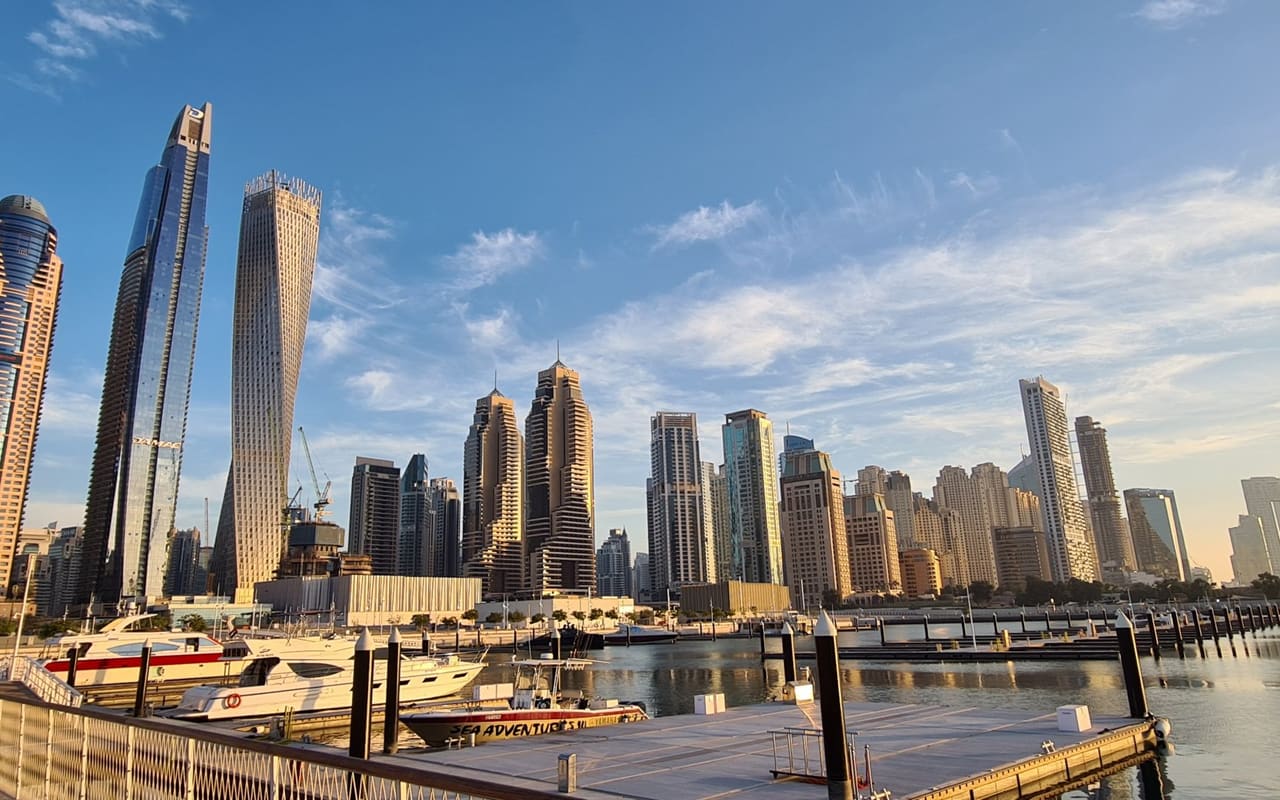
Below market in Al Sufouh right now
From the daily off-market feed. Availability and price are confirmed on request.
All below-market listings →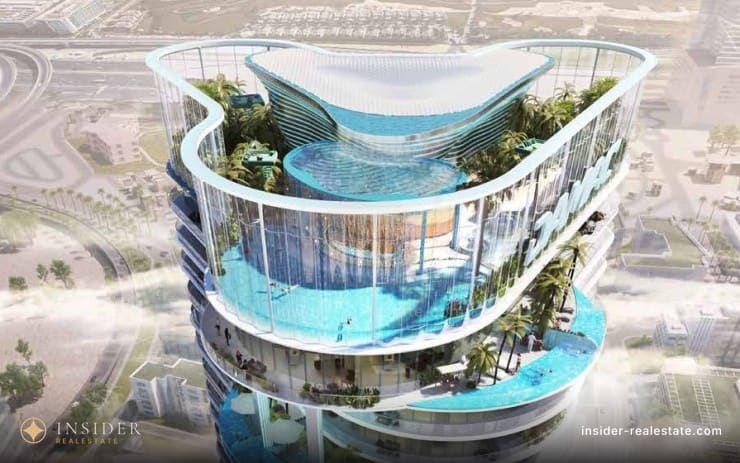
In the news
The same subject in writing — analysis and news related to this video.
Jumeirah Group: buying onto a resort island that is being built for you
A hotel group creating a new resort destination with residences on it. Purpose-built islands have advantages a normal waterfront does not — and one structural dependency.

Myra Real Estate Developments: what changes between a developer’s first and second project
A developer with two residential projects in JVC. The second building is where a company either becomes a developer or stays a one-off, and the difference is visible before you buy.
Tiger Properties: volume at the low end, and how to check a delivery record
One of the oldest builders in the affordable segment. What a low entry price is built from, and the specific checks that matter more here than anywhere else in the market.

Al Sufouh area profile: the stretch between Dubai Marina and Jumeirah that almost never comes up for sale
A quiet strip of coast with universities, hotels and low-rise housing. One of the best locations in the city — and very little of it that a buyer can actually purchase.

Continental Investments: how to judge a central district nobody talks about
A developer building in Al Jaddaf, minutes from the centre and rarely mentioned. Overlooked districts are either an opportunity or a trap, and four checks tell you which.

Abu Dhabi property market 2026: AED 117bn in six months and a run of ADREC records
ADREC data: AED 117bn of transactions in H1 2026 (+112%), AED 86.1bn of sales and AED 13.8bn of foreign direct investment (+309%, more than all of 2025). Full-year 2025 was a record AED 142bn. What sits behind the numbers.