
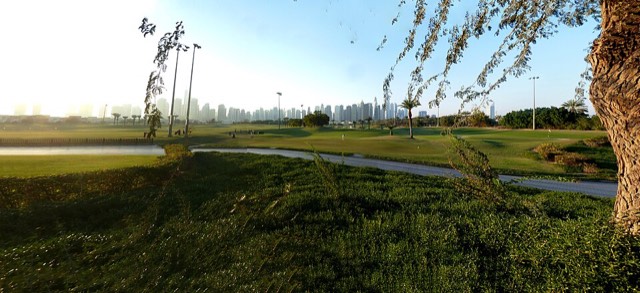
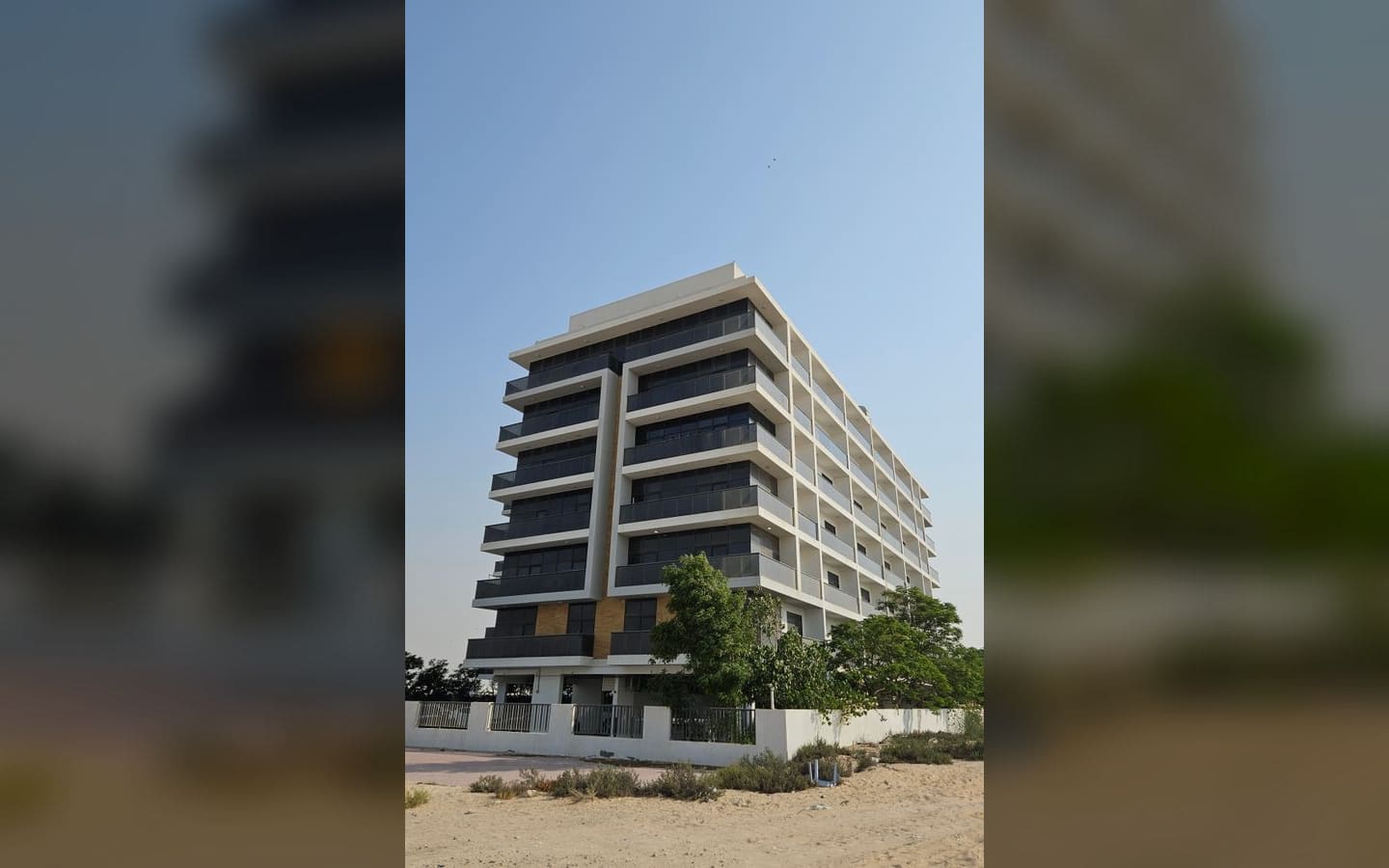
 −6% Illustrative photo
 Dubai Industrial City
An industrial zone between Jebel Ali Port and Al Maktoum Airport, where housing is not the point of the district but an appendage to the work.
2 units in stock. 2 with a confirmed status: 1 ready, 1 under construction. 6th most expensive of 91 districts by median price.
- high percentage yield
- a tenant from the business next door
- the lowest entry price
Median price $7.26M AED 26,650,000
Entry price $354K AED 1,300,000 — cheapest unit
Per square foot $342 AED 1,255 / sq ft, median
Ready stock 50% 1 unit discounted, up to −6%
What this area is actually like
What this place is
Dubai Industrial City is one of the emirate's largest manufacturing and logistics clusters, in the south-west between Jebel Ali Port and Al Maktoum Airport, with access onto Emirates Road and Sheikh Mohammed Bin Zayed Road.
What the district actually contains is factories, warehouses, distribution centres and company headquarters. Food processing, machinery, transport equipment, metals and building materials are the real residents here.
The zone combines free-zone and onshore arrangements, and companies come for one reason: sitting between a container port and a cargo airport is about as convenient as logistics gets in this country.
There is a residential component, but it occupies a small share of the land: a handful of apartment schemes, staff villages and accommodation attached to the businesses.
Why this is not primarily a residential district
Because it was never meant to be one. The masterplan here is industrial, and every home in it exists as a service function for the people working nearby.
That changes the question you ask when buying. In an ordinary district you assess the environment, the schools and the commute; here you assess whether the business next door will still be employing people in five years.
The surroundings match: warehouses, sheds, heavy goods traffic and industry in plain sight. That is not background, it is the defining characteristic of the place.
So everything below is investment logic. Buying here to live in makes sense only for someone who also works here.
What people do buy here
Apartments in the few residential schemes built inside the zone — plain layouts, relatively recent construction, minimal shared amenity.
The format is almost always compact: studios and one-bedrooms. Large family layouts are scarce because the demand for them is not here either.
Supply is piecemeal. There are only a handful of residential projects in the zone, so the market is very thin: comparable sales are few and valuation rests on a small sample.
Establish the status of the specific property separately — in an industrial zone the ownership arrangement and the land designation differ from plot to plot, and that is the first question on any unit.
Who the tenant is
Line and engineering staff from the businesses in the zone, employees of logistics firms, warehouse and production workers.
Demand is tied to employment literally: a tenant rents here because they work in the next building, not because they chose the district.
That has a real strength — short void periods and low sensitivity to the market cycle, for as long as the businesses keep operating.
And a real weakness: concentration risk. A major resident downsizing or relocating hits demand here faster and harder than it would in a district with a mixed tenant base.
The economics
The entry price is among the lowest in the city while rent holds up on stable employment — hence the high percentage, and that is the entire investment case.
Model it net. Vacancy, refurbishment between tenants and management consume a visible share in this segment, and an owner outside Dubai needs someone physically dealing with tenants.
Liquidity is low. The buyer pool is narrow, everyone in it is running yield calculations, and a sale takes months rather than weeks.
There is nowhere for capital growth to come from: land is plentiful nearby and the district is structurally industrial, so a re-rating has nothing to rest on.
What to check before buying
The land designation and ownership form on the specific property. In an industrial zone this is not a formality — it determines what you are actually buying.
What stands immediately around the building and what is permitted on the neighbouring plots. A production facility across the road sets your rent more decisively than the apartment layout does.
Occupancy in the building and how quickly neighbouring units let — the honest indicator of real demand in a thin market.
And the profile of the businesses in the zone: the more varied they are, the more durable your rental income.
Living here day to day
Utilitarian. Daily needs are covered inside the zone — shops, pharmacies, cafés, filling stations — but all of it at a functional level, with nothing spare.
There is no metro and none planned. Public transport is oriented towards moving staff rather than connecting to the city, so a car is mandatory for anyone leaving the zone.
The Marina, Downtown and anything resembling ordinary city life are a long way off. At weekends residents drive to Ibn Battuta, Dubai Investment Park or Dubai South.
There is little greenery or public space, and the district empties out as the shifts end. This is not somewhere to go for a walk, and it should not be imagined otherwise.
Who it suits, and what to compare it against
It suits an investor working the budget segment deliberately, targeting percentage, and clear that they are buying an asset tied to industrial employment.
It suits poorly anyone buying to live in, anyone who may need a fast exit, and anyone counting on capital appreciation.
The nearest alternatives are Dubai Investment Park and Jebel Ali: the same logistics economy, but with a more established residential component and a broader tenant pool.
And Dubai South: dearer, but with its own development programme around the airport and a far more varied tenant base. Median prices and current stock composition for each are computed from our own inventory and sit on their area pages.
−6% Illustrative photo The market, per the Land Department
Residential price index 167.33 Q4 2025
Quarter on quarter +3.32% QoQ
Year on year +8.9% YoY
Full year 2025 +9.81% index 162.51
This is the official index for the whole emirate, not for Dubai Industrial City: the Dubai Land Department does not publish a district breakdown publicly. Treat it as background — it tells you whether the market is rising or flat while you read the prices above. Transaction data for a specific building I pull separately, on request. Source: Dubai Land Department, read 15/08/2026.
The latest read: July 2026
The quarterly Land Department index is one number for the whole emirate. The monthly one counts villas and apartments separately — and in 2026 that is the point, because a blended average masks how far the segments have diverged.
Villas and townhouses 292.5 flat YoY
Apartments 168.7 −4.2% YoY
All residential 219.2 −0.3% MoM
Price per sqft 2,039 villas · apartments 1,397 AED
Off-plan took 72.8% of the month's deals and ready homes 27.2%. Ready volume was up 11.4% on the month, and off-plan alone fell both month on month and year on year (−45.3%). So negotiation is realistic on apartments and off-plan, much less so on completed villas in established communities. Index base is January 2021 = 100 — a villa reading of 292.5 means growth of 192.5% from that mark, not a premium over a 2021 peak. Monthly ValuStrat market review for July 2026, checked 24/08/2026.
Other districts
All districts →Dubai Industrial City in the news
UAE warehouses in 2026: a Grade A shortage, rising rents and who owns the market
Grade A warehouses in Dubai are close to full: JLL put occupancy in Jafza and Dubai Investments Park at 97–100% at the end of 2025, and industrial rents rose 6.8% year on year in Q2 2026 (5% in Abu Dhabi). Leases now run 7–9 years, not 3–5. Who owns the stock and what to check.
Dubai Industrial City: who rents housing in an industrial zone
A manufacturing and logistics zone with its own residential stock. Demand here is not city demand — it is employment demand, and it is counted differently.
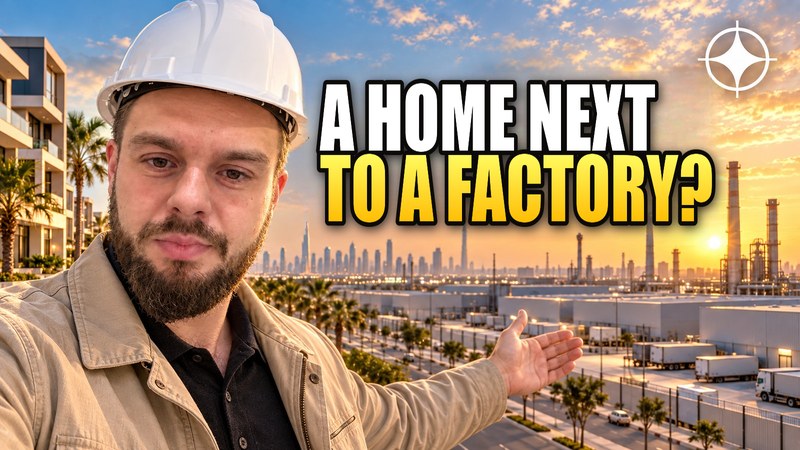
Dubai Industrial City apartments: what to check when you live next to industry
Noise, smell and dust in an industrial zone are not abstractions but checkable facts. The list is short, and checking it takes two visits.
Looking at Dubai Industrial City specifically?
Send me the building or the unit and I will pull the registered transaction history, the current service charge and what comparable units actually let for — before you make an offer, not after.
Ask on WhatsAppAsk a question
Telegram is the fastest way — I answer personally.
Message on Telegram