
Jumeirah International: living next to a convention centre
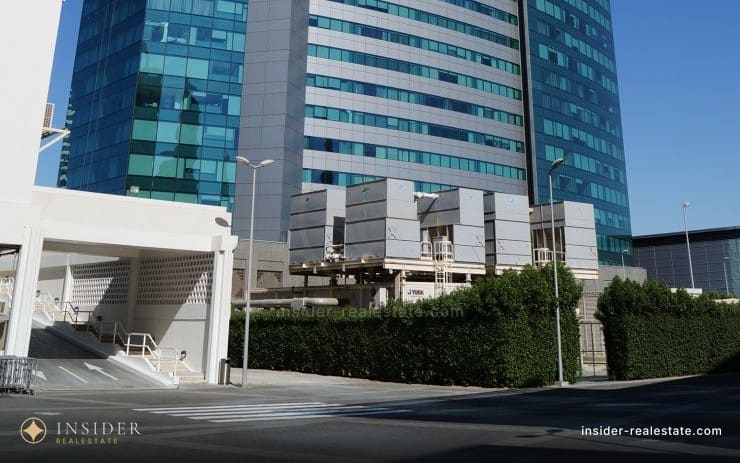
A developer with a serviced residence tower by the World Trade Centre. Event-driven districts have a demand pattern unlike anywhere else in the city, with the disruption to match.
Part of a government-owned hospitality group whose name the world knows through one of the planet's most recognisable hotels — for it, housing under its own brand remains a small branch of a huge hotel business, not the main line of work.
1 project by this developer in the catalogue. Nothing of theirs is in the discounted stock right now — nearby listings are below.
Checkable facts about the developer itself. Unlike the figures above, these are not about our stock and do not move with what happens to be listed today.
Jumeirah International is part of a group whose name is associated by millions of people worldwide with one specific building that became a symbol of the city — not by accident, but the result of decades of deliberate brand-building around the hotel business. The group belongs to a Dubai government structure, giving it financial resilience and a long planning horizon private developers dependent on a sales cycle do not have.
That said, the group's core business is hospitality, with dozens of hotels under its own management in Dubai and beyond, and housing under its brand is more a logical extension of hotel expertise into a new format than a standalone line of business. That is a fundamental difference from developers for whom residential real estate is the sole source of income.
The brand under which the group's housing is sold extends its core hotel name into a residence format with hotel-grade service: ongoing upkeep, concierge, access to the kind of infrastructure a five-star hotel guest expects, applied to a permanent home or an investment asset. That is a different product from an ordinary apartment — the buyer pays not just for floor space but for a service standard the company has honed across dozens of hotels.
That format also means a higher-than-average service charge — hotel-grade service costs more than standard residential building management — but also more predictable operational quality: the company has years of experience running properties at this level, not just building them.
Despite the parent group's global fame, its footprint in the private residential market is effectively limited to one project — the residence at the Zabeel tower. That contrasts sharply with the scale of the group's hotel business and means the company's reputation as a residential developer is currently built on a single property rather than a broad portfolio of delivered residences.
For a buyer, that means the group's development competency cannot be judged directly from its enormous hotel portfolio — running a hotel and developing housing for sale to private investors require different skills, and the latter is far less proven for this company than the former.
Belonging to a Dubai government structure is a real argument for financial resilience: a company like this carries less risk of construction stalling over financing problems, typical of private developers in a downturn. That matters especially for an off-plan buyer, for whom unfinished construction is one of the main risks.
The flip side is that a government-linked structure typically has less commercial pressure to expand aggressively into housing, meaning fewer incentives to bring new residential projects to market quickly and often. For a buyer looking for a wide choice of new phases from one developer, there is not much to choose from here.
A serviced residence under a well-known hotel brand trades in a narrow but stable segment: fewer buyers than the ordinary housing market, but they are specifically looking for the combination of service and a recognisable name, not just square footage in a district. The brand's international fame works in favour of liquidity among foreign buyers who already know the company's name before they know Dubai.
The asset's liquidity is closely tied to the management agreement and to whether the operator keeps maintaining its stated service standard years after handover — worth checking separately from the brand's general reputation at the moment of purchase.
For residences under this brand I always start with the management agreement — the revenue-split terms if the residence lets through a pool, the agreement's length, and what happens when it ends — rather than the advertised yield. From there I check the actual service charge and compare it against what the stated service standard at launch actually includes.
And separately, I explain to the client the difference between the parent hotel brand's enormous international fame and the company's far narrower, still-forming reputation specifically as a residential developer — these are different things, and the second needs checking separately from the first.
The developer is inferred from the project name — there is no developer column in the base. So the figures describe our stock, not the company's share of the Dubai market: a developer sitting on an enormous volume of completed housing can look smaller here than one whose projects reach the resale market more often.
These are asking prices, not closed transactions. For a specific building I pull the registered Land Department sales and show where deals actually closed.
Project breakdowns from the English channel. Every clip has a written version on a page of its own.
 13:04Seven Palm on Palm Jumeirah: an infinity pool, a rooftop bar and a hotel underneath8 May 2024
 23:36Madinat Jumeirah Living by Meraas: living opposite the Burj Al Arab30 December 2023
 7:15Christmas in Dubai: Al Habtoor Winter Garden, Madinat Jumeirah, Expo and DIFC22 December 2023
 12:00XXII Carat on Palm Jumeirah: 22 Mediterranean villas compared with Raffles and Zabeel Saray20 September 2023
A developer with a serviced residence tower by the World Trade Centre. Event-driven districts have a demand pattern unlike anywhere else in the city, with the disruption to match.
Above on this page: 1 project by Jumeirah International from our catalogue, each with a passport covering floors, units, handover and bedrooms. Lots on sale, when there are any, sit right under the project.
For an off-plan buyer the price is identical, because the developer covers the broker’s commission. Going straight to Jumeirah International is therefore no cheaper, and the choice there is limited to its own projects — you will not get a comparison with neighbouring buildings or a candid read on handover dates. On resale and assignment the commission is standard: 2% plus VAT.
The answer depends on the purpose. Send your budget and goal — I will go through which Jumeirah International projects are worth considering now and which I would skip.
Ask on WhatsAppTelegram is the fastest way — I answer personally.
Message on Telegram