
Investing on Saadiyat Island: who rents, what can slip and which signals to watch
Saadiyat Island in Abu Dhabi is an investment in a cultural district that is still being completed: the Louvre Abu Dhabi and exhibitions of the calibre of Cartier are there, further museums lie ahead. The return rests on four tenant groups, a horizon of several years and a short list of signals worth reviewing every six to twelve months.
How does culture turn into property value?
By concentration. Saadiyat is conceived as the cultural centre of the region — the Louvre Abu Dhabi, future museums, galleries and events of world standing — and that density makes the district attractive to live in and to visit, which supports demand for housing directly.
The investor gets four things from the cluster: a prestigious and recognisable location, a tourist flow that feeds rental demand, long-term development of the district under a master plan, and the island’s beaches and nature as a bonus on top of the culture.
As filmed in March 2024, the cluster was at an early stage of development. That is the growth argument: a premium audience and a combination of culture, beaches and status that is hard to copy, bought before it is fully in place.
Talk to a licensed broker: WhatsApp +971 50 120 32 64 · Telegram
Which formats of home does the island offer?
All the main ones: apartments in complexes by the beach, townhouses in gated communities, and villas on the first and second lines. The island is developed under a master plan, and housing on it is represented in every principal format.
The logic of choosing between them is the usual one. Apartments are the lowest entry and the simplest to let. Townhouses are the family format, a balance of price and space.
Villas are the trophy segment, with maximum privacy beside one of the best beaches in the emirate.
One feature is particular to Saadiyat: homes stand next to cultural institutions. Closeness to the museum quarter is gradually becoming as much a pricing factor as a sea view, a combination that is rare in the region.
How does a foreigner buy property in Abu Dhabi?
Through the investment zones. Abu Dhabi has opened a number of zones in which foreigners may acquire property, and Saadiyat is among them.
The process resembles the one in Dubai: a contract, a deposit, checks on the property, registration of the transaction with the municipal authorities and the issue of a document of title.
The differences lie in the detail of registration fees and procedures. Run the purchase with a broker and a lawyer who work in the capital itself, and do not carry Dubai experience across one for one.
A purchase from a developer during construction follows a payment plan, with protection of the buyer’s funds. The terms of the specific project need to be read carefully.
Who rents on Saadiyat?
Four groups. The first is expatriates of the capital’s own market: staff of government bodies, the energy sector, universities and cultural institutions. They take long leases and pay with high discipline.
The second is the academic community. The campuses of international universities on the island create steady demand for homes close by.
The third is tourists and winter residents. Beaches and museums support the short-let format, especially in the high season.
The fourth is families from Dubai. Some residents choose the calmer rhythm of the capital while keeping a job in the neighbouring emirate.
What are the risks, and how long is the horizon?
The main risk is time. A cultural cluster is built over years, and part of what has been announced is still ahead. An investor buying for the future must be ready for a horizon of several years and for the pace of the master plan to shift.
The second factor is the depth of the market. The capital’s market is smaller than Dubai’s, and the time a property spends on sale at resale is usually longer.
Two things compensate: calmer competition among landlords, and the potential for revaluation as new museums and infrastructure open.
On rental yield in percentage terms the two markets are of the same order of magnitude. The difference is one of character: the capital is quieter and less contested, Dubai more liquid and more dynamic.
Abu Dhabi is the calmer, more capital-city market, with its emphasis on quality of life, culture and stability. For an investor that is diversification inside the UAE: a different rhythm and a different audience in the same reliable jurisdiction.
Which signals should an investor watch?
Events that reveal the master plan. Values on Saadiyat will rise as the plan is realised, so following the island’s news is part of the strategy rather than a pastime.
The markers are the opening of new museums in the cultural quarter, the launch of hotels and beach clubs, better road links with the capital and with Dubai, and the rate at which new residential complexes fill with occupants.
Each such event widens the district’s audience and supports both rents and revaluation.
The reverse signals are postponed dates and phases of construction put on hold. They do not cancel the idea, but they lengthen the horizon.
The practice is simple. Review the thesis every six to twelve months on the facts, not on the mood of the market, and decide whether to buy more or to take profit on what those observations show.
Six steps before committing
Settle the strategy first: long lets, a tourist format, or living there yourself while the capital grows. Each leads to a different quarter and a different unit.
Compare the parts of the island — the beach line, the quarters by the cultural centre, the family communities. If the purchase is during construction, check the developer and the status of the project.
Calculate the net yield after service charges and seasonality. Then clarify the letting rules in the chosen complex and the requirements for short lets.
Finally, set a realistic horizon: Saadiyat is a story for patient capital. It suits permanent living as well — beaches, schools, the university campus and low density make it one of the most comfortable residential districts in the capital.
Frequently asked
Does it make sense to buy on Saadiyat before all the museums open?
That is the investment idea itself: to enter before the potential of the district is fully revealed, accepting the time risk. The cultural cluster is built over years, so the horizon is several years and dates can move.
Who are the typical tenants on Saadiyat Island?
Expatriates working for government bodies, the energy sector, universities and cultural institutions on long leases; the academic community around the island’s university campuses; tourists and winter residents on short lets; and families from Dubai who prefer the calmer capital.
Is the rental yield higher on Saadiyat or in Dubai?
In percentage terms the two are of the same order of magnitude. The capital is calmer, with less competition among landlords; Dubai is more liquid and more dynamic.
✍️ Message me on WhatsApp for a free consultation — off-market stock, payment plans and honest numbers on any of the projects covered here.
✅ Subscribe on YouTube — investment, property, business and relocation in the UAE and beyond.


In the news
The same subject in writing — analysis and news related to this video.
Baccarat Residences Saadiyat: 77 Homes With Louvre and Guggenheim Views
Aldar brings the Baccarat brand to Abu Dhabi’s residential market: 77 residences in Saadiyat’s cultural district — two- and three-bedroom apartments, four-bedroom sky villas and two signature penthouses.

Aldar buys 2.3m sqm of land on Yas and Saadiyat: 3 000 homes worth AED 23bn
In February 2026 Aldar added more than 2.3m sqm on Saadiyat, Yas and next to Yas for about 3 000 homes with a GDV near AED 23bn ($6.26bn). That averages AED 7.7m per home — what it says about the launches to come.
Saadiyat Island apartments: Mandarin Oriental Residences and Henge Residences beside Abu Dhabi’s museums
Two branded launches on Saadiyat six months apart: Aldar’s Mandarin Oriental Residences (about 228 homes, designed by BIG, from AED 6.2m, Q3 2028) and Nord’s Henge Residences (166 homes, from AED 1.1m, 2028). Guggenheim Abu Dhabi opens on 11 December 2026.
Aldar: the Abu Dhabi developer, and why the emirate is a separate market
The largest listed developer in Abu Dhabi, now building in Dubai too. Where the two emirates diverge on ownership zones, registration and rent regulation — and what that means for a foreign buyer.
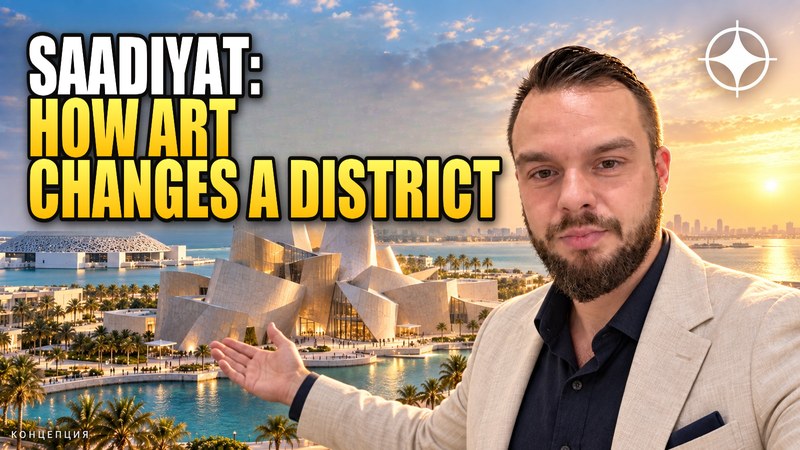
Dar al Funoon: Frank Gehry’s Arts Centre Joins Saadiyat’s Museum Cluster
Abu Dhabi’s cultural cluster is gaining an arts centre designed by Frank Gehry, standing alongside Louvre Abu Dhabi and the future Guggenheim. What museums do to property prices around them.
Dar Al Funoon: Frank Gehry’s Cultural Centre Opens on Saadiyat by 2030
Saadiyat Island in Abu Dhabi is getting one of the region’s largest cultural centres — an opera, ballet and theatre complex designed by the architect behind the Guggenheim Bilbao.