Villa communities in Dubai compared: the Palm, Damac Lagoons, Damac Hills, Dubai Hills
Villa shopping in Dubai usually starts with a budget and a viewing list, which is the wrong order. These communities are not tiers of the same product — they are different answers to different questions, and the one that suits a family relocating with school-age children is close to useless for someone buying a winter home.
What is each community actually for?
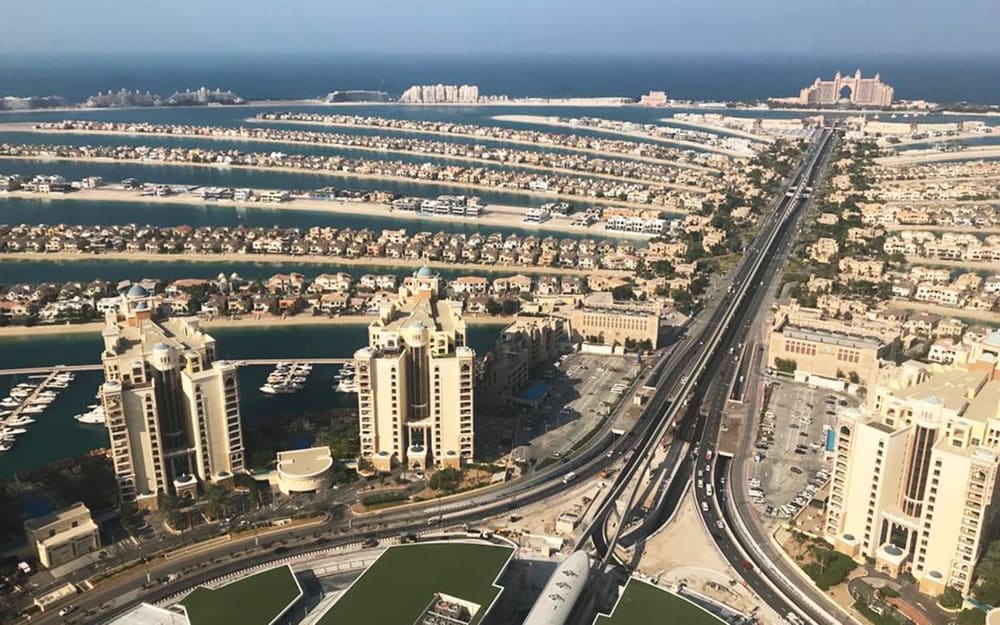
Palm Jumeirah is a beach address. You are buying water frontage, a finished environment and the scarcity of an island that cannot be extended. It is the most liquid ultra-prime villa market in the city and the least practical for a family running two school journeys a day.
Dubai Hills Estate is the family benchmark: park, schools, hospital, mall and golf inside the gates, a full range from townhouses to large villas, and a commute that is real but not punishing. It is the community with the deepest tenant and buyer pool, which is why it resells fastest.
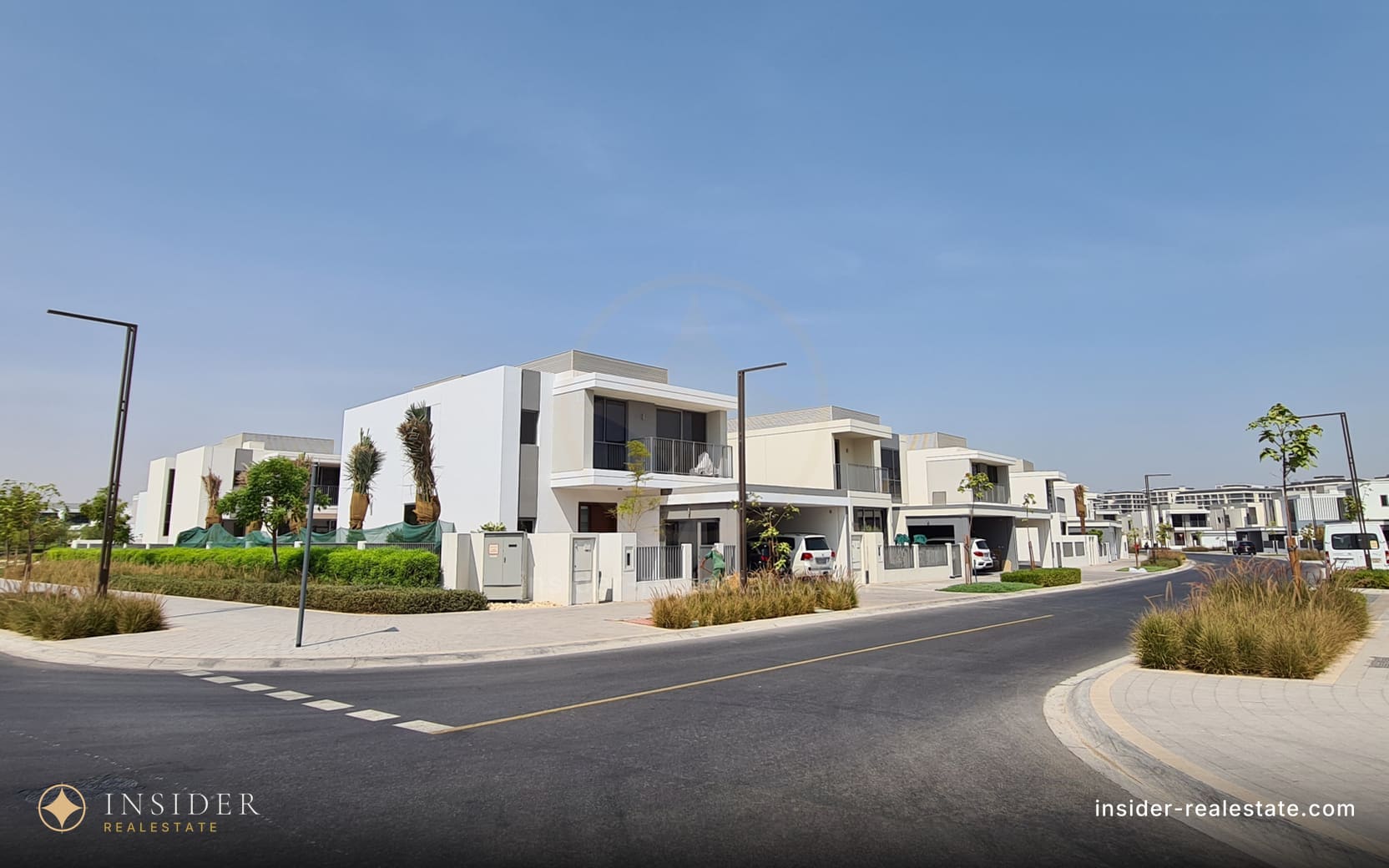
Damac Hills and Damac Lagoons are the volume end — themed masterplans further out, delivering space per dirham that the inner communities cannot approach. What you give back is the drive, and the fact that these are large communities with a lot of simultaneous supply.
Talk to a licensed broker: WhatsApp +971 50 120 32 64 · Telegram
What trade does every villa buyer make?
Every step outward buys plot size and gives back time.
That is the entire villa market in one sentence, and the correct answer depends on facts about your life rather than about the property: where the schools are, whether both adults commute, and how long the household will be at this stage.
What about liquidity and running cost?
The second trade is liquidity. Established communities with delivered streets, mature landscaping and a decade of transaction history resell in weeks; new themed masterplans with several thousand identical homes coming to completion resell against their own supply.
The third is running cost. A large villa carries a garden, a pool and cooling that a townhouse does not, and in the outer communities every adult needs a car. None of it appears in the price per square foot.
How is owning a villa different from owning an apartment?
A villa is not simply more square metres. It is a different asset with a different operating model.
An apartment owner shares the facade, the roof and the building's engineering with neighbours, and his responsibility ends at the front door. A villa owner answers for all of it: the plot, the pool, the landscaping, the roof and the external systems. Community fees cover the estate's roads, security and parks — not the upkeep of the house.
The practical consequence is that the ownership budget is always wider than it looks at purchase. A gardener, pool cleaning, air-conditioning service and the damage a hot climate does to facades and terraces are recurring lines that belong in the model from the start.
In exchange a villa gives what no apartment can: privacy, a plot and no neighbour through the wall. That is precisely what a family tenant pays for.
Ready, or off-plan?
In the villa segment the choice of stage affects the outcome more than it does with apartments, because the ticket is larger and the build takes longer.
A finished villa means immediate occupation or letting, real quality you can inspect, and a settled environment. Against that: no discount for waiting, and possible spending on updates if the house is not new.
Off-plan in a community under construction means a lower price, an instalment plan and the pick of the best positions — by the lagoon, by the park, on a corner. Against that: years of waiting, building work around you after you move in, and the risk of a slipped date.
The compromise is buying into the later phases of an almost-finished estate: the surroundings are already visible and the price has not fully caught up. For living with children the finished product is usually wiser; for investment growth, early phases of a promising community from a reliable developer.
How much does the plot position change the price?
Inside one cluster, villas of identical layout can differ noticeably in price, and the reason is almost always position.
The maximum premium goes to plots on the front line to water or a lagoon, plots by a park, and corner or cul-de-sac positions with a larger plot and no through traffic. The discounted positions sit by the entry roads, the parking and the technical zones.
Look at orientation too: where the pool and the terrace sit relative to the sun decides how usable they are for most of the year.
And measure the distance to the estate's entrance and to the school routes. For a family tenant the daily logistics matter more than the handsome common areas. At resale all of these micro-factors convert into speed: the good positions go first.
Who rents a villa, and what do they look at?
The core tenant is a family with children and a stable income, renting for a year and usually longer. That is quality demand: long contracts, careful treatment of the house, low rotation.
Rents in the segment are held up by a persistent shortage of family housing in the popular communities, and a sensibly priced house tends to have short voids.
Condition decides. A family chooses a house it can move into without works, and a tidy garden and a working pool speed the letting by a wide margin.
Schools nearby are the main magnet for family demand: villas in communities with functioning schools let noticeably more easily. A short-let model exists for villas too — holidays and large groups — but it is a niche rather than the default.
How do you choose properly?
Start with the school and the workplace, then draw the acceptable drive, then look at what is inside that circle. Buyers who do it in the other order end up with a beautiful house and a life spent on Al Khail.
Inside the community, plot position and orientation are the permanent variables: what backs onto the garden, how close the neighbouring row is, and which way the outdoor space faces. In this climate a west-facing garden is unusable for months.
And be honest about the horizon. Villa communities are slow markets in both directions — they reward long holds and punish anyone who needs an exit on a date. If the horizon is short, an apartment in a liquid central district is the better instrument, whatever the brochure says about family living.
Frequently asked
Which is the best villa community in Dubai?
They answer different questions. Dubai Hills Estate is the strongest all-round family choice and the most liquid; Palm Jumeirah is a beach address at ultra-prime level; the Damac masterplans buy the most space per dirham at the cost of the commute.
Is a villa a good investment compared with an apartment?
Villas produce long family tenancies, low turnover and short voids, with yields below apartments and slower resale. They suit long holds; an apartment in a liquid central district is the better instrument for a short horizon.
What matters most when comparing two villas?
Plot position and orientation — what backs onto the garden, distance to the neighbouring row, and which way the outdoor space faces. Neither can be changed after purchase and both show up at resale.
✍️ Message me on WhatsApp for a free consultation — off-market stock, payment plans and honest numbers on any of the projects covered here.
✅ Subscribe on YouTube — investment, property, business and relocation in the UAE and beyond.


Below market right now
From the daily off-market feed. Availability and price are confirmed on request.
All below-market listings →