
 −8%
−8% Al Khawaneej
The city's eastern edge: plots on a scale Dubai no longer subdivides, working farms next door, and half an hour to everything else.
1 unit in stock. 1 with a confirmed status: 1 ready, 0 under construction. 16th most expensive of 91 districts by median price.
- a large plot
- quiet on the edge of the city
- living rather than investing
Median price $3.00M AED 11,000,000
Entry price $3.00M AED 11,000,000 — cheapest unit
Per square foot $309 AED 1,134 / sq ft, median
Ready stock 100% 1 unit discounted, up to −8%
What this area is actually like
What the district is
Al Khawaneej occupies the eastern edge of the city beyond Mirdif and splits into Al Khawaneej 1 and 2. Historically an Emirati district, it is built up with large villas on generous plots.
Density is the lowest of any residential district in Dubai. Between the houses are walls, gardens and driveways rather than neighbouring party walls.
Working farms and nurseries survive alongside the housing, and they are not decorative: the eastern edge of the city remains partly agricultural.
The district's public life centres on two places — Al Khawaneej Walk, with its lake and promenade, and Last Exit on the highway — both of which draw people from the neighbouring districts as well.
Who lives here
Predominantly local families who have been here for generations, plus long-settled expatriates who want a house with a genuine plot.
This is not an investment district and barely a rental one. Houses here are more often passed down than let, and the market is correspondingly narrow.
Rental supply exists but is episodic: a particular house comes available because a family has moved, not because someone bought it to let.
International buyers are essentially absent, and that is worth understanding before you start viewing.
What it offers and what it costs
It offers land. Plots on this scale are no longer subdivided within the city, and nothing substitutes for that — not a renovation, not extra floor area.
It offers quiet and air: no through traffic, low buildings, and more greenery than most of Dubai.
It costs distance. Downtown, the Marina and the business districts are all a long way off, and at peak that is a punishing daily drive.
And it costs liquidity. Buyers are few, transactions are rare, and a sale is measured in many months rather than weeks.
Getting around
No metro, and none coming: the district lies well beyond both the existing and the planned lines.
Road access runs via Al Khawaneej Road and Sheikh Mohammed Bin Zayed Road. The airport is around twenty minutes; the centre is considerably more.
Everyday infrastructure is modest. There are grocers, pharmacies, schools and clinics, but most things mean a drive to Mirdif or into the city.
For a family with children the school route is a subject to settle before buying rather than after.
What to check before buying
The ownership form, before anything else. This is a historically local district, and the availability of freehold to a foreign buyer has to be confirmed plot by plot, not district by district.
The plot boundaries and what the neighbouring land is designated for. Farms, nurseries and undeveloped ground all occur, and what happens to them in a few years is an open question.
The condition of the house and its services. The stock varies widely in age and much of it was built to individual designs rather than in series.
And an honest assessment of the commute: the morning drive to work decides everything here.
Living here day to day
This is as close to country living as Dubai gets: walls, gardens, quiet, and almost no through traffic between the houses.
Social life concentrates in two places — Al Khawaneej Walk with its lake and promenade, and Last Exit on the highway — where residents of Mirdif and Al Warqaa come too.
The nurseries and farms nearby are working businesses. At weekends people drive out for plants and produce, and that is part of the district's texture rather than a tourist attraction.
Everything else requires a car. Cinemas, large shops, specialist clinics and most schools are outside the district, and life here does not work without driving.
What to compare it against
Mirdif — closer in, denser, with proper infrastructure and a far more active market.
Al Warqaa — the same eastern advantages on smaller plots and at a lower entry price.
Arabian Ranches and The Villa — a comparable idea of living in a house, but inside planned communities with managing agents and predictable liquidity.
Median prices and current stock composition for each are computed from our own inventory and sit on their area pages.
What to expect over time
This district changes more slowly than anywhere else in the city. No large-scale development is undertaken, density does not increase, and the character of the place persists across decades.
For a buyer who wants precisely this way of living, that is the guarantee: what you are paying for will not disappear in three years because of construction next door.
For an investor the same fact means there are no growth drivers. There is nowhere for a re-rating to come from, and the rental market is too thin to lean on.
The practical conclusion is straightforward: people buy a house here to live in it. Any other motivation works badly in this district.
−8% The market, per the Land Department
Residential price index 167.33 Q4 2025
Quarter on quarter +3.32% QoQ
Year on year +8.9% YoY
Full year 2025 +9.81% index 162.51
These are official DLD readings for the entire emirate; a district split, Al Khawaneej included, is not made public. Use them as context for the prices on this page — registered sales for the building you pick I pull on request. Source: Dubai Land Department, read 15/08/2026.
The latest read: July 2026
The quarterly Land Department index is one number for the whole emirate. The monthly one counts villas and apartments separately — and in 2026 that is the point, because a blended average masks how far the segments have diverged.
Villas and townhouses 292.5 flat YoY
Apartments 168.7 −4.2% YoY
All residential 219.2 −0.3% MoM
Price per sqft 2,039 villas · apartments 1,397 AED
By completion status the month broke down as 72.8% off-plan and 27.2% ready. Ready-home deals grew 11.4% month on month; off-plan was the one segment lower against both the previous month and the previous year (−45.3%). In practice: apartments and off-plan leave room to bargain, finished villas in settled communities far less. Index base is January 2021 = 100 — a villa reading of 292.5 means growth of 192.5% from that mark, not a premium over a 2021 peak. Monthly ValuStrat market review for July 2026, checked 24/08/2026.
Other districts
All districts →Al Khawaneej in the news
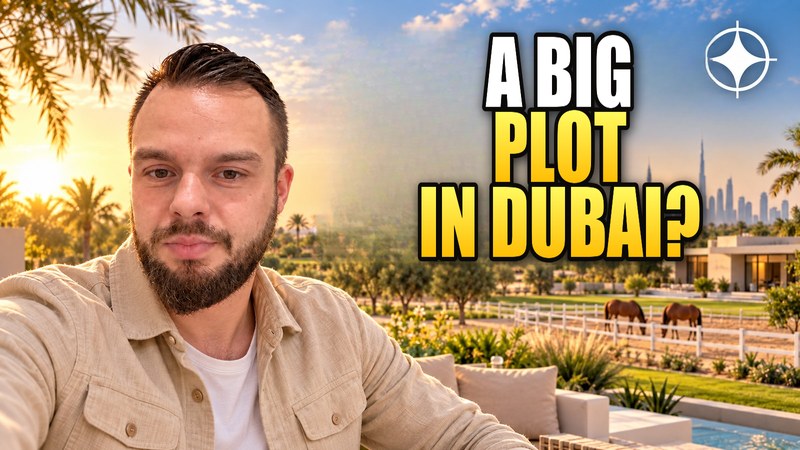
Al Khawaneej: large plots on the eastern edge of the city
Farms, gardens and generous plots beyond the dense build-up. A rare format for Dubai, and a limited one for a foreign buyer.
Al Khawaneej: what a large plot costs after you buy it
Plots here are on a scale the city no longer subdivides. Space has a running cost, it scales with area, and it is the part buyers reliably underestimate.
Dubai Opens an 820-Metre Cycling Bridge Linking Al Mamzar and Al Khawaneej
The bridge over Al Nahda stitches the Al Khawaneej and Al Warqa cycle tracks into one continuous corridor to Saih Al Salam. The emirate’s cycling network runs 636km, aiming for 1,000km by 2030 — and walkable connectivity is starting to show up in rents.
Looking at Al Khawaneej specifically?
Send me the building or the unit and I will pull the registered transaction history, the current service charge and what comparable units actually let for — before you make an offer, not after.
Ask on WhatsAppAsk a question
Telegram is the fastest way — I answer personally.
Message on Telegram