
Jumeira Bay Island: a seahorse of plots, and a market of a few dozen properties
Most Dubai districts are analysed with per-square-foot figures and yields. On an island whose entire market is a few dozen properties, neither number carries much information — and the question that actually decides the outcome is how long it takes to find the next buyer.
What the place is
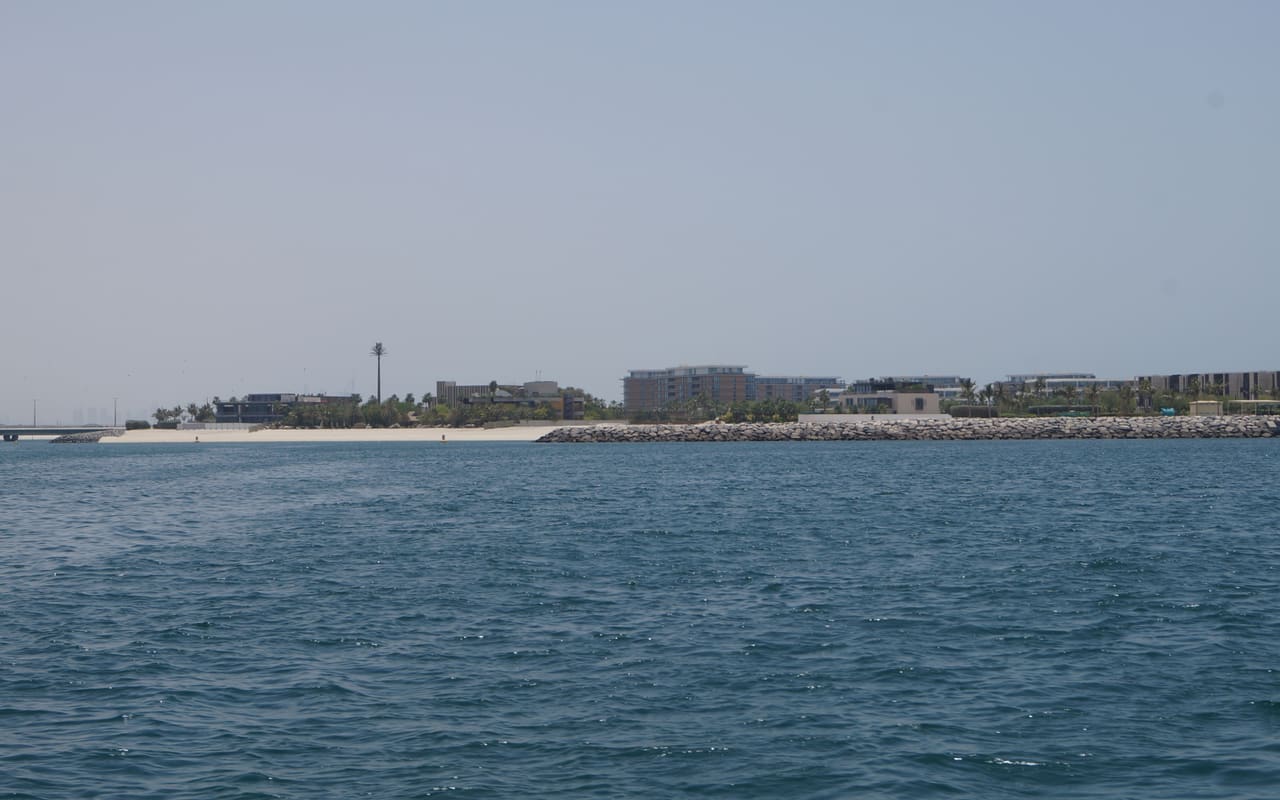
A small man-made island off the Jumeirah shore, laid out in the shape of a seahorse and joined to the mainland by a causeway. The city centre is minutes away rather than the half-hour the Palm requires, which is the whole geographic argument for it.
The core of the island is the Bulgari resort and residences, with their own beach, marina and yacht club. Around them sit plots for private villas and a small number of houses built to individual designs.
Villa Amalfi is recorded on the island as a 68-unit development by Meraas Holding, completed in 2021 — which gives a sense of the scale involved. Sixty-eight homes would be one building elsewhere in the city; here it is a significant share of the island.
Talk to a licensed broker: WhatsApp +971 50 120 32 64 · Telegram
A foreigner takes full freehold and transactions run on ordinary terms. The complication on this island is not the paperwork.
The trap: supply is closed, in both directions
The island is complete and finite in size. No new plots will appear here, which is the rare case in Dubai where supply really is closed rather than merely not yet released.
That is the argument for buying: whatever happens to the wider market, nobody can build a competing island next door, and prices barely sag in a downturn because forced sellers are rare among owners at this level.
It is also the argument for caution, because the same scarcity governs your exit. Few transactions occur in a year, each one is noticed, and finding a buyer when it is your turn to sell can take a very long time.
So the honest way to hold this asset is without a deadline. Anyone who might need to realise the value within two or three years is buying the wrong thing, however good the island is.
Why the usual arithmetic does not work here
Price per square foot on this island is among the highest in Dubai, which tells you where it sits in the market and almost nothing about whether a specific property is well bought.
Yield as a measure means very little. The rental market here is bespoke rather than systematic, and what is being bought is the asset itself rather than an income stream.
There is no depth of comparables to lean on either. A handful of sales a year across a few dozen properties is not a dataset, and a valuation that rests on two transactions should be read as an opinion with two data points behind it.
The useful question replaces all of them: ask how many comparable properties actually sold in the last twelve months, not how many are currently listed. Those two figures diverge sharply in a market this narrow, and only one of them tells you anything.
Buying a plot is buying a project
Much of what trades here is land rather than a finished house, and that is a different undertaking from buying a villa on the Palm.
The building rules for the specific plot govern the outcome: permitted height, footprint, and setbacks from the water. Establish them before the purchase rather than after, because they decide what can be built and therefore what the plot is worth to you.
Design, approvals and construction are then your project and your timeline, on an island where the logistics of building are constrained by a causeway and by neighbours who are already living there.
A plot is not a cheaper route to living on this island. It is a longer one, and it should be priced as such against the completed houses.
Aspect, and the permanent costs
The island has a city-facing side and a sea-facing side, and the price difference between them is material. This is the first thing to establish about any property here, before size, before condition.
Running costs are high and permanent. An island property with a private beach and a marina carries a service charge to match, and it is a line in the budget for as long as you hold, in good markets and bad.
That combination — a very large capital sum and a substantial fixed annual cost — is why this works as a place to hold capital in a scarce asset and works badly as a leveraged position.
Model the cost of ownership over a realistic holding period rather than a return percentage. On this island the second number is close to fiction and the first is the one that will actually turn up in your accounts.
Who it suits, and the comparison that misleads
Somebody buying for themselves who wants privacy together with a five-minute drive to the centre, which is a combination almost nowhere else in Dubai offers.
Somebody holding part of their capital in a scarce asset who is not counting on a quick exit, and who has the patience the market requires.
It does not suit an investor with a two- or three-year horizon. This market is not about speed and never has been.
The comparison with the Palm suggests itself and is inexact. The Palm is a large district with its own infrastructure, thousands of apartments and a live secondary market that prices itself every week. Jumeira Bay is a few dozen properties and proximity to the centre. They are different products and they behave differently in every phase of the cycle.
Frequently asked
Can a foreigner buy on Jumeira Bay Island?
Yes — a foreign buyer takes full freehold and transactions run on ordinary terms. The complication here is not the paperwork but the narrowness of the market: a few dozen properties, few sales a year, and a long search for a buyer when it is your turn to exit.
What is actually for sale on Jumeira Bay Island?
The Bulgari resort and residences at the core with their own beach, marina and yacht club; plots for private villas around them; a small number of individually designed houses; and Villa Amalfi, recorded as a 68-unit development by Meraas Holding completed in 2021. The island is finished and finite, so no new plots will be created.
How long does it take to sell on Jumeira Bay Island?
Longer than almost anywhere else in Dubai, and that is structural rather than cyclical. Few transactions occur in a year across a few dozen properties, so ask how many comparable properties actually sold in the past twelve months rather than how many are listed — and treat the asset as one to hold without a deadline.
✍️ Message me on WhatsApp for a free consultation — off-market stock, payment plans and honest numbers on any of the projects covered here.
✅ Subscribe on YouTube — investment, property, business and relocation in the UAE and beyond.


Below market in Jumeira Bay Island right now
From the daily off-market feed. Availability and price are confirmed on request.
All below-market listings →
In the news
The same subject in writing — analysis and news related to this video.

A plot for $34m: how to think about the return on land in Dubai
A 2,277 m² plot on Jumeirah Bay sold for $34m; the previous owner had bought it at $9.9m — a 242% gain. Land behaves differently from an apartment, in four specific ways.
Dubai Islands: the last waterfront land, from about $5,200 a square metre
A chain of reclaimed islands under a single government master plan. Almost no coastal land with direct beach access is left inside the emirate — and one or two new projects launch here every month. The opportunity and the risk are the same fact.
Waterfront villas in Dubai: from AED 21m on Palm Jebel Ali to 39.5m on Pearl Jumeirah
A five-bedroom villa is the most sought-after coastal format, which makes it a convenient way to compare locations. Four reference points, and the three factors behind the near-twofold gap.
Jumeirah Group: buying onto a resort island that is being built for you
A hotel group creating a new resort destination with residences on it. Purpose-built islands have advantages a normal waterfront does not — and one structural dependency.
Nakheel: the master developer of the islands, and what that title means
The state developer behind Palm Jumeirah and the Dubai Islands. The difference between a master developer and a building developer, and why it matters for what you own.
Mr. Eight Development: an off-plan villa on an island still being made
A developer building villas on the Dubai Islands. A house bought off-plan on new land combines two kinds of waiting, and they resolve on different timetables.