
Wild Luxury in Dubai property: what the idea behind Eywa means, and how to tell it from a slogan
Wild Luxury is an approach to design and development in which luxury is defined through nature, not through a finish more expensive than the neighbour’s. The Eywa tower on the Dubai Water Canal is perhaps the city’s clearest statement of it: status expressed through tactile materials, closeness to nature and a sense of the untouched.
What does Wild Luxury actually mean?
It means raw or minimally worked natural materials, organic forms, a great deal of living greenery, water treated as part of the architecture and a muted natural palette. The interior should look as if it grew, not as if it was assembled from a catalogue.
The thinking goes back to biophilic design, a research-based approach which holds that people are physiologically calmer and more productive in surroundings that resemble nature.
Wild Luxury takes that idea to a luxury standard. The aim is not to put plants in the lobby but to build the whole house around the feeling of living in nature, without giving up the service and comfort of a five-star hotel.
Talk to a licensed broker: WhatsApp +971 50 120 32 64 · Telegram
It is a reaction as much as an invention. Dubai’s luxury market was long associated with gloss — marble, gold, panoramic glazing and the greatest possible display of status — and tastes at the top of the market change faster than anywhere else.
How does Eywa apply it?
The tower in Business Bay is conceived as a “tree of life”. Its architecture refers to giant trees and interlaced roots, the facades are heavily planted, and inside the building uses natural stone, timber and minerals.
The developer speaks openly about the influence of natural imagery and of Eastern wellbeing practices, from work with the energy of a space to crystals in the finishes of the shared areas.
What matters is that the concept is carried through. From the underground car park to the penthouses the building is put together on a single logic, and that is what separates the real thing from a marketing wrapper.
When the “naturalness” ends at the lobby renders, the buyer gets an ordinary tower with a green picture in the brochure. In projects at the level of Eywa the theme decides the materials, the engineering, the landscape and even the resident services: a spa, spaces for meditation, wellness programmes.
Why are developers betting on nature?
Because demand at the top of the Dubai market comes from buyers who already own property that is simply expensive. Marble does not surprise them. A rare experience — life in surroundings that lower stress — still can.
Since the pandemic, health and recovery have become the main driver of premium demand around the world, and wellness real estate has separated into an asset class of its own.
There is a commercial logic too. In a market with hundreds of towers, a distinctive concept is a way of selling for more than a notional neighbour with the same views.
Luxury is bought with the heart, and natural imagery works on emotion harder than a list of finishing brands does. The style also lasts: a natural palette and stone age more gracefully than a sharply fashionable interior, so the building looks current for longer.
What does Wild Luxury mean for an investor?
A premium on entry. Concept projects generally sell above the average for their district, and that price for uniqueness is justified on two conditions: the developer carries the concept through without cheapening the materials, and the project stays rare instead of becoming a production run.
So the first question is the developer’s reputation and the quality of the buildings it has already handed over.
The second question is liquidity. A niche product narrows the circle of buyers, but it also removes direct competitors: an apartment “like the one in Eywa” cannot be bought in the building opposite.
Over a horizon of several years such properties tend to hold their price better in a correction and to reprice faster in a rising market — provided the building is managed at the level of its declared segment and the shared areas are kept in perfect condition.
How do you tell a concept from marketing?
Check the paperwork before you reserve. Look at the finishes specification in the contract: does it name particular natural materials, or does it use loose phrases such as “premium finish”?
Study the showroom and the developer’s completed projects. Then ask who will manage the building and what budget is set aside for maintaining the greenery and the water features, because that is where savings are most often made after handover.
Compare the price per square metre with ordinary luxury towers in the same district. A premium within reason is a normal price for a concept.
A premium of several times over has to be backed by something material: the size of the plot, the views, the rarity of the format, the standard of the engineering. Where none of those is present, the buyer is overpaying for a fashionable word with nothing behind it.
What it costs to run, and whether it lets
It costs more to run, as a rule. Living greenery, water features and natural materials need professional care, and that is reflected in the service charge. It is the price of the environment the building is bought for.
On letting, the format suits premium long-term rental. Tenants at the level of senior executives value wellness facilities and are prepared to pay above the market for them.
The investment premium is real but slow. Distinctive projects from strong developers usually reprice better than the market average, yet the gain is realised over a long horizon and depends on the quality of execution and of management.
These notes date from July 2023, when Eywa was being presented as the statement of the idea in Dubai. The lesson outlasts the date: the concept a building is conceived in decides who buys it, how it ages physically and in taste, and how it is repriced on the secondary market.
Frequently asked
Is Wild Luxury an interior style or a type of property?
Closer to the philosophy of a whole project: it covers architecture, landscape, materials and services. An interior in a natural palette can be made anywhere, but real Wild Luxury is set at the stage when the building is designed.
Is a Wild Luxury building more expensive to maintain?
As a rule, yes. Living greenery, water features and natural materials need professional care, and that is reflected in the service charge.
Does a concept tower suit the rental market?
Yes, in premium long-term letting. Tenants at the level of senior executives value wellness facilities and are prepared to pay above the market for them.
✍️ Message me on WhatsApp for a free consultation — off-market stock, payment plans and honest numbers on any of the projects covered here.
✅ Subscribe on YouTube — investment, property, business and relocation in the UAE and beyond.


Below market in Business Bay right now
From the daily off-market feed. Availability and price are confirmed on request.
All below-market listings →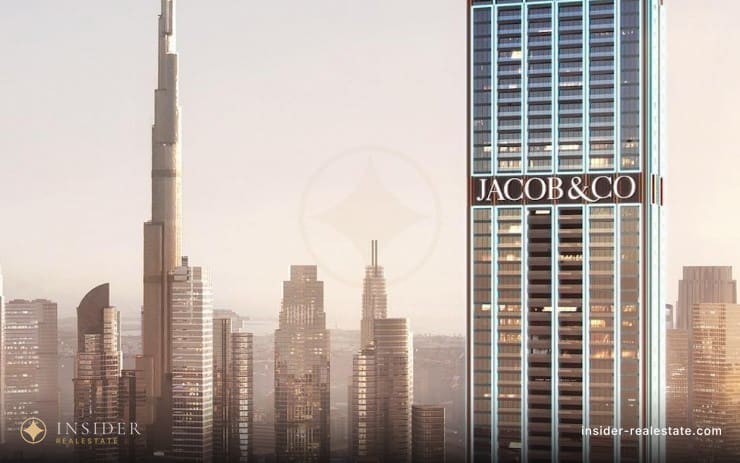
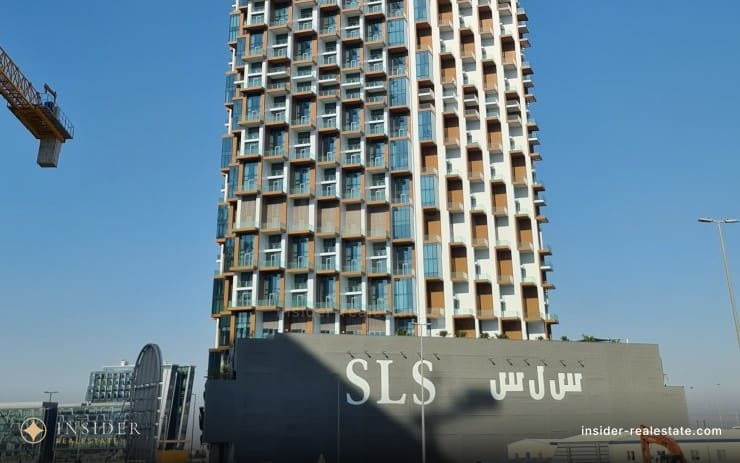
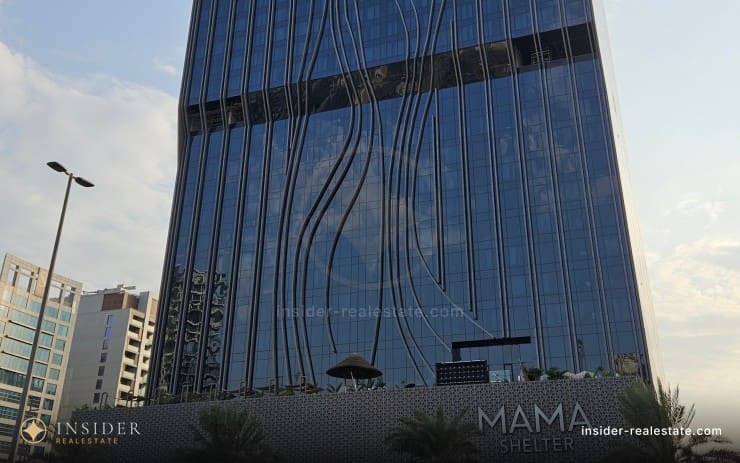
In the news
The same subject in writing — analysis and news related to this video.
Business Bay apartments: Deyaar’s DWTN Residences — 445-metre twin towers planned around Maslow’s pyramid
Deyaar is building DWTN (Downtown) Residences in Business Bay: twin 445 m, 111-storey towers with 522 homes — 432 apartments, 76 duplexes, 13 penthouses and a “Royal Palace”. From AED 1.86m with half due at keys. Construction began in January 2026; completion is quoted for 2029–2030.
Orion Real Estate Development developer profile: eight clauses to read in a Dubai off-plan contract
The developer of a Business Bay tower. Off-plan purchase agreements are signed almost unread, yet eight of their provisions decide nearly everything — here they are.

Ginco Properties: building in Business Bay, where supply is the whole question
A developer with a tower under construction in Business Bay. The district has plenty of demand and even more supply — and that ratio, not the building, decides the outcome.
Downtown Dubai vs Business Bay: where to live and where to buy to let
Downtown is Dubai's tourist and status core, around AED 2 433/sqft on our own data. Business Bay is the business district next door, home to 17 000+ companies, around AED 1 871/sqft. We compare lifestyle, rental economics and who should pick which.

Emirates National Investment: what insurance actually covers, and what it does not
A developer with tall Business Bay towers from 2016. The building has a policy and you probably assume it covers you — here is where the line falls.
Kasco Properties: the area you buy and the area you get
A developer building a Business Bay tower. Off-plan contracts allow the final measured area to differ from the sold area — and the clause that governs it is worth finding.