Hessa Street rebuild finished: what the AED 690m upgrade means for JVC, Al Barsha and Arjan
RTA fully opened phase one of the Hessa Street upgrade in April 2026: 4.5km, four lanes each way, capacity up from 8,000 to 16,000 vehicles an hour, and the Sheikh Zayed Road–Al Khail Road run cut from 15 minutes to about 4.
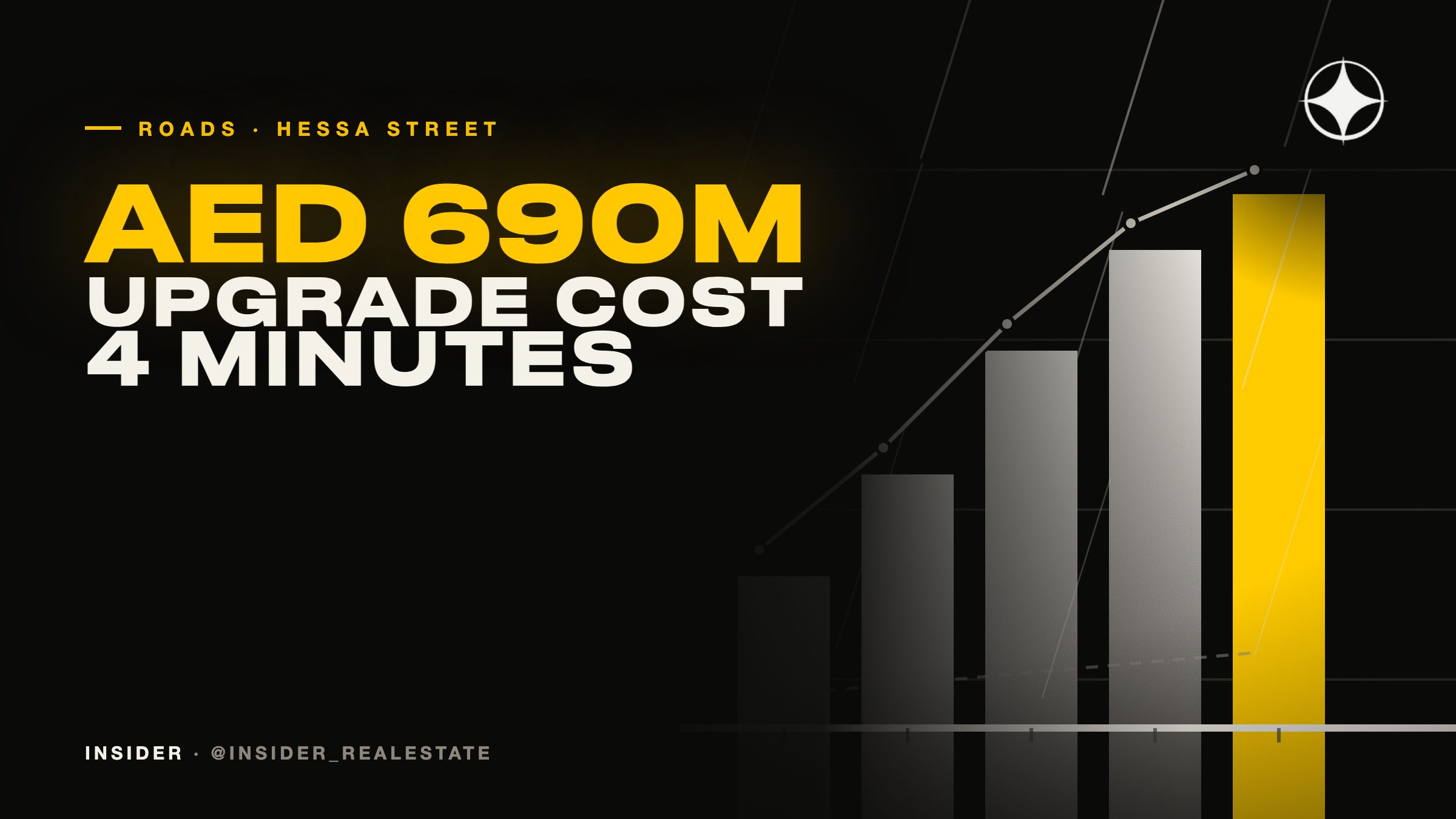
In October 2023, Dubai's Roads and Transport Authority (RTA) signed a AED 689m contract to rebuild Hessa Street, the main cross-connector between Sheikh Zayed Road and Al Khail Road that residents of JVC, Al Barsha and nearby districts use every morning. Two and a half years later, phase one is fully delivered and phase two is already under construction. Here is what changed, and for whom.
Phase one: what was delivered
RTA opened the work in stages: a one-kilometre bridge linking Hessa to Al Khail Road went live in December 2024, the main carriageway reached 90% completion in January 2026, and on 19 April 2026 RTA announced phase one complete. The result:
- 4.5km between Sheikh Zayed Road and Al Khail Road;
- four lanes each direction, up from two;
- capacity of 16,000 vehicles an hour in both directions, up from 8,000;
- the Sheikh Zayed Road–Al Khail Road run cut to about 4 minutes at peak, down from 15;
- four rebuilt intersections — at Sheikh Zayed Road, First Al Khail Street, Al Asayel Street and Al Khail Road — with flyovers over the Red Line metro;
- a 4.5-metre-wide, 13.5km cycling track connecting Al Sufouh to Dubai Hills.
RTA puts the total cost at "about AED 690m." The corridor serves Al Sufouh 2, Al Barsha and JVC, which are expected to house around 640,000 residents by 2030.
Talk to a licensed broker: 📲 +971 50 120 32 64 on WhatsApp, @dubai_oleg on Telegram
Phase two: east from Al Khail Road
In February 2026, RTA signed a contract for the continuation: 3km from Al Khail Road to Sheikh Mohammed bin Zayed Road, including 8,835 metres of bridges and a 480-metre tunnel, plus a full rebuild of the Al Khail–Hessa interchange. Capacity on this stretch is planned to double, from 4,000 to 8,000 vehicles an hour, with travel time falling from 24 to about 5 minutes. Phase two serves districts with roughly 650,000 residents combined: JVC, Arjan, Dubai Science Park, Al Barsha South, JLT, Jumeirah Islands, Barsha Heights, The Greens and Emirates Hills. The same package includes 10.4km of cycling and scooter tracks from Dubai Hills to Motor City. RTA has not given a public completion date for phase two.
What it changes for each district
For JVC, traffic has been the community's biggest drawback in recent years: the district built out fast while entry and exit points stayed limited, so a 15–25-minute crawl to Sheikh Zayed Road ate into the appeal of cheaper rents. The rebuilt Hessa is the first of several road programmes here — RTA and Dubai Holding are also adding four new entry points to the community, covered in our JVC traffic fix piece.
For Al Barsha and Barsha Heights, the effect is more direct: journey times to Mall of the Emirates, Dubai Internet City and the Marina have shortened, making a Barsha address more workable for a downtown commute. Arjan should see its main benefit once phase two lands — the tunnel and interchange at Al Khail remove the district's principal exit bottleneck.
Worth a sober caveat: roads rarely lift prices on their own — they remove the discount attached to inconvenience. If a JVC unit is priced below comparable stock because of traffic, that gap should narrow gradually, but only once every piece, including the new entry points, is finished. And the flip side: expect diversions and noise along Hessa east of Al Khail while phase two is under construction.
If you're weighing districts along Hessa, start with the JVC and Al Barsha area pages for pricing and stock — and for Al Barsha as a transit-and-mall district in its own right, its area profile has the full picture.
Video on this topic
The same subject on the English channel — each clip has a written version of its own.


In the news
Other write-ups on the site about the same thing.
JVC traffic fix: RTA and Dubai Holding’s AED 6bn road programme and four new access points
The RTA and Dubai Holding signed an AED 6bn (about $1.6bn) road programme: four new JVC access points with interchanges, double the capacity and 70% shorter journeys. Hessa Street phase two adds a 780 m bridge and a 480 m tunnel out of JVC. What it means for owners and buyers.

Lantana Hills: Dubai Holding is building 390 modular townhouses in Al Barsha South
Dubai Holding awarded a AED 680m (~$185m) contract to build Lantana Hills, 390 townhouses in Dubai Science Park. The modular method cuts construction waste by 30%; handover is set for the second half of 2027. Not to be confused with the existing Villa Lantana next door.
Dubai malls rebuild: Mall of the Emirates’ AED 5bn revamp, Dubai Mall’s 240 new stores and Dubai Square
Majid Al Futtaim is spending AED 5bn on Mall of the Emirates: about 20,000 m² and 100 new stores. Emaar is adding 240 shops and restaurants to Dubai Mall for AED 1.5bn and building Dubai Square in Creek Harbour. How malls move home values in Al Barsha, Downtown and by the creek.
Retail is growing where nobody expected: International City, JVC, Majan and Arjan
Transaction statistics on Dubai retail units give an unexpected picture: activity leads not at prestige addresses but in mass residential districts.

Al Barsha area profile: a mainland district by the metro and the mall, and why ownership varies street by street
Villas, apartment blocks, hotels and a major mall in the middle of the city. Convenient to live in — but what a foreigner can actually own here changes from one plot to the next.

Al Ali Property Investment: check the plot is freehold before anything else
A developer with projects in Al Barsha and Nad Al Sheba. Mainland Dubai is not uniformly open to foreign ownership, and the map of what is does not follow district boundaries.
Below market in JVC right now
From the daily off-market feed. Availability and price are confirmed on request.
All below-market listings →