
IMF UAE GDP forecast: a 3.9% contraction in 2026, 7.7% growth in 2027 — what it means for Dubai property
The IMF expects the UAE economy to shrink by 3.9% in 2026 and grow by 7.7% in 2027, 2.4 points above its April forecast. The condition: the Strait of Hormuz starts reopening in March 2027. The numbers, and what they mean for buyers and sellers in Dubai.
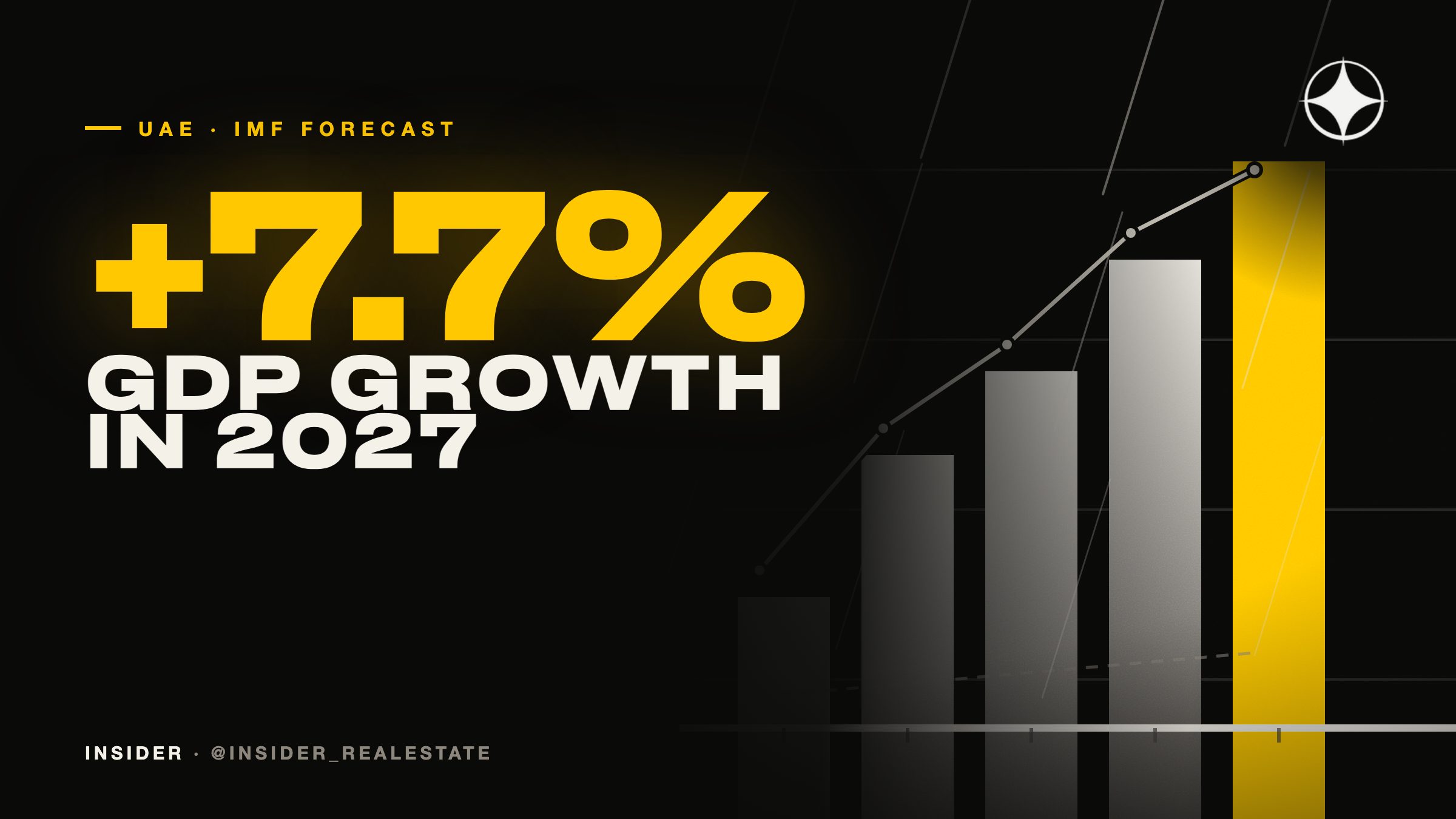
The IMF expects the UAE economy to contract by 3.9% in 2026 and grow by 7.7% in 2027. The 2027 figure is 2.4 percentage points higher than the fund’s April forecast. The numbers appear in the IMF’s October reports: the World Economic Outlook and the regional outlook for the Middle East and Central Asia.
What exactly does the IMF forecast for the UAE?
A contraction in 2026, then a sharp rebound in 2027. The contraction comes from the closed Strait of Hormuz and disrupted shipping on the main route for Gulf oil exports. The fund ties 2027 growth to a gradual reopening of the strait and a recovery in exports.
Jihad Azour, director of the IMF’s Middle East and Central Asia Department, presented the regional outlook at DIFC on 22 October. He pointed to the UAE’s large financial buffers, advanced infrastructure and AI investment, which could add about 0.5 percentage points to annual growth.
Talk to a licensed broker: 📲 +971 50 120 32 64 on WhatsApp, @dubai_oleg on Telegram
What does 7.7% growth depend on?
On when the Strait of Hormuz reopens. The IMF’s baseline has a gradual reopening starting in March 2027 and shipping back to pre-war levels by October 2027. The fund says uncertainty will stay elevated throughout 2027.
If the strait reopens later, the rebound moves with it. So 7.7% is a forecast under a specific assumption, not a promise.
How does the UAE compare with its neighbours?
The UAE’s contraction is milder than that of most Gulf neighbours. Economies more dependent on exports through the strait face double-digit declines in 2026 and stronger rebounds in 2027.
| Country | 2026 | 2027 |
|---|---|---|
| UAE | −3.9% | +7.7% |
| Saudi Arabia | −3.3% | +7.9% |
| Bahrain | −11.3% | +13.9% |
| Kuwait | −16.7% | +17.1% |
| Qatar | −15.6% | +18.8% |
The fund expects the Middle East and North Africa as a whole to shrink by 2% in 2026, the only region of the world it sees contracting. Global growth is forecast at 3.1% in 2026 and 3.4% in 2027.
Does the IMF agree with the UAE Central Bank?
On the shape, yes: both expect a weak 2026 and a strong 2027. In the summer the UAE Central Bank forecast 1.7% for 2026 and 9.8% for 2027.
The IMF is harsher on this year and more modest on the next. We covered the central bank’s numbers in UAE Central Bank forecast for 2026.
On prices, the IMF expects average Gulf inflation to ease to 2.4% in 2027 and to about 2% from 2028.
What does this mean for a property buyer in Dubai?
A weak year for the economy usually hands buyers negotiating power. Developers are readier to offer long payment plans, and resale sellers are readier to bargain. If the 2027 rebound arrives, deals closed during the slowdown will have been bought near the bottom of the cycle.
Still, the decision should rest on your own holding period, not on one line of a forecast. For buyers with a five-year horizon, the city’s long-term agenda matters more — see D33: Dubai’s plan to double its economy by 2033.
And what should a seller do?
If the sale is not urgent, time is on the seller’s side: the 2027 forecast is stronger than the current year. If the money is needed now, a slowing market rewards a realistic price and a fast reply to buyers, not an inflated asking price in hope of a rebound.
Frequently asked questions
What growth does the IMF expect for the UAE in 2027?
7.7%. That is 2.4 percentage points above the forecast the fund gave in April 2026.
Why does the IMF expect the UAE economy to shrink in 2026?
Because of the closure of the Strait of Hormuz and disrupted shipping. The fund puts the contraction at 3.9%.
When does the IMF expect the Strait of Hormuz to reopen?
In the baseline, a gradual reopening starts in March 2027, with shipping back to pre-war levels by October 2027.
How does the IMF forecast differ from the UAE Central Bank’s?
The central bank expected 1.7% growth in 2026 and 9.8% in 2027. The IMF sees a contraction in 2026 and a smaller rebound in 2027.
How the UAE economy was holding up over the summer, before the autumn forecasts — in UAE economy in 2026: PMI at 55.3 in August.
Video on this topic
The same subject on the English channel — each clip has a written version of its own.
 13:38
Dubai Maritime City and the Nautica launch: is the location worth it?
The history of Dubai Maritime City, the Nautica launch by Select Group, and an honest forecast: where 1-bedroom pricing can realistically go, what I think of the 2 and 3-bedroom units, and how branded towers change the maths.
WatchIn the news
Other write-ups on the site about the same thing.
UAE Central Bank: growth slows to 1.7% in 2026 — then accelerates to 9.8% in 2027
The UAE Central Bank cut its 2026 growth forecast to 1.7%, after 6.2% a year earlier — geopolitics and logistics took their toll. For 2027 it projects 9.8% growth. How to read the swing, and what it means for timing a property purchase.
UAE Economic Stability: Second in the World, Behind Only Switzerland
An international stability study ranks the UAE second worldwide, ahead of Canada, Germany and Japan. GDP per capita rivals Western Europe, and the country’s sovereign wealth funds hold trillions of dirhams in assets.
Abu Dhabi manages $1.7 trillion — more than Switzerland and the Netherlands combined
The number explains less than the structure does. There is no single pot: several independent institutions with separate mandates, and that arrangement is what makes the capital behave the way it does.
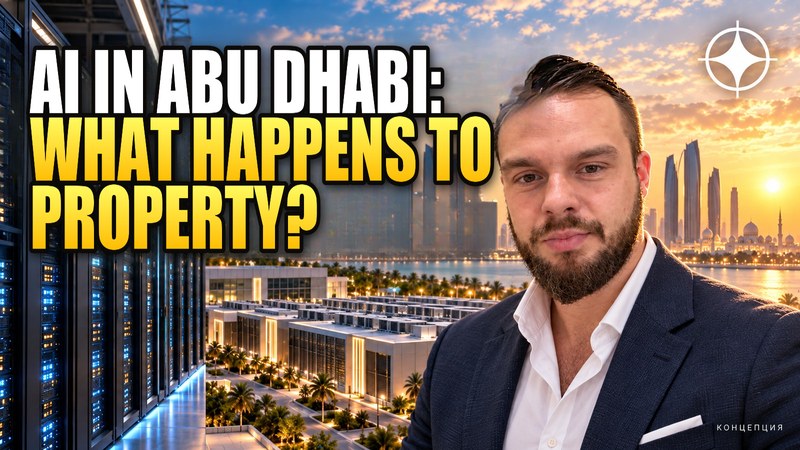
Stargate UAE: a 1 GW AI cluster in Abu Dhabi, and what it actually means for property
The first 200 MW goes live in 2026 and the wider campus is planned at 5 gigawatts across ten square miles. Where the effect on housing and offices is real, and where it is being overstated.
Non-Oil Sector Now 74.6% of UAE GDP; Dubai Draws $14bn in Foreign Investment
The UAE’s non-oil economy has grown to 74.6% of GDP, up 4.5%. Dubai alone attracted $14bn in foreign direct investment — up 33% year on year — and a record 1 117 new greenfield projects.
Dubai Cracks the Top 7 Global Financial Centres: What It Means for Housing
Dubai climbed four places to rank 7th on the Global Financial Centres Index, its best result ever. At the same time, the UAE posted a record AED 177.3bn in foreign direct investment. How both feed through to apartment prices.