
The Opus by Omniyat: the only building Zaha Hadid designed inside and out
Most towers in Business Bay are variations on a rectangle. The Opus is a cube with a free-form void cut through its middle, and it is the one project Zaha Hadid designed both outside and in — an architectural fact that turned out to have commercial consequences.
What the building is
Two towers reading as a single glass cube, joined by a bridge at the top and a podium at the bottom, with the void carved between them. The reflective, distorted facade is the point: the building is not trying to disappear into the skyline, it is trying to interrupt it.
Inside it holds the ME Dubai hotel by Meliá, offices, and serviced residential units — a mixed-use stack rather than a residential tower with a lobby. That matters for an owner, because you share the building with a hotel operation and a working office population, and the way access, lifts and parking are separated is what decides whether that is pleasant.
Omniyat is the developer, and the project is the clearest statement of what that company sells: design as the asset. Their buildings are commissioned from names people recognise, and the resale story leans on that authorship in a way an ordinary developer's does not.
Talk to a licensed broker: WhatsApp +971 50 120 32 64 · Telegram
Living in a piece of architecture
A sculptural facade produces sculptural interiors, and not always in your favour. Curved glass, angled walls and irregular floor plates are beautiful and they complicate furniture, storage and shading. Anybody buying here should walk the specific unit rather than the show apartment — in a building like this, two units on the same floor can be genuinely different products.
The upside is the same coin. Units with the void frontage, or the higher floors looking along the canal, are unrepeatable: no future tower can copy them, and there are only so many of them. In a market where new supply arrives every quarter, non-replicable is the rarest quality on offer.
Serviced residences also mean hotel-adjacent service and hotel-adjacent running costs. Both are part of the product, and both should be read in the service-charge history rather than assumed from the brochure.
The investment case, stated honestly
Design-led buildings hold their premium when the design stays distinctive and the building stays maintained. This one has an author who cannot be repeated and a location on the Business Bay canal that has continued to densify around it — both supportive.
The risk in the segment is not the architecture, it is the operator and the owners' association. Complex buildings cost more to run, and a landmark that is visibly tired loses its premium faster than a plain tower ever could, because the premium was the point.
Ask the same three questions as anywhere in this class: what has actually resold in the building, what the service charge is per square foot and what it has done, and what exactly the unit's geometry gives you in usable space versus headline area.
Frequently asked
Who designed The Opus?
Zaha Hadid Architects — and it is the only building where Zaha Hadid designed both the exterior and the interiors. It was developed by Omniyat in Business Bay.
What is inside The Opus?
The ME Dubai hotel by Meliá, offices and serviced residences, arranged as a mixed-use building rather than a purely residential tower.
Is a landmark building a better investment than an ordinary tower?
It is a different one. Scarcity and authorship support the price and narrow the buyer pool at resale; running costs are higher and depend on the building being well managed. Judged purely on yield, an ordinary tower usually wins.
✍️ Message me on WhatsApp for a free consultation — off-market stock, payment plans and honest numbers on any of the projects covered here.
✅ Subscribe on YouTube — investment, property, business and relocation in the UAE and beyond.


Below market in Business Bay right now
From the daily off-market feed. Availability and price are confirmed on request.
All below-market listings →
In the news
The same subject in writing — analysis and news related to this video.
Car-brand residences in Dubai: Bugatti, Mercedes-Benz, Aston Martin, Pagani and Bentley compared
Five car makers now put their names on Dubai homes: 182 Bugatti Residences in Business Bay, the 341-metre Mercedes-Benz Places, Aston Martin interiors at Viewz, a 19-storey Pagani tower on the canal and Bentley Home villas from AED 20m. What the badge actually buys.
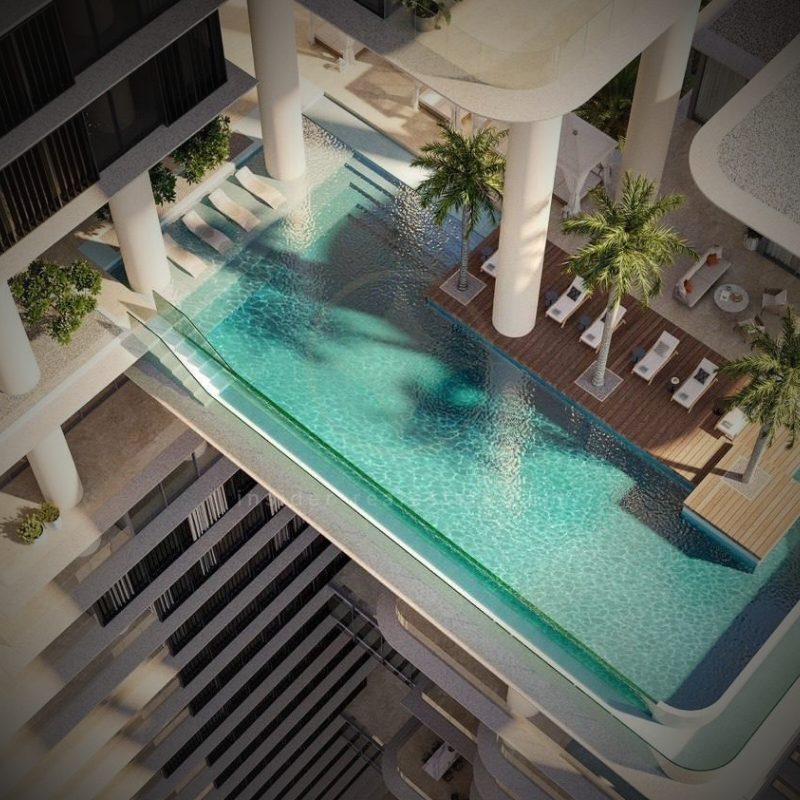
Omniyat's Marasi Bay island: a beach club by the Burj Khalifa and a fully funded $11.7bn portfolio
Omniyat bought a reclaimed island in Marasi Bay to build the Burj Khalifa district's only urban beach club and Sunset Park, a private floating island for VELA Viento residents. In March 2026 it priced a $600m sukuk at 7.25% and said its $11.7bn launched portfolio is fully funded to completion.
Omniyat: the ultra-prime end, where the rules are different
A developer that builds few buildings at the very top of the market. How the ultra-prime segment behaves differently on pricing, liquidity and comparables — and what due diligence looks like there.
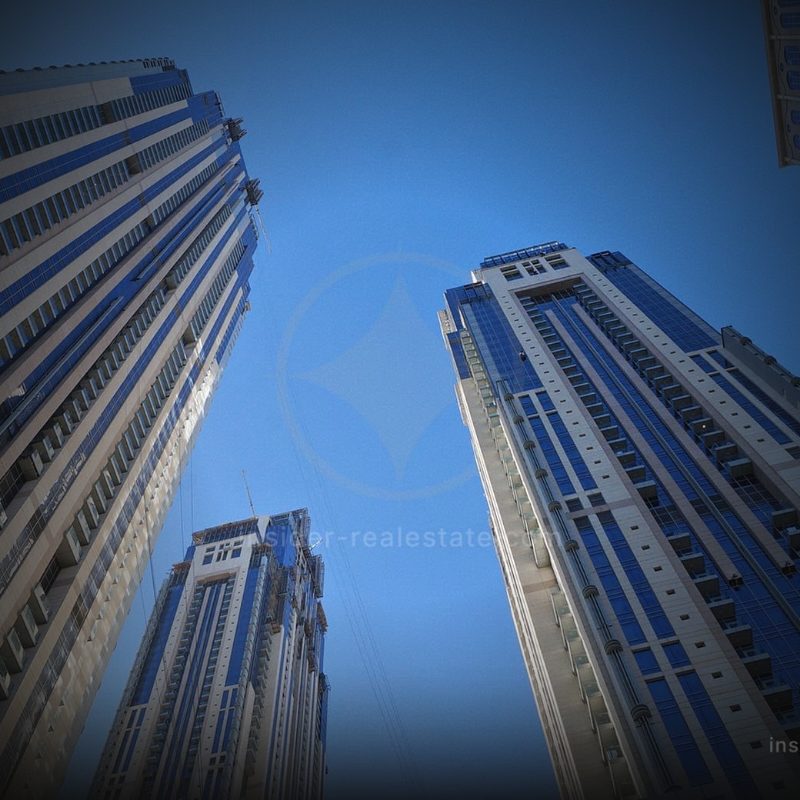
Dubai skyscrapers: Corinthia Dubai above 500 metres and Al Habtoor’s AED 5bn tower in Al Habtoor City
Corinthia Dubai, twin towers above 500 m on Sheikh Zayed Road with a rooftop pool and a Corinthia hotel, is due by 2030. Al Habtoor Group has announced an AED 5bn ($1.36bn) office tower in Al Habtoor City. What the two projects say about the market and who should care.
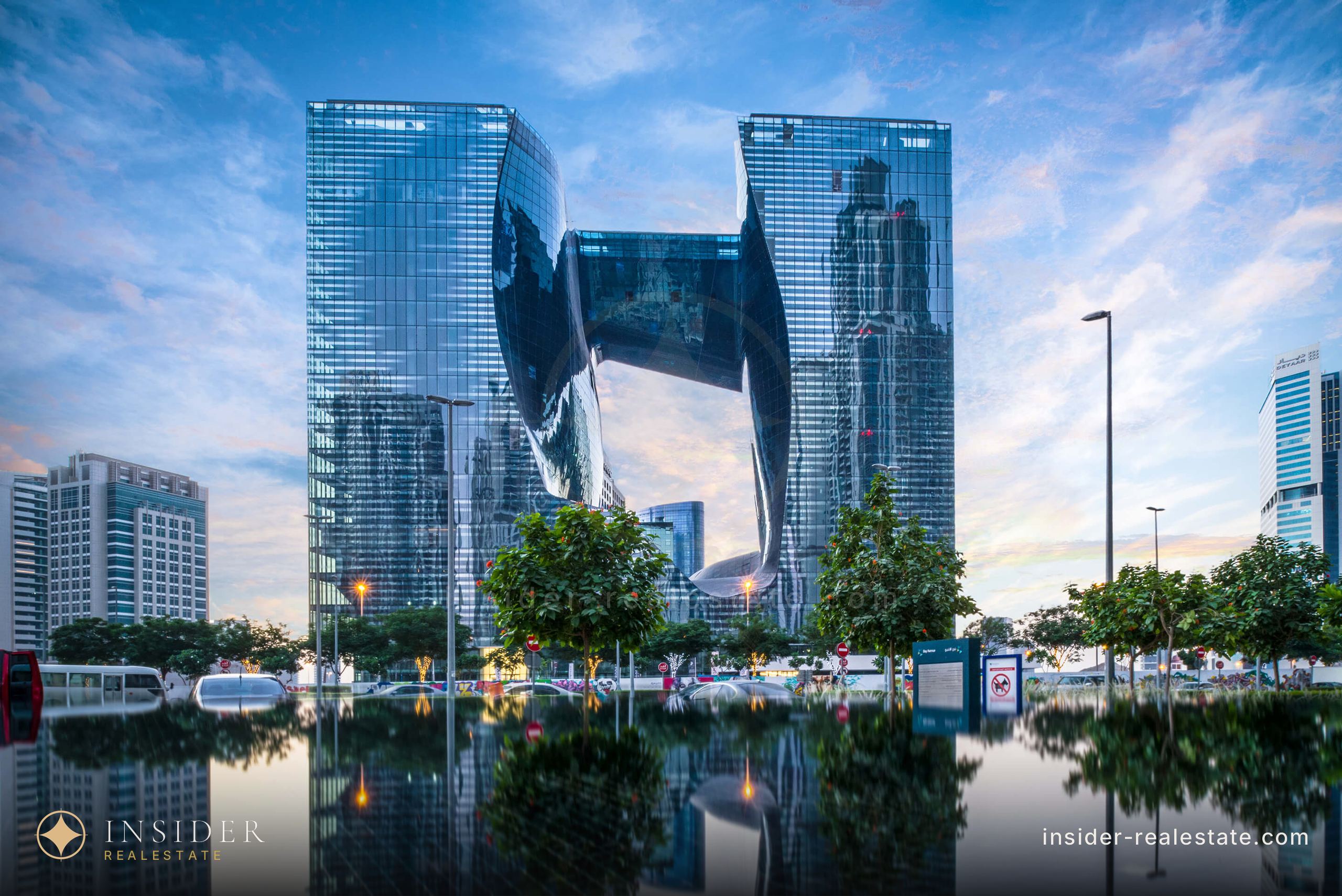
The Opus: how a Zaha Hadid building became a price anchor in Business Bay
A cube with a living form carved out of its centre — Zaha Hadid’s last Dubai project, where her practice designed both the exterior and the interiors of the ME Dubai hotel. How an architectural statement works on the value of the district around it.
New Dubai office towers: Immersive Tower in DIFC, Aldar's Sheikh Zayed Road building and Bureau Lamar in Business Bay
Three major office schemes are rising around DIFC and Business Bay: Immersive Tower ($300m, 58 573 sq m, 2027), Aldar's 88 000 sq m tower by Emirates Towers metro (Q4 2027), and an office park with a theatre on Business Bay's largest plot. Vacancy in central clusters sits at 2–5%.