
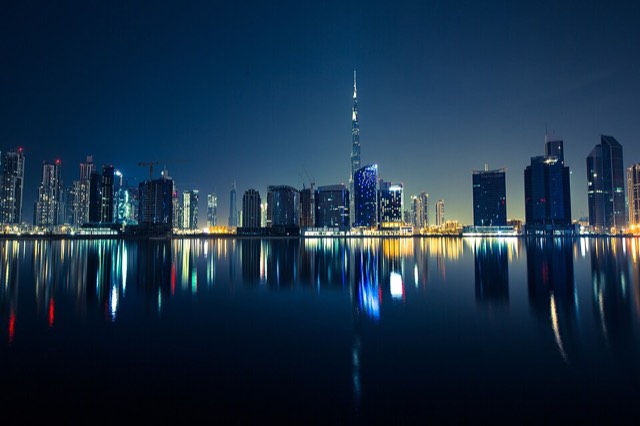
 −33% Illustrative photo
 Saadiyat Island
The cultural island: the Louvre, NYU Abu Dhabi, a protected natural beach and the strongest villa market in the emirate.
- cultural district and museums
- protected natural beach
- the strongest Abu Dhabi villa market
Indicative gross yield 6.5% per annum, before costs
Entry price $199K AED 730,828 · for an apartment in the Cultural District
Format Apartments apartments
Regulator DMT Dept. of Municipalities & Transport, Abu Dhabi
What this district is actually like
What Saadiyat is
Saadiyat Island covers about 27 square kilometres roughly 600 metres off the Abu Dhabi coastline, connected to the mainland by a bridge carrying a high-speed road. Central Abu Dhabi is around five minutes away; Dubai is about an hour and twenty.
Unlike most of the Gulf's islands it is natural rather than reclaimed, and it retains mangrove reserves and populations of rare and endangered plants, birds and animals — including protected turtle nesting on parts of the shoreline.
The Saadiyat Cultural District is the best-known part: the Louvre Abu Dhabi is operating, with the Sheikh Zayed National Museum and Guggenheim Abu Dhabi in progress, alongside Manarat Al Saadiyat.
The island also holds New York University Abu Dhabi, an eighteen-hole championship golf course, several resort hotels and a beach that has been ranked the best in the Middle East.
Why the culture matters to property
A museum quarter is not amenity in the way a mall is. What it does is fix the island's identity and its visitor economy for decades, and that is unusually valuable in a region where districts are frequently rebranded.
Visitor numbers rose sharply as the cultural programme opened — up 44% in 2023 — and the island has collected more than thirty awards for tourism and hospitality.
It also anchors a specific resident population: academics and staff from NYU, museum and cultural professionals, and the hospitality workforce around the resorts. That is a stable, well-educated, long-staying tenant base.
For an owner the practical effect is that demand here is less tied to the general property cycle than in a purely residential district.
The ownership position
Saadiyat is a designated investment zone, which means foreign nationals can hold freehold title with the same rights as anywhere in Dubai. That is not true of most of the Abu Dhabi mainland, and it is why international buyer activity in the emirate concentrates on a handful of islands.
Registration is with the Department of Municipalities and Transport rather than the Dubai Land Department, and the process differs in detail. There is no annual property tax and no personal income tax on rental income.
The market itself is thinner than Dubai's: Abu Dhabi registers a fraction of the transaction volume, which means fewer comparable sales to price against and a longer time to sell.
Saadiyat is nonetheless the most liquid villa market in the emirate — the most popular destination for villa purchases in Abu Dhabi — and in 2024 it recorded the emirate's most expensive penthouse sale.
What is actually for sale
The range runs from apartments in the Cultural District to beachfront villas on Saadiyat Beach, with branded and resort-linked residences in between.
Apartments in the Cultural District are the accessible entry and put the museums and international schools within walking distance. Manarat Living and Nouran Living sit in this band.
Villas on the beach side are the premium product and the reason the island leads the emirate's villa market. They trade thinly, price by negotiation and take time to sell — the standard pattern in any low-volume prime segment.
Whichever band you look at, establish the specific position: distance to the beach, to the cultural district and to the causeway are the three variables that move the price here.
Living on the island
Quiet, low-density and green by Gulf standards, with strict controls that keep it that way. The beach is genuinely protected rather than nominally so, which is part of why it is what it is.
International schools operate on the island, which combined with the university and the cultural institutions makes it a plausible family location rather than only a resort one.
Everyday retail is limited relative to the mainland and residents drive for a substantial shop. The bridge means central Abu Dhabi is close, so this is a minor rather than a defining constraint.
Dubai is an hour and twenty minutes away, which rules out daily commuting and defines who lives here: people whose work is in Abu Dhabi.
Who it suits
A buyer who wants the strongest address in Abu Dhabi with a genuine cultural and natural setting, freehold ownership and a stable institutional tenant base.
Families working in Abu Dhabi who want schools, a protected beach and low density in one place.
It suits poorly anyone who needs Dubai access daily, anyone optimising purely for yield percentage — the entry price reflects the address — and anyone who might need a fast exit from a thin market.
The realistic comparison is against Yas Island, which offers more amenity, more supply and more event-driven short-let demand, and Al Reem, which offers liquidity and central proximity at a lower price.
The island by the numbers
The Saadiyat masterplan is drawn for 160,000 residents and more than 220,000 workers across seven districts. Those numbers are hard to believe against today's quiet, low-rise island — and that is the point: the build-out is measured in years, and the current density is not the final one.
The sand beach runs for eight and a half kilometres, and since 2012 the island has taken the World Travel Award as the Middle East's leading beach destination year after year. The one-and-a-half-kilometre Mamsha Al Saadiyat promenade runs along the shore.
The Cultural District was commissioned from the biggest names in architecture: the Louvre Abu Dhabi is Jean Nouvel's building, the Guggenheim Abu Dhabi is Frank Gehry's, and the district masterplan also carries designs by Tadao Ando and Zaha Hadid.
The eighteen-hole Saadiyat Beach Golf Club was designed by Gary Player. Schooling is solved on the island itself: Cranleigh Abu Dhabi, nurseries and the New York University campus.
Zayed International Airport is about 26 minutes away by road, Abu Dhabi Mall around twelve.
What we have in Saadiyat Island
Showing 12 of 146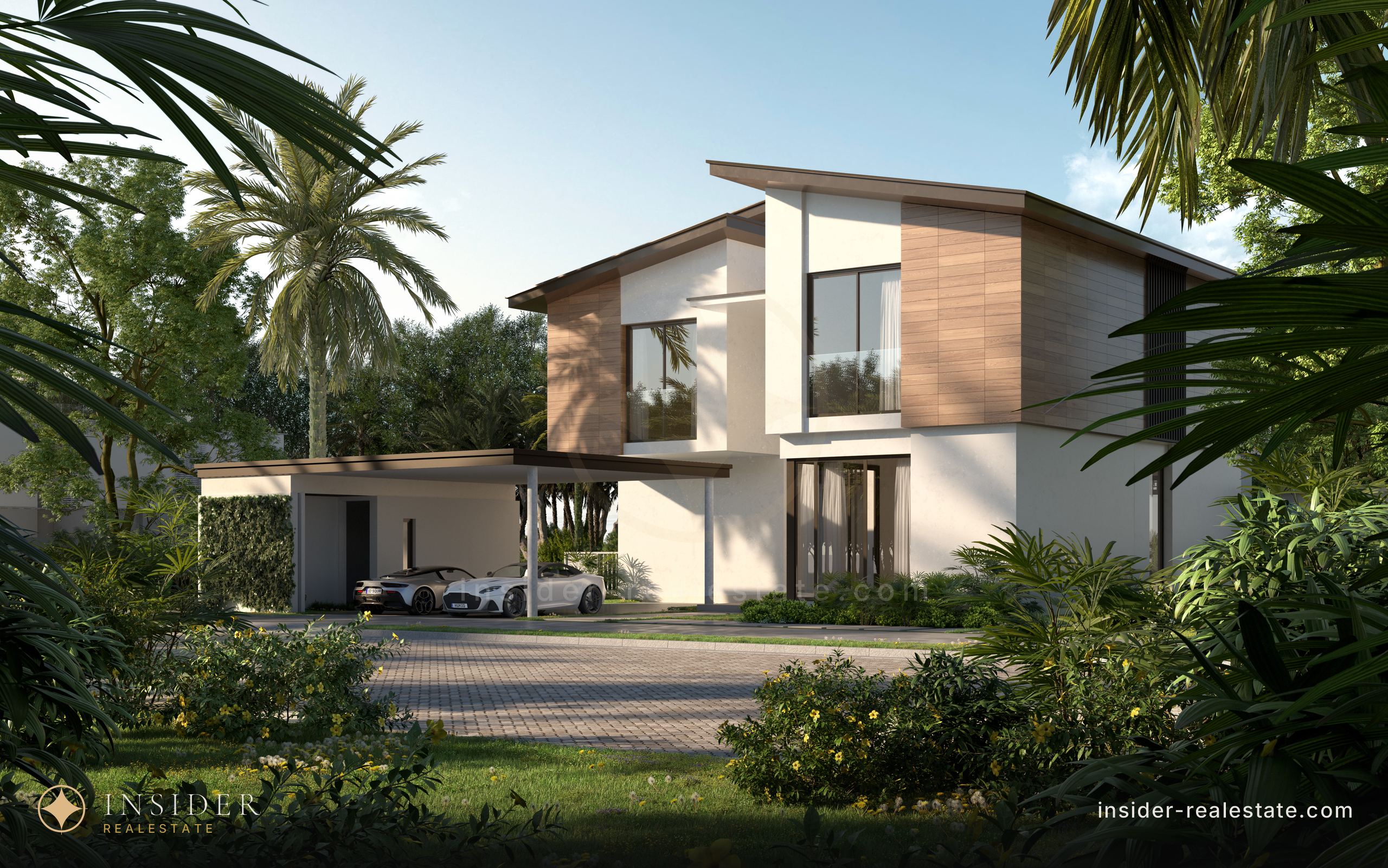
Projects in Saadiyat Island
Full catalogue →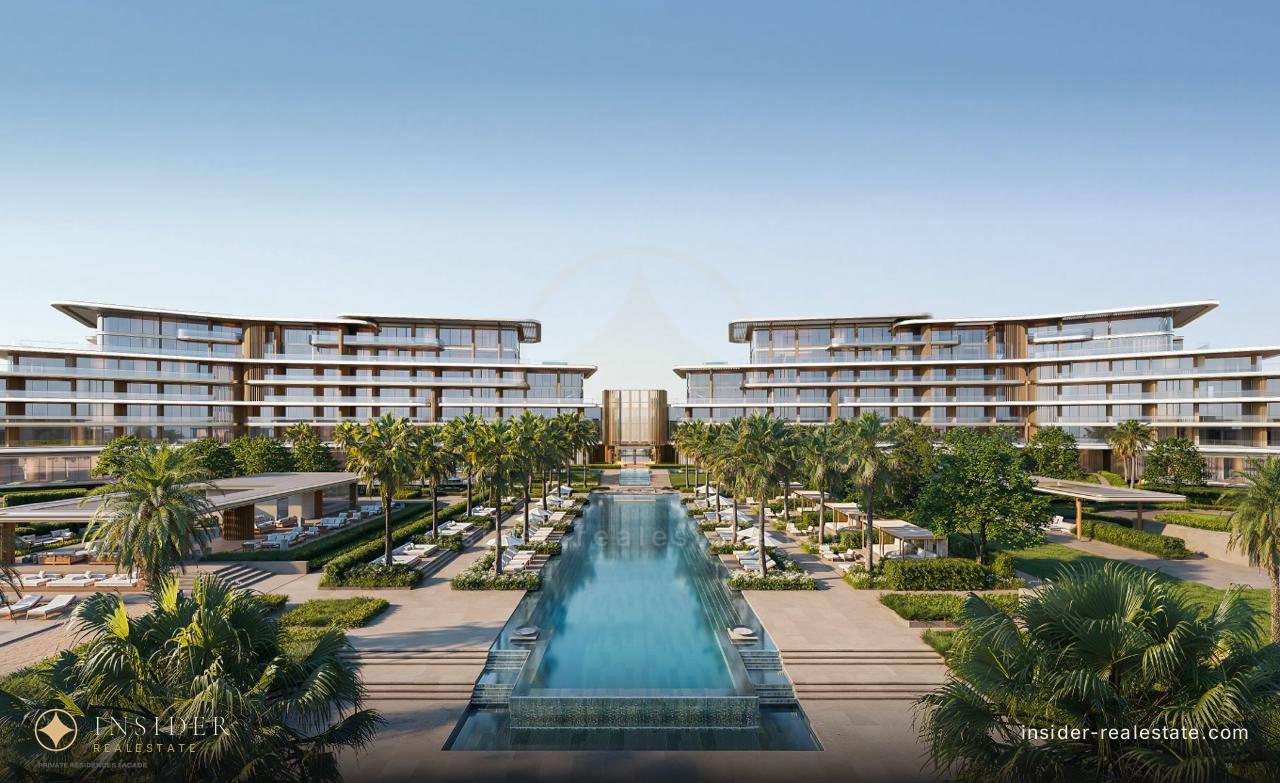
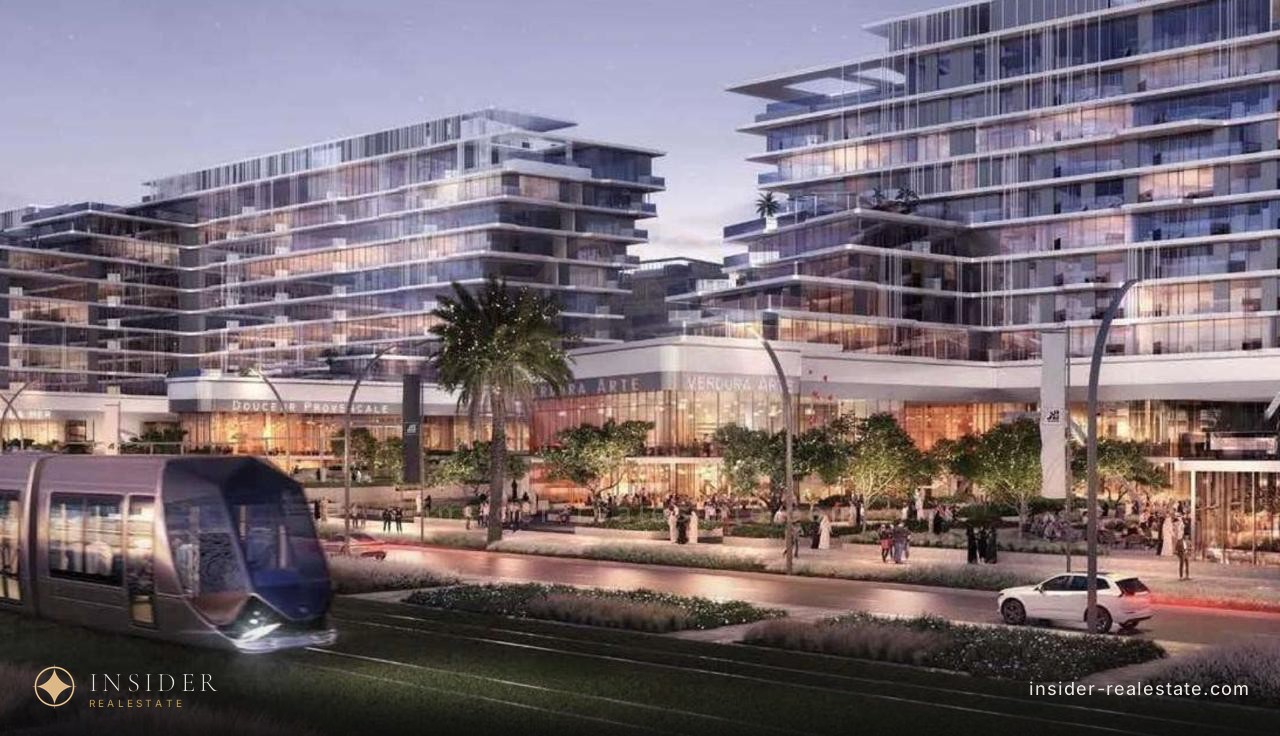
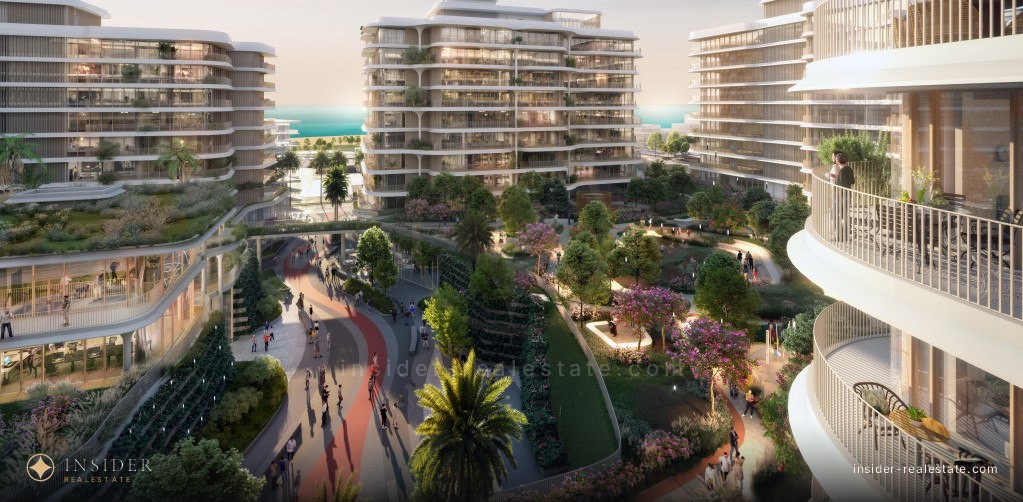
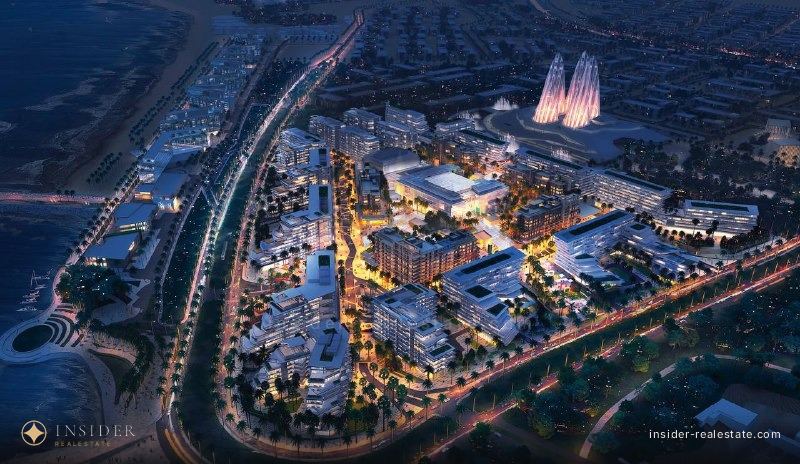
Video
Abu Dhabi on camera
Films from the channel about the emirate. They are not cut by district — the market, the islands and the ownership rules are the same conversation across all of them — so the rail is the emirate's rather than this district's.
Full reviews


Questions about Saadiyat Island
Can foreigners buy freehold on Saadiyat Island?
Yes — Saadiyat is a designated investment zone where foreign nationals can own freehold, registered with the Department of Municipalities and Transport. Most of the Abu Dhabi mainland does not offer this, which is why international activity concentrates on the islands.
How far is Saadiyat from Dubai?
About an hour and twenty minutes by road, with central Abu Dhabi roughly five minutes away over the bridge. That rules out a daily Dubai commute and defines the resident profile as Abu Dhabi-based.
What museums are on Saadiyat Island?
The Louvre Abu Dhabi is operating, with the Sheikh Zayed National Museum and Guggenheim Abu Dhabi in progress, alongside the Manarat Al Saadiyat arts centre. Together they form the Saadiyat Cultural District.
The yield and entry price shown above are indicative figures for comparing districts against each other, drawn from market summaries rather than calculated from our own inventory the way the Dubai numbers are. They are not a valuation of any specific property and they are not investment advice. Foreign freehold ownership in Abu Dhabi is available only within designated investment zones — confirm the designation for any specific property before proceeding.
In the news
Saadiyat Island apartments: Mandarin Oriental Residences and Henge Residences beside Abu Dhabi’s museums
Two branded launches on Saadiyat six months apart: Aldar’s Mandarin Oriental Residences (about 228 homes, designed by BIG, from AED 6.2m, Q3 2028) and Nord’s Henge Residences (166 homes, from AED 1.1m, 2028). Guggenheim Abu Dhabi opens on 11 December 2026.
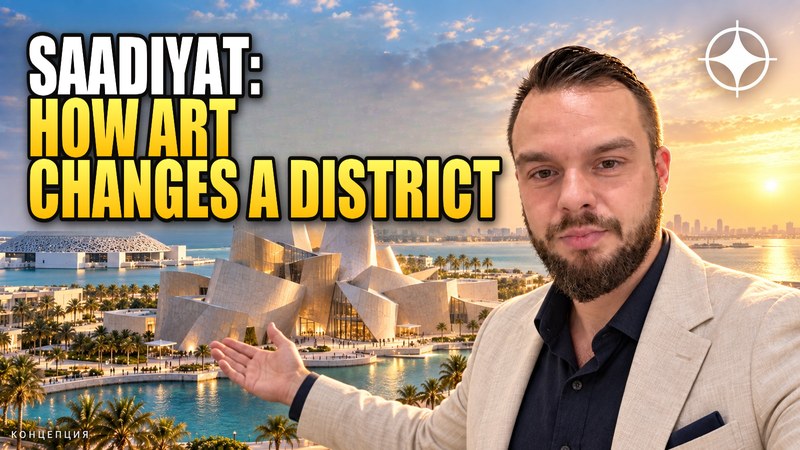
Dar al Funoon: Frank Gehry’s Arts Centre Joins Saadiyat’s Museum Cluster
Abu Dhabi’s cultural cluster is gaining an arts centre designed by Frank Gehry, standing alongside Louvre Abu Dhabi and the future Guggenheim. What museums do to property prices around them.
Dar Al Funoon: Frank Gehry’s Cultural Centre Opens on Saadiyat by 2030
Saadiyat Island in Abu Dhabi is getting one of the region’s largest cultural centres — an opera, ballet and theatre complex designed by the architect behind the Guggenheim Bilbao.
Baccarat Residences Saadiyat: 77 Homes With Louvre and Guggenheim Views
Aldar brings the Baccarat brand to Abu Dhabi’s residential market: 77 residences in Saadiyat’s cultural district — two- and three-bedroom apartments, four-bedroom sky villas and two signature penthouses.
Saadiyat Island apartments: Nobu Residences and The Source Terraces by Aldar, two years on
Two premium Aldar launches on Saadiyat: Nobu Residences (88 homes, November 2023, from about AED 7m) and The Source Terraces designed by BIG (June 2024, from about AED 3m). Both are sold out and due in 2027 — so the only way in now is a resale contract.
Weekend trips from Dubai: Fujairah, Khor Fakkan and Saadiyat Island in one or two days
Three weekend escapes from Dubai: the east coast at Khor Fakkan and Fujairah, 1.5–2 hours by car and now reachable by Etihad Rail from Abu Dhabi; and Saadiyat, where the Louvre is joined by new museums and the Guggenheim opens on 11 December 2026. What each tells a property buyer.
Marsa Al Saadiyat: the final phase of Saadiyat Island, at AED 100bn
The concluding part of the island’s master plan — 6.4 million square metres, the largest marina in Abu Dhabi, hotels and culture. What is significant is not the scheme but that an entire island is being completed.
Saadiyat Beach Ranks in the World's Top 20: Abu Dhabi Beats Famous Resorts
Saadiyat Beach in Abu Dhabi is No. 19 in The World's 50 Best Beaches 2026. Why Saadiyat Island made the list of the best beaches in the world, and how the Louvre, a marine reserve and luxury resorts are turning it into Abu Dhabi's main tourism hub.
Abu Dhabi 2040: a doubling population, AED 240bn of infrastructure and the transport pipeline
Abu Dhabi expects its population and GDP to double by 2040; the emirate had 4.14m residents at the end of 2024. AED 240bn is earmarked for housing, transport, health and schools. The widely quoted "6 million by 2040" is not an official figure. What is actually being built.
Other apartment districts
All Abu Dhabi districts →Is Saadiyat Island the right call for you?
Tell me the budget and what the purchase is for — a percentage, a resale, or somewhere for the family to live. I will run it against the Dubai alternative at the same money and say plainly which side wins. It is often not the side people expect.
Ask on WhatsAppAsk a question
Telegram is the fastest way — I answer personally.
Message on Telegram