
Gold Line: Dubai’s Fourth Metro Line — 42km Underground, 18 Stations, Opening 2032
Dubai has approved its most expensive transport project ever: a fully underground metro line costing AED 34bn, opening in 2032. The route, and what it means for housing along it.
On 22 April 2026, the Ruler of Dubai approved the Gold Line — the city's fourth metro line and, by total investment, the largest transport project in the emirate's history. The cost is AED 34 billion, the length 42 kilometres, with 18 stations. It will be the city's first fully underground line.
Where the line runs
The route starts at Al Ghubaiba in Bur Dubai and heads southwest to Jumeirah Golf Estates. Along the way it serves Mina Rashid, City Walk, Business Bay, Mohammed Bin Rashid City, Nad Al Sheba, Mohammed Bin Rashid Gardens, Meydan, Al Barsha South and Jumeirah Village Circle.
The metro network grows from 120 to 162 kilometres — a 35% increase. The Jumeirah Golf Estates terminus isn't arbitrary: Dubai's national rail station is being built at the same spot, and the two systems connect at that single point.
Talk to a licensed broker: 📲 +971 50 120 32 64 on WhatsApp, @dubai_oleg on Telegram
Timeline
Tenders go out in 2026, contracts are awarded in 2027, and opening is targeted for 9 September 2032. RTA projects that congestion on the Red Line's busiest stretch, between BurJuman and ONPASSIVE, will drop by roughly a quarter, taking over 40 million trips a year off the roads.
What it means for real estate
A metro line genuinely moves prices in Dubai — but not on its own. It amplifies what's already there in a district: build quality, the surrounding environment, existing demand. A new station won't rescue a district with no environment to speak of, but it adds tenants and liquidity to one that already has it.
The other thing worth keeping in mind is the horizon. Six years separate approval from opening. Buying "for the metro" on that timeline is a bet on the district, not on the station's opening date — a lot can change around it in six years, in both construction and the mix of residents.
The practical takeaway: look at the walking distance from a specific building to a specific station, not at the line on the map. In Dubai, "near the metro" and "a ten-minute walk to the metro" are different products, priced differently in rent.
Video on this topic
The same subject on the English channel — each clip has a written version of its own.

 ShortDubai 2040: the masterplan that tells you where demand goes next28 August 2025
 ShortWellness resorts: why Dubai is putting hundreds of millions into health26 August 2025
 ShortFour cities, four bets on the future: Dubai, New York, London, Tokyo4 September 2025
 ShortThe Jebel Ali coast: Dubai's last big stretch of undeveloped shoreline2 September 2025
 ShortAir taxis in Dubai: what eVTOL would change, and what it would not1 September 2025
In the news
Other write-ups on the site about the same thing.
Dubai Rolls Out 735 Electric Buses: The UAE’s Largest Fleet Renewal
RTA is switching city buses to electric power: 735 vehicles through 2026, a 370km range, and 32 charging stations at 360kW across five depots. What the shift means for rents in neighbourhoods without a metro line.
UAE Mangroves: Halfway to 100 Million Trees
The UAE has planted 51% of its target 100 million mangrove trees by 2030. The program protects the coastline from erosion — and it's the one environmental initiative that directly affects owners of waterfront property.
Dubai Opens an 820-Metre Cycling Bridge Linking Al Mamzar and Al Khawaneej
The bridge over Al Nahda stitches the Al Khawaneej and Al Warqa cycle tracks into one continuous corridor to Saih Al Salam. The emirate’s cycling network runs 636km, aiming for 1,000km by 2030 — and walkable connectivity is starting to show up in rents.
Etihad Rail Launch Schedule: How the UAE's New Railway Reshapes Housing Choices
The first Etihad Rail passenger train left Abu Dhabi for Fujairah on June 30, 2026. Here is the full station rollout schedule, ticket prices, and why the railway is redrawing where people can live and work.
The Blue Line and Dubailand: how a periphery becomes a district in demand
Dubai Land Residence Complex spent years being what agents delicately call “out of town”. The pattern that repeated twice before says what a station does next.
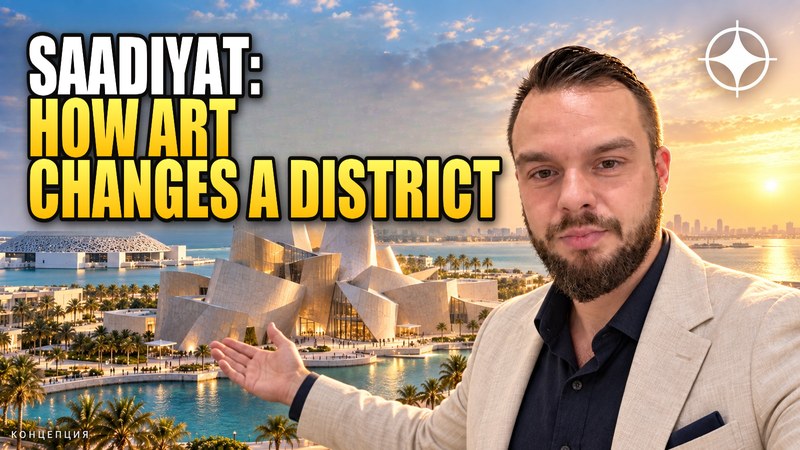
Dar al Funoon: Frank Gehry’s Arts Centre Joins Saadiyat’s Museum Cluster
Abu Dhabi’s cultural cluster is gaining an arts centre designed by Frank Gehry, standing alongside Louvre Abu Dhabi and the future Guggenheim. What museums do to property prices around them.