What it is
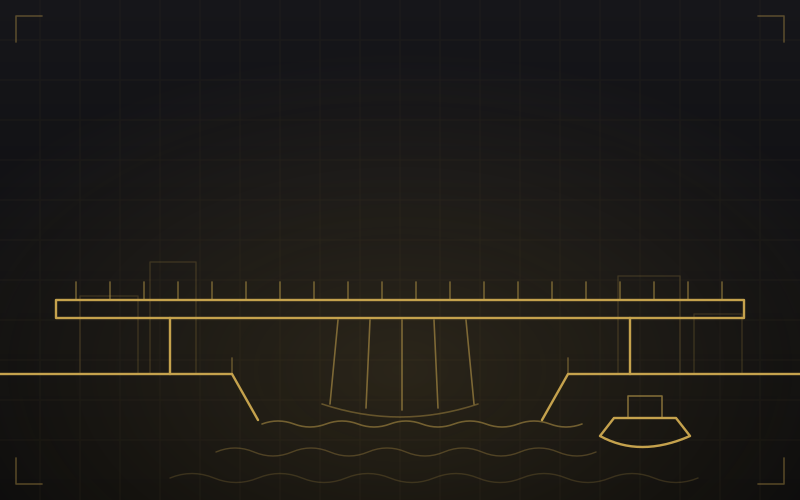
A bridge across Dubai Creek with a distinctive arch in the shape of an infinity symbol, from which it takes its name. Twelve lanes, six in each direction, plus provision for pedestrians and cyclists.
It is not a standalone build but part of the Al Shindagha corridor — a multi-year programme reshaping the connections between the city’s two historic banks.
It opened to traffic in January 2022. For a city where the creek had been a bottleneck with two or three crossings for decades, that is a material change.
Why this is about price
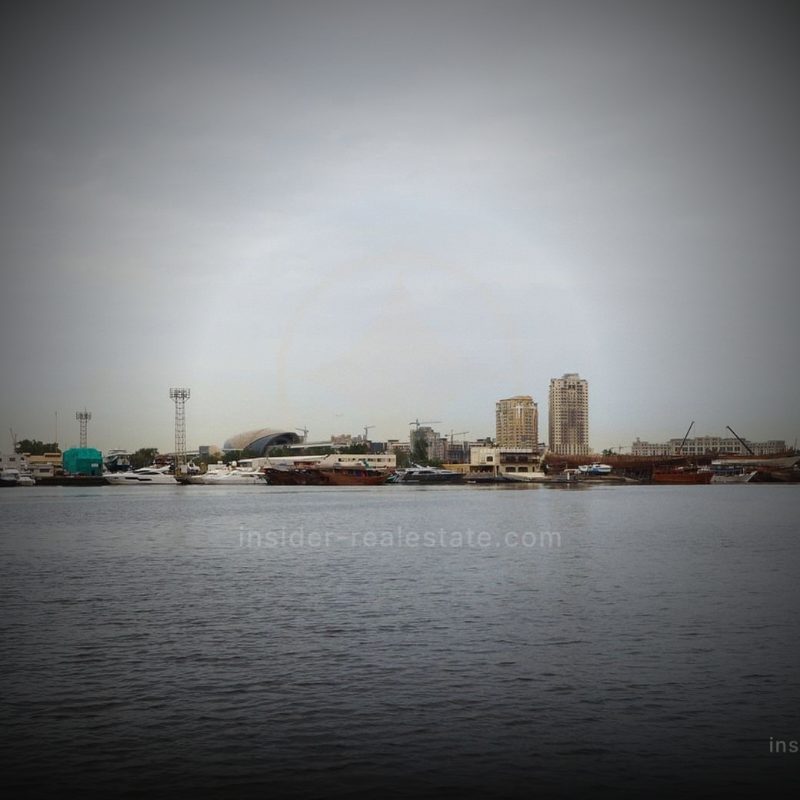
Deira and Bur Dubai are cheaper than the newer districts not only because of the age of the stock. The second reason is the drive: at peak, crossing the creek consumed enough time that living there and working on Sheikh Zayed Road was an expensive decision.
That discount is precisely what the corridor attacks. The shorter the run to the business city, the narrower the price gap between old and new, and the wider the pool of tenants for whom the old city exists at all.
The caveat, without which the conclusion would be dishonest: a transport project narrows the gap without abolishing it. Building age, management quality and the state of the common areas in the historic districts do not go anywhere, and they account for most of the discount.
So the bridge is an argument for looking at Deira, not an argument that Deira will appreciate. Those two things are confused more often than any other.
Who this interests
Anyone counting yield in per cent rather than the prestige of an address: the entry price in the old city is a fraction of the waterfront, and there is always a tenant.
Anyone looking at Al Jaddaf and Dubai Festival City — the districts right by the new bridge, which gain first from better connectivity.
And anyone buying for long lets: the tenant pool in this part of the city is broad and not dependent on a single employer.
What to check
The building rather than the district. In old Dubai the spread in quality within one block is wider than the difference between blocks: the service charge and the management company decide the yield.
The ownership status. Not all historic stock is available to foreigners on a freehold basis — the zoning here is a mosaic, and it has to be checked address by address.
And parking: it is scarce in the older blocks, and it affects lettability more than a listing suggests.
What else is changing in the old city
The Al Shindagha corridor is not a single bridge but a series of interchanges and widenings on both banks, spread over years. Infinity Bridge is its most visible part, not its only one.
In parallel, Dubai Islands are being built out off the Deira shore: new waterfront stock next to the old city changes both its tenant mix and its prices.
And the green metro line has served Deira and Bur Dubai for fifteen years now: connectivity here improves in layers rather than in one jump.
Which is why the old city is worth assessing as a whole rather than object by object: each individual build shifts the picture a little, and together over a decade they shift it noticeably.

 Dubai Metro
  Burj Khalifa
  Al Maktoum International
  Dubai Tram
  Dubai Water Canal
  The Dubai Mall
  Etihad Rail
  Dubai International (DXB)
  Jebel Ali Port
  Sheikh Zayed Road
  Expo City Dubai
  Dubai Creek
  Museum of the Future
  Ain Dubai
  Mall of the Emirates
  Dubai Hills Mall
  Palm Monorail
  Metro Gold Line
  DIFC Zabeel District
  Dubai Opera
  The Dubai Fountain