What it is
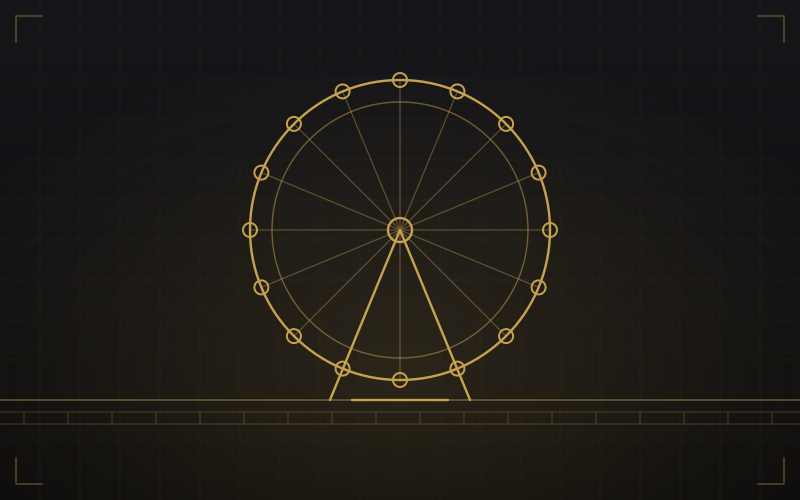
Ain Dubai opened on 21 October 2021 on Bluewaters Island: 250 metres tall with 48 capsules, the tallest observation wheel in the world at opening and still the tallest today.
It ran for about five months and was stopped in March 2022 for enhancement works. No reopening date has been announced publicly since.
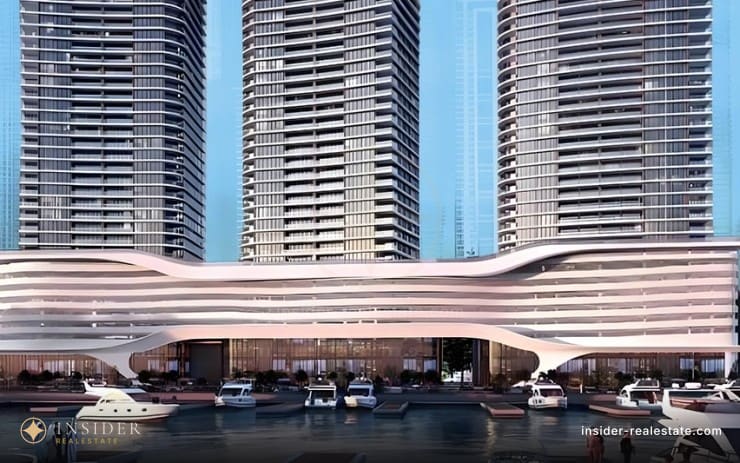
The island itself carries on regardless: the promenade, the restaurants, the hotel, the Bluewaters Residences towers and the footbridge to JBR all operate independently of the wheel.
What the case teaches a buyer
Bluewaters was sold partly on the wheel. It appeared on every render, it led the presentations, and the island was frequently named after it.
The wheel has now been out of service for a fourth year — and the island has neither cheapened nor emptied. Housing here remains among the most expensive in the city per square foot, lettings clear, and the promenade restaurants are full.
The conclusion worth carrying away: what holds the price is the combination of sea, a walkable link to JBR and a closed supply of land on a reclaimed island. The attraction was a reason to visit, not the reason for the price.
And the reverse conclusion, which matters more: when a seller explains a premium by a future object — a park, an aquarium, a promenade, a wheel — ask what remains if the object does not arrive. In Dubai that is not a hypothetical question.
What actually holds the price here
Beach and water on two sides: the island is narrow, and almost every tower has a sea aspect.
The bridge to JBR: The Walk and The Beach are within walking distance, which is ready-made dining and beach infrastructure that nobody has to wait for.
Finite land: the island is reclaimed and built out, and no new plots will appear. This is the rare case in Dubai where supply really is closed.
And the proximity to Dubai Marina and Dubai Harbour — the two districts where the city’s entire marine and waterfront life is concentrated.
What to check
The aspect. The difference between a sea view and a view of the next tower matters more here than the floor.
The service charge. On island schemes with a promenade and shared infrastructure it runs above the city norm, and it belongs in the yield from the outset.
And the short-term letting regime in the specific building: on Bluewaters nightly letting is the primary yield case, and it is the management company that permits it, not only the law.
How to price promised infrastructure
The rule is simple and works on any scheme: price it twice — with the promised object and without it.
If it still stands up without, the promise is a bonus and the premium for it should be small. If the deal collapses without it, what is being bought is not property but the delivery date of somebody else’s project, over which you have no control.
Check separately who has actually undertaken what. Infrastructure inside the developer’s own plot is a contractual obligation and can be read. A civic object — a metro line, a park, a road — is the municipality’s obligation, and the developer does not answer for it, however readily it appears on the plan.
And allow for slippage. It happens everywhere, Dubai included; the question is not whether the date moves but whether your model survives two extra years.

 Dubai Metro
  Burj Khalifa
  Al Maktoum International
  Dubai Tram
  Dubai Water Canal
  The Dubai Mall
  Etihad Rail
  Dubai International (DXB)
  Jebel Ali Port
  Sheikh Zayed Road
  Expo City Dubai
  Dubai Creek
  Museum of the Future
  Mall of the Emirates
  Dubai Hills Mall
  Palm Monorail
  Infinity Bridge
  Metro Gold Line
  DIFC Zabeel District
  Dubai Opera
  The Dubai Fountain