
UAE tourism spending hit a record — and what it means for short-term rental demand
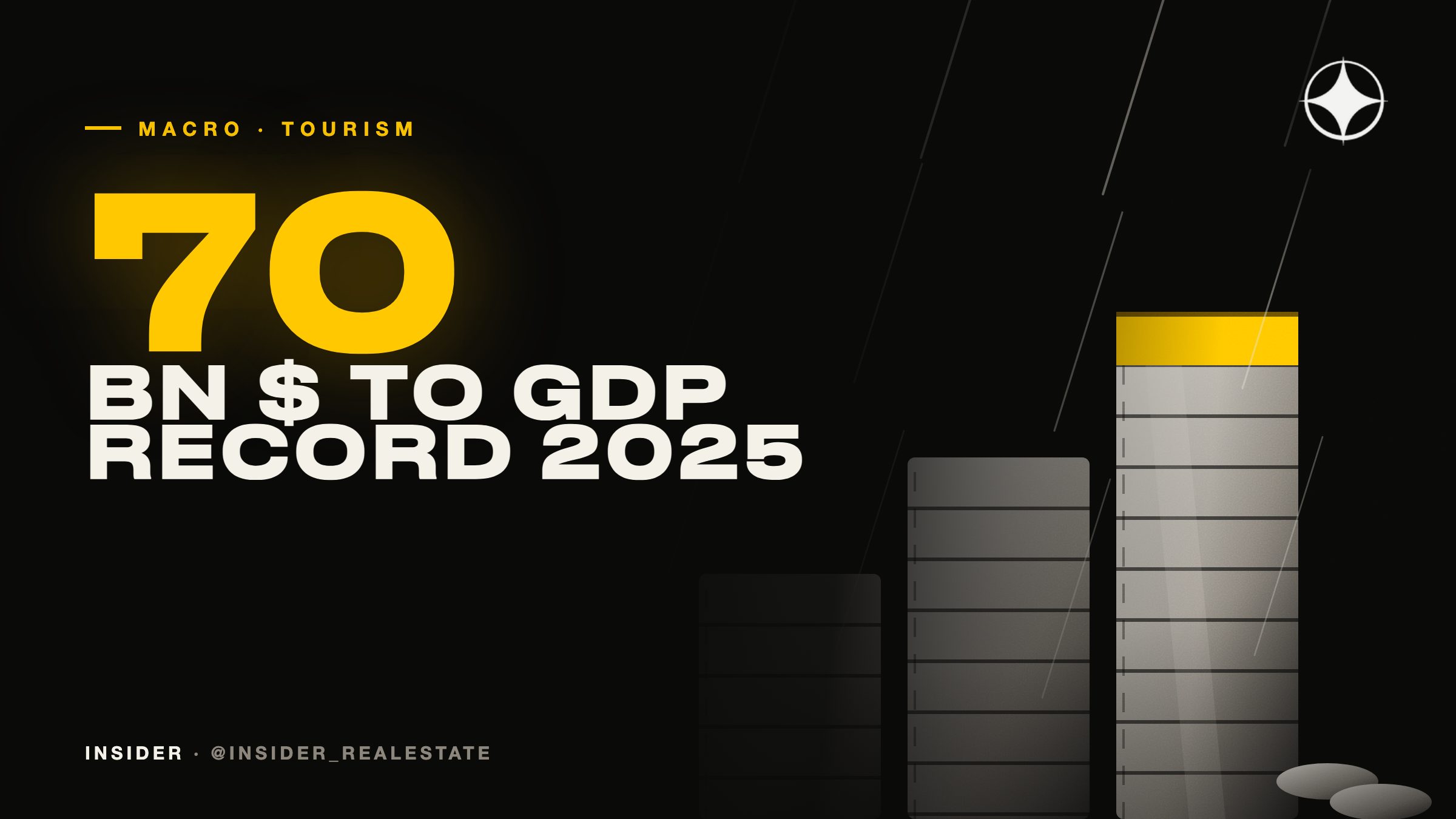
Foreign tourists spent a record $59.2 billion in the UAE in 2024, and the sector’s GDP contribution topped $70 billion in 2025. We look at how that spending flows into short-term rental demand and what it means for an owner.
Tourism in the UAE is not just about hotels: a large share of visitors stay in apartments let out by private owners through short-term rental platforms, and tourist arrivals shape occupancy and rates in that segment more than any other single factor. The last two years of data show that flow has not just recovered from the pandemic — it has hit a historic high.
A record 2024, and an even stronger 2025
In 2024, foreign tourists spent a record $59.2 billion in the UAE — 30% above the pre-pandemic 2019 level — placing the country among the world's top seven for international tourist spending. Dubai alone welcomed 17 million visitors that year, up 19% on the year before. 2025 was stronger still: according to the World Travel & Tourism Council, international visitor spending hit record levels, and the sector's total contribution to the UAE economy topped $70 billion — about 13% of GDP, supporting more than 925,000 jobs. The top source markets stayed consistent — India, the UK, Russia, China and Saudi Arabia — with an official target of $121.5 billion a year in sector contribution by 2031.
How that turns into rental demand
Every tourist who books an apartment instead of a hotel room is direct income for a private owner who has registered the unit as a holiday home with regulator DTCM. In high-draw tourist districts — along the beachfront, near Dubai Marina, JBR and Downtown — short-term yields in peak season consistently beat long-term lease returns, though they require more hands-on management: cleaning, guest turnover, and working the booking platforms.
Talk to a licensed broker: 📲 +971 50 120 32 64 on WhatsApp, @dubai_oleg on Telegram
One structural point matters here: short-term rental demand in Dubai does not follow the narrow seasonality most tourist cities see. Business travel, family tourism and residents escaping colder climates for the winter keep demand running nearly year-round, with a peak in the traditional winter season.
What it means for an owner
When weighing long-term versus short-term letting, rising tourist spending is an argument for the latter — but only in locations with genuine tourist footfall, such as Dubai Marina and Downtown Dubai. A short-term let in a residential district with no beach or business infrastructure nearby usually loses to a long-term lease once operating costs are netted out.
The growing tourist flow also feeds directly into demand along Dubai's most visited beaches, such as JBR's, where a unit's price on the first row is increasingly driven not just by the view but by the beach's global standing.
For more on how that global standing shapes short-term rental value on the water, see JBR’s place among the world’s beaches.
In the news
Other write-ups on the site about the same thing.

Holiday homes in Dubai: the permit, the operator fee, and the summer
Short-let returns are quoted gross, in winter, on a good week. The licence you need, the building that may not allow it, the 15–25% an operator takes, and why the annual number lands closer to a long let than the peak season suggests.
How the Dubai rental market works: four players, one licence and no tax on rental income
Owners, tenants, brokers and licensed holiday home operators — you cannot let short-term without the last. And the key feature: individuals in the UAE pay no tax on rental income.
Port de la Mer rentals: seasonality of seaside income and how to model it month by month
Income from beachfront property is spread unevenly across the year. It has to be modelled month by month, or the annual figure misleads.

Bluewaters Island apartments: living where the whole city comes to visit
A small island with an observation wheel, restaurants and a promenade that draws the whole city. For an owner it is both the main asset and the main drawback.

ANAX Developments: what it takes to run a unit as a holiday home
A developer building serviced-style units in Business Bay. Short letting in Dubai is licensed and regulated — and three separate permissions have to line up before you can start.

Saadiyat Beach Ranks in the World's Top 20: Abu Dhabi Beats Famous Resorts
Saadiyat Beach in Abu Dhabi is No. 19 in The World's 50 Best Beaches 2026. Why Saadiyat Island made the list of the best beaches in the world, and how the Louvre, a marine reserve and luxury resorts are turning it into Abu Dhabi's main tourism hub.