
Abu Dhabi housing supply in 2026: why so little gets built, and what changes by 2028
Abu Dhabi completed about 2,700 apartments, villas and townhouses in the first nine months of 2025 — Dubai delivers more than that in a single quarter. Colliers puts the supply peak at 2028, around 21,800 units, with roughly 71,000 new homes citywide by 2030.
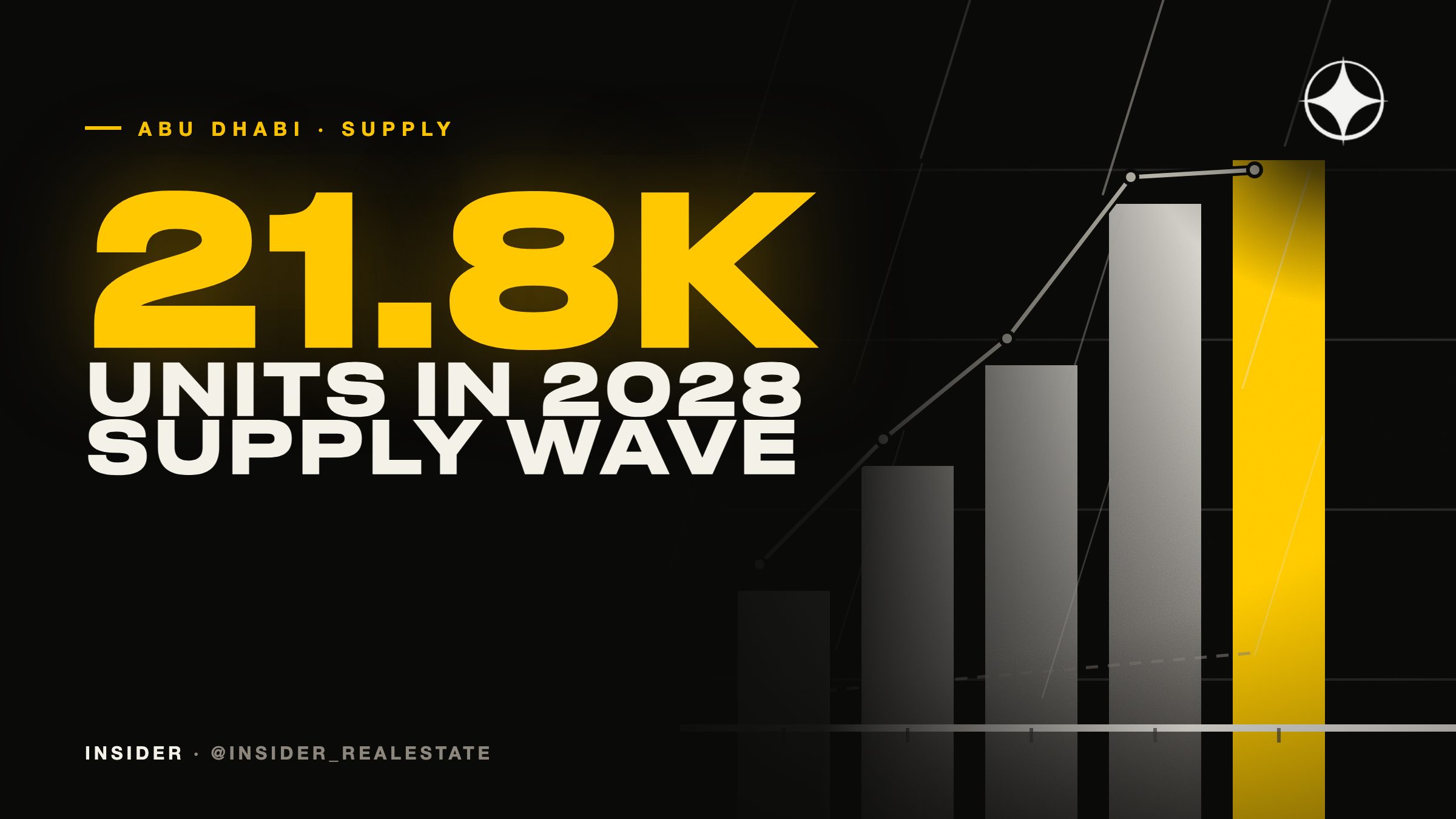
Abu Dhabi and Dubai build at very different speeds, and that gap is not a statistical footnote — it is the single biggest reason Abu Dhabi rents have kept climbing for two years running. Dubai delivers more housing in a strong quarter than Abu Dhabi delivers in a year. The gap is narrowing as developers move faster on Al Reem, Saadiyat and Hudayriyat Island, but the point where supply catches demand sits in 2028–2030, not next year.
What is actually being delivered now
In the first nine months of 2025, Abu Dhabi completed roughly 2,700 apartments, villas and townhouses. For scale: CBRE reports Dubai alone delivered 27,300 homes in the second quarter of 2026 — more in three months than the capital typically adds in several years. Dubai's base is larger too, with a population estimated at 4.74 million in 2026, while Abu Dhabi's population is growing at a comparable pace in percentage terms but from a smaller number of homes being added. That ratio — not population growth, but completion volume — is what has kept Abu Dhabi rents rising and gave ADREC grounds to freeze rent increases at zero this year.
What the latest Colliers data shows
Colliers' Q2 2026 report marks the first signs of normalisation after an extended run of sharp growth. Apartment prices in Abu Dhabi eased 3% quarter-on-quarter and villas 1%, while annual gains stayed strong at 19% and 10% respectively. Around 2,200 units were handed over in Q2 across established and emerging clusters — Al Shamkha, Yas Island, Bloom Living in Zayed City and Al Raha Beach — with roughly 3,200 more expected by year-end.
Talk to a licensed broker: 📲 +971 50 120 32 64 on WhatsApp, @dubai_oleg on Telegram
| Period | Expected housing supply |
|---|---|
| All of 2026 | about 5,400 new units (2,200 already delivered in Q2, plus 3,200 due by year-end) |
| Peak year, 2028 | around 21,800 units — Colliers calls this the top of the delivery cycle |
| Cumulative by 2030 | about 71,000 new apartments and villas across the emirate |
What it means for a buyer
While supply keeps lagging demand, Abu Dhabi rents and prices tend to move up more confidently than Dubai's — a trend now visible directly, since ADREC opened its transaction data to the public. But 2028 is not an abstract date: that is exactly when the largest projects launched over the past eighteen months are due, from Bashayer on Hudayriyat Island to the towers on Al Reem and Al Maryah covered elsewhere on this site. A buyer treating a completed unit as a rental-income asset should model a holding period longer than one or two years: today's shortage will look considerably smaller two construction cycles from now, and assuming current rent levels for the full life of the investment is an optimistic bet.
For anyone choosing between off-plan and ready stock, handover timing matters directly. A project delivering in 2026–2027 reaches the market while the shortage is still in effect; a launch with a 2029–2030 horizon lands squarely in the busiest delivery window the emirate has seen. Neither is a bad deal by default — but they are different investments by logic, and lumping them into one spreadsheet is a mistake.
For the specific projects landing in that 2028–2029 window, see our coverage of Al Reem Island and Hudayriyat Island.
Video on this topic
The same subject on the English channel — each clip has a written version of its own.
 15:37Abu Dhabi property investment: Saadiyat Island and the Aldar launch numbers16 February 2023
 19:45Oceano on Al Marjan Island: the Luxe Developers project and the island being built around it14 August 2026
 1:35Binghatti Aquarise, Business Bay: the pitch and the reality check12 September 2025
 1:17Skyrise by Binghatti: a landmark tower at mid-market pricing11 September 2025


In the news
Other write-ups on the site about the same thing.

Dubai housing supply: the 210,000-home forecast for 2025–2026 against about 54,000 delivered
The market was warned of 210,000 new Dubai homes over 2025–2026. ValuStrat counts about 36,000 units delivered in 2025, 59% of plan, and CBRE about 18,000 in H1 2026. Rents fell 6.2% quarter on quarter in Q2. Where oversupply risk is real and where it is not.
Abu Dhabi property market 2026: AED 117bn in six months and a run of ADREC records
ADREC data: AED 117bn of transactions in H1 2026 (+112%), AED 86.1bn of sales and AED 13.8bn of foreign direct investment (+309%, more than all of 2025). Full-year 2025 was a record AED 142bn. What sits behind the numbers.
Off-plan escrow in Dubai and Abu Dhabi: AED 500,000 fines for early marketing and EOIs only through Madhmoun
In June 2024 the Dubai Land Department fined three developers AED 500,000 each for marketing projects before registration and escrow. Since 16 February 2026 Abu Dhabi takes off-plan EOIs only through ADREC’s Madhmoun platform and a government escrow. What it means for buyers.
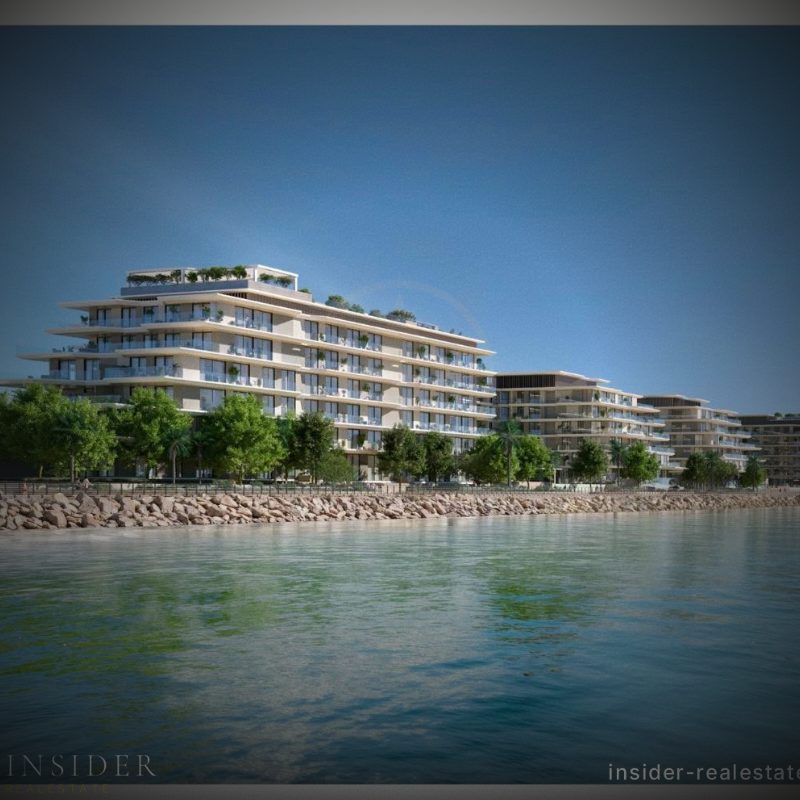
Bashayer on Hudayriyat Island sold out in a day: Modon banked AED 3bn on one launch
Modon's first residential project on Hudayriyat Island — 157 villas and 330 apartments — sold out completely on launch day, bringing in about $820 million. The developer has already followed up with Bashayer Final Phase, the last release in this cluster.

Aldar buys 2.3m sqm of land on Yas and Saadiyat: 3,000 homes worth AED 23bn
In February 2026 Aldar added more than 2.3m sqm on Saadiyat, Yas and next to Yas for about 3,000 homes with a GDV near AED 23bn ($6.26bn). That averages AED 7.7m per home — what it says about the launches to come.
Riviera Residences on Al Reem Island: a pearl facade by Herzog & de Meuron
Mered has entered Abu Dhabi with a 240,000 sqm waterfront project on Oval Bay, designed by Swiss firm Herzog & de Meuron, complete with a private marina. Handover is set for March 2029; deep-foundation works began in spring 2026.