
 −38% Illustrative photo
 Production City
Dubai Production City, formerly IMPZ: a printing and media zone with lakeside apartment buildings and low prices.
10 units in stock. 9 with a confirmed status: 2 ready, 7 under construction. 86th most expensive of 91 districts by median price.
- high gross yields
- lowest entry prices
- lakeside outlook at a low cost
Median price $306K AED 1,125,000
Entry price $167K AED 615,000 — cheapest unit
Per square foot $390 AED 1,433 / sq ft, median
Ready stock 22% 4 units discounted, up to −38%
What is nearby, and what it does to the price
What this area is actually like
What it is
Dubai Production City, originally the International Media Production Zone (IMPZ), is a free zone for printing, publishing, packaging and media production, with a residential cluster built around artificial lakes on part of the site.
It sits off Sheikh Mohammed Bin Zayed Road in the western inland area, near Motor City, Sports City and Jumeirah Village Triangle.
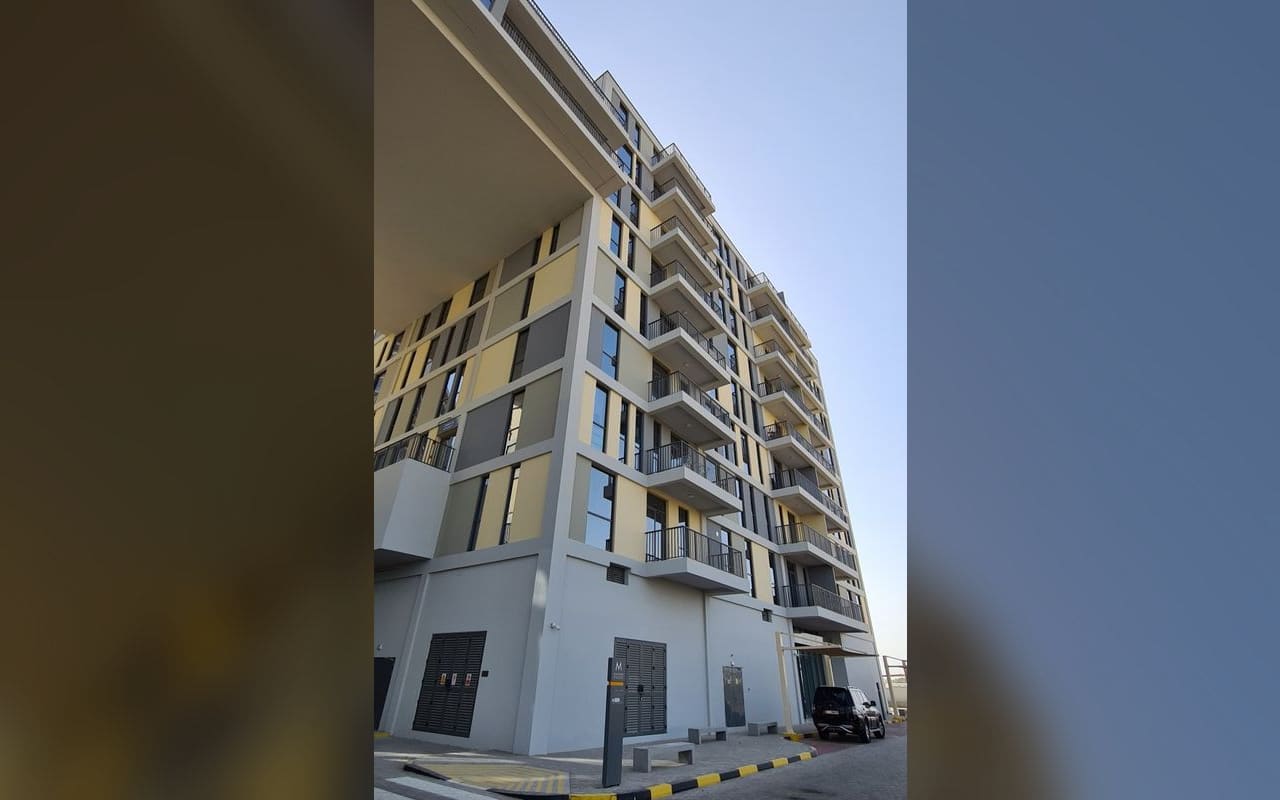
The residential component is predominantly mid-rise apartment buildings, several of them arranged around the lakes, at some of the lowest price points in the city for new-ish stock.
The lakes and the layout
The artificial lakes are the district’s one distinguishing feature and they do provide outlook and open space that comparable cheap districts lack.
Lake-facing units command a modest premium and are worth targeting — in a district where the product is otherwise interchangeable, any differentiation helps at both letting and resale.
Beyond the lakes, the environment is functional: mixed commercial and residential, wide roads, and limited pedestrian amenity.
The economics
Entry prices are low and gross yields are among the higher figures in Dubai. That is the argument, and for a cash-flow investor it is a real one.
The tenant base is drawn from the free zone, the surrounding business parks and households looking for the cheapest reasonable apartment in the western half of the city.
It is a price-driven market at every level, which means negotiation is expected in both directions and capital appreciation is minimal.
The risks
Building quality and management vary considerably, and some buildings here have had persistent service charge and maintenance issues. This is the primary risk and it is checkable.
The district has a substantial commercial and light-industrial component, so the residential environment is not uniformly pleasant. Position within the district matters.
No metro. Car-dependent, with parking allocation directly affecting rent.
Resale liquidity is moderate, with a buyer pool of yield investors who negotiate hard.
What to check
The building’s service charge history and the state of its common areas, before anything else.
Whether the unit faces a lake, another building, or the commercial side of the district.
Parking allocation.
The realistic achieved rent for the specific building rather than a district figure.
Who it suits
A yield investor operating at the affordable end who is prepared to do building-level due diligence and hold long term.
Tenants working in the free zone or nearby who want the lowest cost of decent accommodation in the area.
It suits poorly anyone who wants amenity, anyone expecting appreciation, and anyone buying without inspecting the specific building.
The industrial half
Roughly half of Production City is printing presses, packaging plants, publishing warehouses and the logistics that serve them. It is a working zone with shift patterns, loading bays and heavy vehicle movements, and it is inside the same district as the apartments.
The residential cluster around the lakes is separated from it, and in the better positions the separation is genuine. In the weaker positions it is a road width, and the difference in living experience is large.
Air quality, noise and the visual outlook all change with distance from the industrial side. So does the tenant’s willingness to renew, which is the part that shows up in your returns.
This is the single most consequential thing to check on a viewing here, and it takes ten minutes: walk out of the building and see what is at the end of the street.
What the lakes are worth
The artificial lakes are the district’s only differentiator and they do real work. A lake-facing unit has an outlook, natural light on that side and a photograph that stands out on a listing page — in a market of interchangeable apartments, that is what gets a unit let first.
The premium for lake frontage here is modest, usually well below what an equivalent view premium would cost in a central district, which makes it one of the better value-per-dirham upgrades available in mid-market Dubai.
Verify the outlook from the actual unit rather than the floor plan. Some stacks catch the water across a car park; some catch it directly; some are described as lakeside and face the building opposite.
The lakes themselves are landscape features rather than amenities — not swimmable, not programmed — so value them for the view and the light, not as a facility.
Underwriting the purchase
Production City has some of the highest gross yields in Dubai and some of the most variable building management, and those two facts are related. Get the service charge history, the owners association budget and evidence that maintenance is actually being carried out.
Check occupancy in the specific building. In a district with this much stock at this price point, a tower with visible vacancy is telling you something the listing will not.
Model net rather than gross: charge, vacancy allowance, re-letting cost and maintenance provisioning. The gap between the headline and the reality is wider here than almost anywhere.
Done properly this is a sound cash-flow asset. Done on a spreadsheet without a site visit it is the district where Dubai investors most often discover what deferred maintenance costs.
More on Production City
Written breakdowns of subjects the English channel has not filmed.
- The Crescent in Production City: an eighteen-year-old Damac complex, read as an income asset
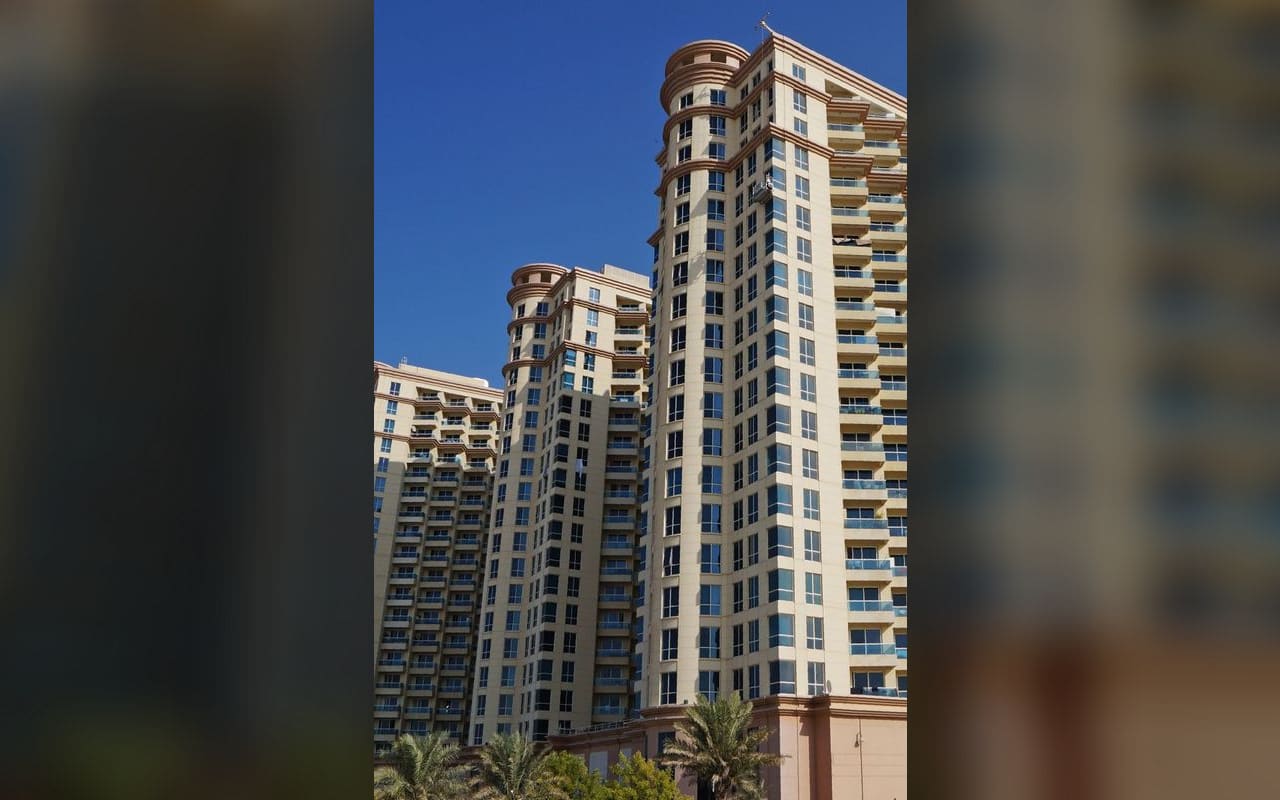
Twenty-one storeys, completed 2008, in the district with some of the highest gross yields and the most variable building management in Dubai. The service charge history is the whole investment case.
−38% Illustrative photo 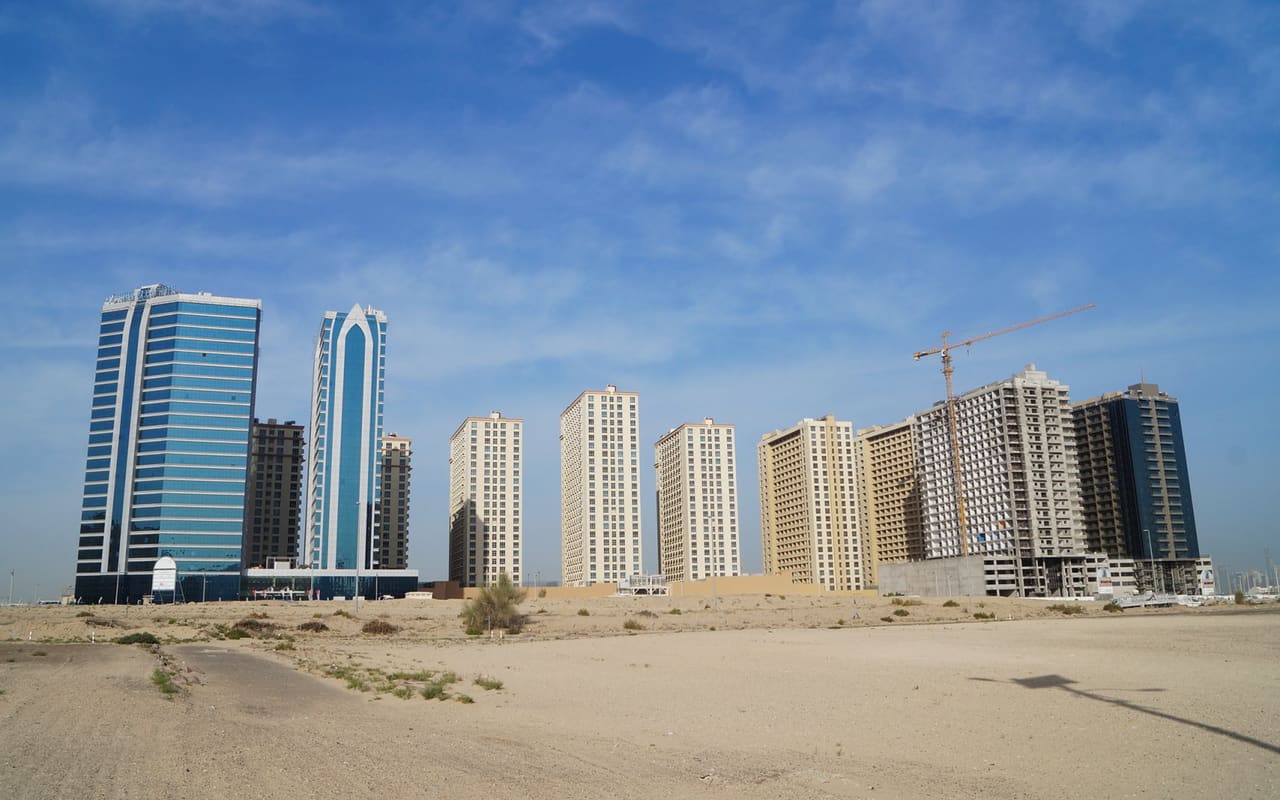 −18% Photo of the community
  −9% Illustrative photo
  −5% Illustrative photo
 Illustrative photo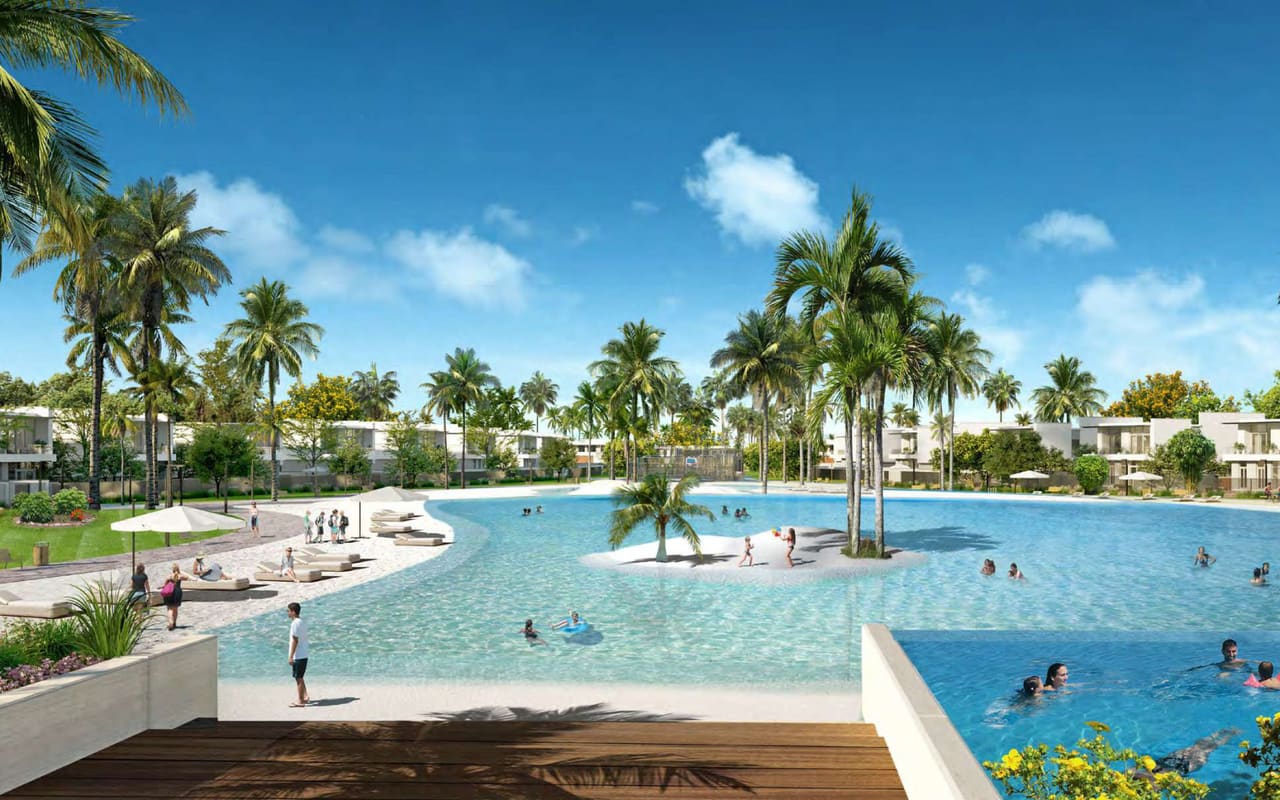
The market, per the Land Department
Residential price index 167.33 Q4 2025
Quarter on quarter +3.32% QoQ
Year on year +8.9% YoY
Full year 2025 +9.81% index 162.51
This is the official index for the whole emirate, not for Production City: the Dubai Land Department does not publish a district breakdown publicly. Treat it as background — it tells you whether the market is rising or flat while you read the prices above. Transaction data for a specific building I pull separately, on request. Source: Dubai Land Department, read 15/08/2026.
The latest read: July 2026
The Land Department index above is quarterly and emirate-wide. The monthly price index splits villas from apartments — and in 2026 that matters: a single blended figure hides the fact that the two markets have pulled apart.
Villas and townhouses 292.5 flat YoY
Apartments 168.7 −4.2% YoY
All residential 219.2 −0.3% MoM
Price per sqft 2,039 villas · apartments 1,397 AED
The month split by completion status: 72.8% of deals were off-plan, 27.2% ready homes. Ready-home volume rose 11.4% on the month, while off-plan was the only segment down both on the month and on the year (−45.3%). The practical read: there is room to negotiate on apartments and on off-plan, far less on finished villas in established communities. Index base is January 2021 = 100 — a villa reading of 292.5 means growth of 192.5% from that mark, not a premium over a 2021 peak. Monthly ValuStrat market review for July 2026, checked 24/08/2026.
Questions about Production City
What was Dubai Production City called before?
The International Media Production Zone, or IMPZ. It is a free zone for printing, publishing, packaging and media production, with a residential cluster built around artificial lakes on part of the site.
Other districts
All districts →Projects in Production City
All projects in Production City →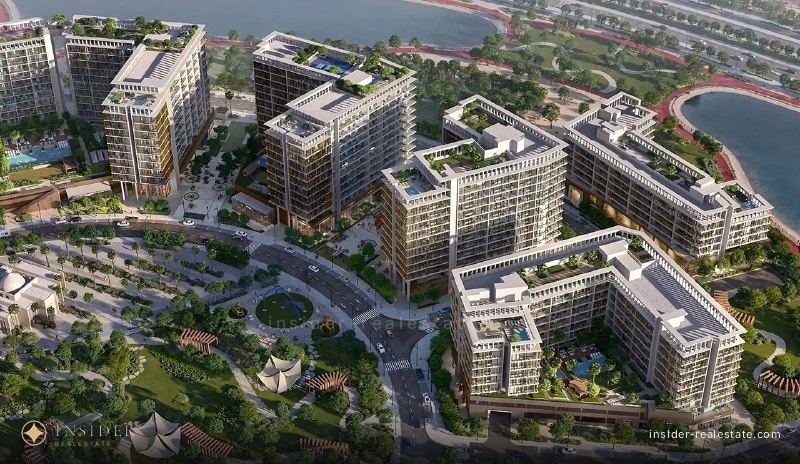
Production City in the news
JVC traffic fix: RTA and Dubai Holding’s AED 6bn road programme and four new access points
The RTA and Dubai Holding signed an AED 6bn (about $1.6bn) road programme: four new JVC access points with interchanges, double the capacity and 70% shorter journeys. Hessa Street phase two adds a 780 m bridge and a 480 m tunnel out of JVC. What it means for owners and buyers.
Production City: a district built around one industry
A media and printing free zone with housing around a lake. When demand rests on one industry, that is both the strength and the single point of failure.
Production City: how to check free zone occupancy before buying to let
In a sector-based district, housing demand comes from the companies nearby. Their number and occupancy can be checked, and they are the best leading indicator you have.
Looking at Production City specifically?
Send me the building or the unit and I will pull the registered transaction history, the current service charge and what comparable units actually let for — before you make an offer, not after.
Ask on WhatsAppAsk a question
Telegram is the fastest way — I answer personally.
Message on Telegram